


News Desk
The News Desk provides timely and factual coverage of national and international events, with an emphasis on accuracy and clarity.
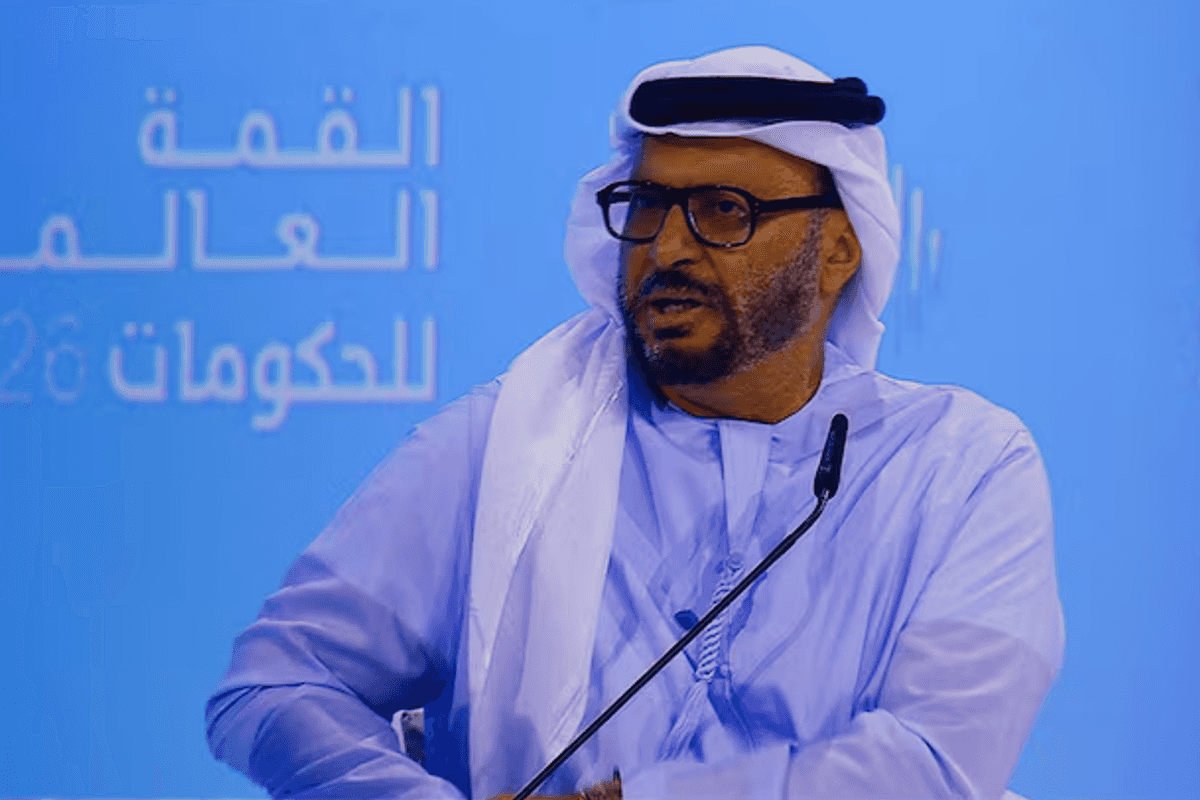
Dr. Anwar Gargash, diplomatic adviser to the UAE president, says the UAE remains committed to deterrence and dialogue as it works to build trust with Iran.
Reuters/File
A recent meeting between the UAE and Iran has opened an important channel for the two countries to address their differences, Dr. Anwar Gargash, diplomatic adviser to the UAE president, said at the Arab Media Summit in Dubai, Khaleej Times reported.
What did Gargash say about the UAE-Iran meeting?
Gargash said the meeting created a channel for the UAE and Iran to discuss tensions and the future of their relationship. It did not mean the two sides agreed on every issue. The contact marked a step toward addressing differences through dialogue rather than confrontation.
Gargash was referring to a September 12 meeting between Sheikh Khaled bin Mohamed bin Zayed Al Nahyan, Crown Prince of Abu Dhabi, and Iranian President Masoud Pezeshkian. The meeting took place on the sidelines of the BRICS Summit in New Delhi.
Gargash described Pezeshkian as a voice of reason during a critical period. He said the Iranian leader's positions and statements throughout the crisis had been balanced and rational.
How does the UAE balance deterrence and dialogue with Iran?
The meeting reflected the UAE's approach of combining deterrence with diplomacy, Gargash said. He added that geography made engagement with Tehran necessary, though rebuilding trust would require action rather than words.
Gargash said the immediate challenge was not only managing the current crisis but also building a sustainable framework for future relations. Dialogue was essential to restore normal trade, aviation and market access, he said, though reopening channels and rebuilding trust remained separate tasks.
"The relationship is one thing, and trust is another," Gargash said, adding that trust would need to be restored gradually after the pressure and attacks experienced across the region.
What does Gargash want Iran to change?
Gargash said Iran should reconsider how it exercises regional influence. He argued Tehran would benefit more from economic development and cooperation than from strategic expansion, proxy groups and confrontation.
A more constructive approach, he said, could help Iran move beyond isolation and join what he called a promising Arab regional system, improving prospects for its economy and people.
He said Gulf states wanted a stable region built on respect for sovereignty, non-interference and secure trade routes. Any lasting settlement would require confidence building actions, not just statements.
What did Gargash say about Saudi Arabia and regional security?
Gargash said the UAE's policy rests on keeping diplomatic channels open while retaining the ability to defend the country. He credited President Sheikh Mohamed bin Zayed Al Nahyan's leadership for combining political steadiness, realistic diplomacy and a focus on protecting national interests.
Turning to Saudi Arabia, Gargash said the Kingdom's security and stability were tied directly to the security of the wider Gulf. He said Gulf security was interconnected and that a threat to one state affected its neighbors as well.
On regional conflicts, including Yemen, Gargash rejected the use of armed groups operating outside state institutions, saying such weapons threatened both the countries where they operated and neighboring states.
He said the UAE's preferred approach was to strengthen national institutions, support trade and development, and prevent outside powers from dominating countries through armed proxies.




Comments
See what people are discussing