

UN leadership race enters pivotal stage with female candidates vying to become first woman Secretary-General
The search for the next United Nations Secretary-General reached a crucial milestone as four women lead the charge among seven total candidates, with Costa Rica's Rebeca Grynspan emerging at the top of the Security Council's fourth informal straw poll

News Desk
The News Desk provides timely and factual coverage of national and international events, with an emphasis on accuracy and clarity.
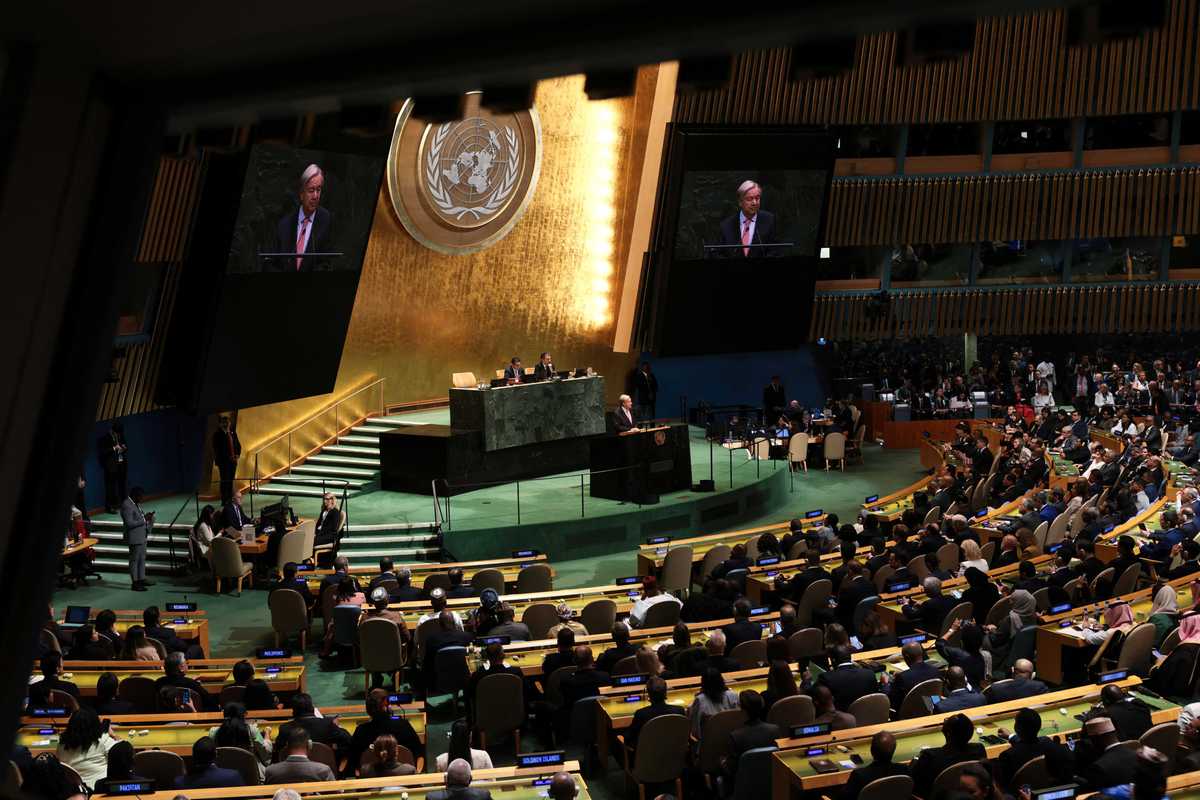
The 81st session of the United Nations (U.N.) General Assembly at U.N. Headquarters on September 22, 2026, in New York City.
AFP
The race to lead the United Nations has entered a pivotal stage, with four women among seven candidates vying to become the world body's first female Secretary-General, as Costa Rica's Rebeca Grynspan strengthened her position by finishing first in the fourth round of informal UN Security Council polling on Tuesday.
How did Rebeca Grynspan and other candidates perform in the latest Security Council poll?
According to diplomatic sources cited by the Associated Press and PassBlue, Grynspan—currently head of the UN Trade and Development agency (UNCTAD)—received 10 "encourage" votes, three "discourage" votes, and two "no opinion" responses from the 15-member council. Grynspan has now placed first in three of the four informal polls conducted thus far, maintaining consistent momentum as the contest moves toward formal decision rounds.
Guyanese former Foreign Minister Carolyn Rodrigues-Birkett placed second in Tuesday's poll with eight favorable votes, followed by Rafael Grossi, head of the International Atomic Energy Agency (IAEA). Other contenders seeking the UN's top diplomatic post include Senegal's former President Macky Sall, Uganda's Olara Otunnu, and Ecuadorian diplomats Ivonne A-Baki and María Fernanda Espinosa.
What makes this Secretary-General selection historic?
No woman has served as UN Secretary-General since the organization's founding in 1945, making the strong showing by Grynspan, Rodrigues-Birkett, A-Baki, and Espinosa a potential historic breakthrough for global diplomacy. Additionally, the customary regional rotation principle favors candidates from Latin America and the Caribbean to succeed António Guterres when his second five-year term concludes on December 31, 2026.
To secure the Security Council's official recommendation, a candidate must receive at least nine "encourage" votes without a veto from any of the five permanent members (P5)—Britain, China, France, Russia, and the United States. Council President Jérôme Bonnafont of France noted that Tuesday's poll was conducted without color-coded ballots, though future rounds will incorporate marked ballots to identify potential P5 vetoes before a final nominee is presented to the 193-member General Assembly for formal confirmation.



Comments
See what people are discussing