

US bans Chinese startup DeepSeek across federal civilian agencies over data security risks
US Department of Homeland Security ordered federal civilian agencies to immediately purge artificial intelligence models and third-party tools developed by the Chinese lab DeepSeek from government devices

News Desk
The News Desk provides timely and factual coverage of national and international events, with an emphasis on accuracy and clarity.
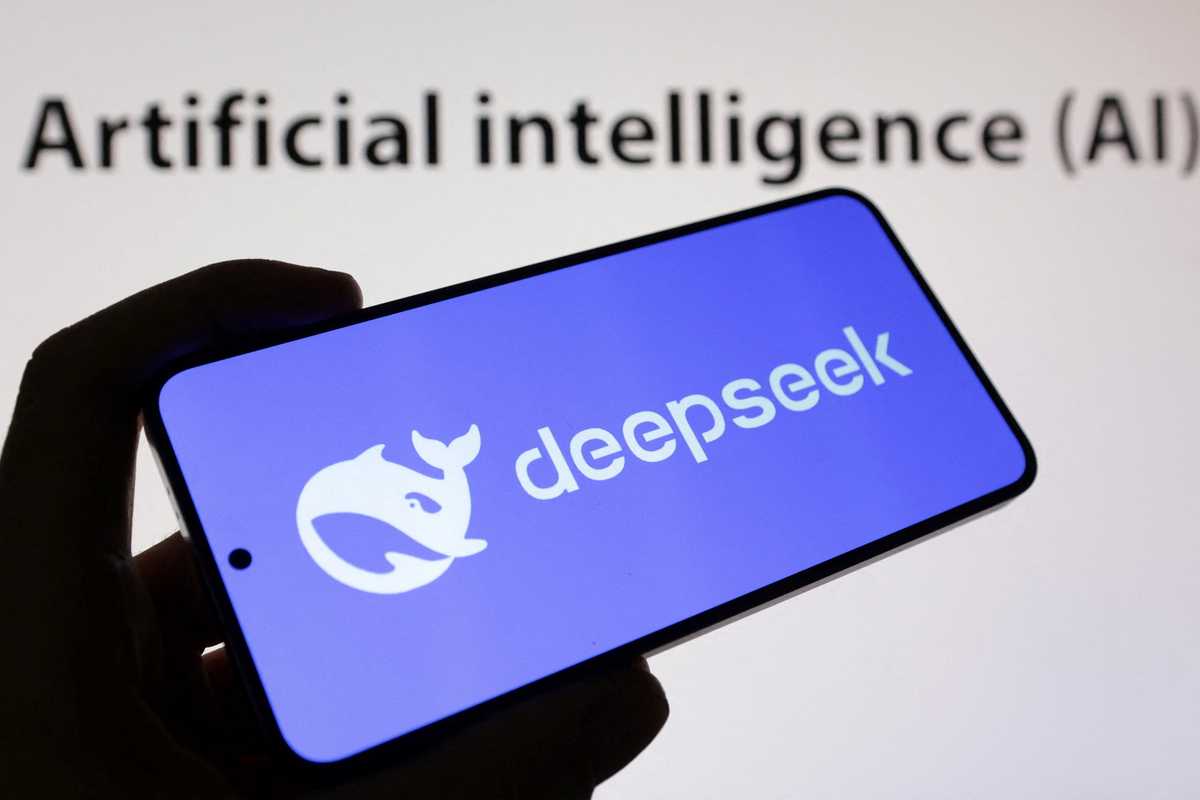
The United States government on Monday, October 19, ordered all federal civilian agencies to halt the use of artificial intelligence tools developed by Chinese startup DeepSeek, directing their immediate removal from government IT systems amid escalating competition between Washington and Beijing for dominance in advanced technology.
Why did Homeland Security ban DeepSeek products and derivative software?
The directive, issued by the Department of Homeland Security (DHS), mandates that all civilian executive branch agencies remove standalone DeepSeek software as well as third-party enterprise tools built on DeepSeek’s underlying model architectures from federal IT infrastructure and government-issued devices.
While DHS holds the statutory authority to issue binding operational directives across civilian departments, the order does not formally apply to the Department of Defense or the intelligence community; the Pentagon did not immediately comment on whether corresponding restrictions would be adopted across military networks.
In an accompanying cybersecurity evaluation, DHS warned that "DeepSeek's models present multiple threat vectors," concluding that operational use of the software by government personnel or federal vendors "may result in the transfer of sensitive data" to servers located within the People's Republic of China. The document emphasized that China’s domestic legal framework grants state security organs extensive statutory authority to compel domestic tech firms to disclose underlying infrastructure, user logs, and processed data streams.
How does the restriction impact the US-China AI race ahead of the Shenzhen summit?
DeepSeek, headquartered in Hangzhou, emerged as one of China’s most prominent AI developers after disrupting the global market in January 2025 by deploying a high-performance, cost-effective reasoning model that directly challenged American developers.
The firm expanded its deployment footprint in April 2026 with the release of its flagship V4 model, followed earlier this month by an updated, lightweight iteration optimized for edge devices and faster inference speeds.
The federal prohibition follows repeated accusations from Washington that Chinese AI developers systematically extract training data and distill capabilities from proprietary, frontier systems built by US companies.
The enforcement action also surfaces against a complex diplomatic backdrop: despite intensifying tech controls and trade tensions, Washington and Beijing established a formal bilateral communication channel in September 2026 to mitigate unintentional crises or escalation stemming from military and critical-infrastructure AI applications. The ban is expected to inject friction into bilateral discussions when US President Donald Trump and Chinese President Xi Jinping are slated to attend the Asia-Pacific Economic Cooperation (APEC) leaders' summit in Shenzhen next month.
According to The Wall Street Journal, the Cybersecurity and Infrastructure Security Agency (CISA) has begun monitoring agency compliance to verify the complete removal of DeepSeek-linked dependencies across civilian networks.





Comments
See what people are discussing