

US-Iran deal signals major geopolitical shift, reshapes Middle East outlook
Kamran Khan said the development reflects the remarkable speed and scale of diplomatic efforts that drove the breakthrough

News Desk
The News Desk provides timely and factual coverage of national and international events, with an emphasis on accuracy and clarity.
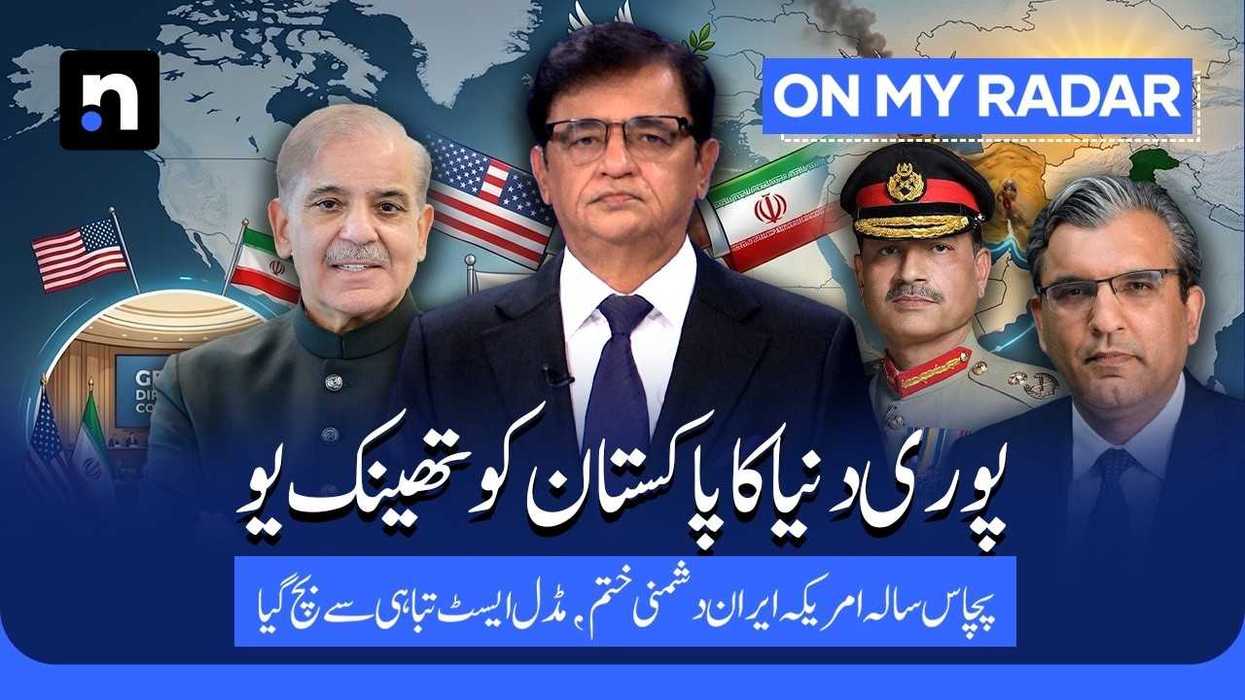
In a major diplomatic development, the United States and Iran have reached a framework agreement aimed at ending hostilities and de-escalating tensions across the Middle East. The breakthrough has been described as one of the most significant geopolitical shifts in recent years, with immediate implications for regional stability, energy markets and global diplomacy.
The announcement first came through a post on X by Prime Minister Shehbaz Sharif at around 2:15 a.m., in which he stated that the long-standing 50-year enmity between Washington and Tehran had effectively come to an end under a peace arrangement. He further said the agreement had helped avert the risk of a wider and potentially catastrophic conflict in the Middle East, confirming that both sides had agreed to an immediate and permanent halt to military operations on all fronts, including Lebanon. He also announced that the formal signing of the agreement would take place on June 19 in Geneva under Pakistan’s hosting.
Kamran Khan said in the latest episode of On My Radar that the development underscores the scale and speed of diplomatic engagement that led to the breakthrough.
Just minutes after the Pakistani premier’s post, US President Donald Trump also confirmed the agreement, saying the deal with Iran had been finalized. He announced the opening of the Strait of Hormuz and the lifting of a US naval blockade on Iranian ports, adding that the formal signing would take place later in the week.
A few hours later, Iranian authorities also appeared to confirm the development. The Supreme National Security Council said Tehran and Washington had finalized the text of a memorandum of understanding to end hostilities. The Iranian statement described the process as the outcome of “Islamabad talks,” referring to the negotiation track, and said the agreement would be known as the “Islamabad Memorandum of Understanding.”
Iran also acknowledged and praised the mediation efforts of Pakistan and Qatar, while reiterating that the signing ceremony would take place in Geneva. The announcement was widely welcomed by international leaders, who described it as a significant step toward regional stability and an end to prolonged conflict.
However, despite the diplomatic momentum, questions remain over implementation. Shortly after the announcement, Israel signaled that it would not fully adhere to the terms as described, particularly regarding troop withdrawals from Lebanon. Israeli Defense Minister Israel Katz said this position had been conveyed to Washington, while Prime Minister Benjamin Netanyahu also reportedly communicated Israel’s concerns directly to US officials, including US Defense Secretary Pete Hegseth. Despite this, no immediate reports of fresh Israeli strikes were recorded following the announcement.
Another unresolved issue is the status of the Strait of Hormuz. While Trump suggested the waterway would return to toll-free passage conditions, Iran indicated that maritime regulations in the strait would be determined jointly with Oman, rejecting any third-party authority over the matter.
The question of Iran’s frozen assets also remains unsettled, though expectations persist that access to funds and oil revenues may be gradually restored in the coming period.
Global markets reacted positively to the developments, reflecting optimism over reduced geopolitical risk. Oil prices fell sharply, with Brent crude dropping nearly 5 percent to $83.05 per barrel - its lowest level in three months and the weakest since early March.




Comments
See what people are discussing