


News Desk
The News Desk provides timely and factual coverage of national and international events, with an emphasis on accuracy and clarity.
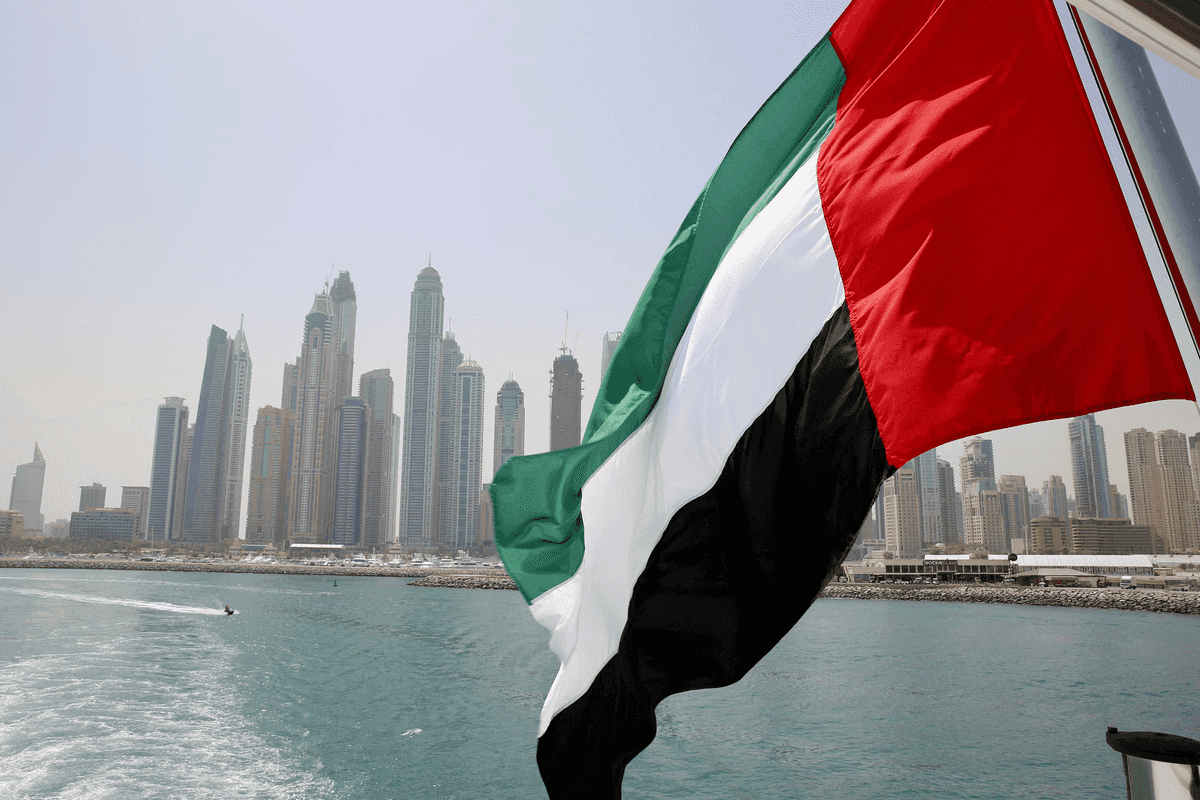
The United States and the United Arab Emirates held their 11th Economic Policy Dialogue in Abu Dhabi on Jan. 15, according to the state-run WAM news agency.
The dialogue was co-chaired by Saeed Mubarak Al Hajeri, minister of state at the UAE Ministry of Foreign Affairs, and Jacob Helberg, undersecretary of state for economic affairs at the U.S. Department of State.
Officials underscored the strategic importance of bilateral trade and investment between the two countries.
They noted that the UAE is the largest U.S. trade partner in the Gulf region, a position it has held for nearly two decades, and that the United States maintains a significant trade surplus with the UAE.
Senior officials emphasized that bilateral trade and investment, supported by clear regulatory pathways and market openness, make both countries more prosperous.
They praised growing cooperation in priority sectors, including critical minerals, advanced technology, energy, manufacturing and life sciences, with a view to expanding value-chain cooperation.
The officials reiterated the UAE’s commitment to invest US$1.4 trillion in the United States over the next decade, reinforcing the UAE’s position as America’s largest regional economic partner.
Direct trade relations have expanded significantly and support many jobs in both countries, according to the officials.
Al Hajeri said total non-oil trade between the UAE and the United States surpassed $38 billion by 2024.
He added that preliminary data for 2025 show that in the first half of the year, bilateral non-oil trade reached $19.3 billion, reflecting year-on-year growth of 3.4%.
He said the trade growth supports key American industries, including energy, aviation and technology.
Helberg emphasized the importance of enhancing economic security and securing trusted supply chains.
He highlighted shared interests in advanced manufacturing, artificial intelligence, energy abundance and digital infrastructure, saying these areas can strengthen economic and national security alignment and help maintain secure supply chains.
Both sides explored further collaboration on critical minerals.
Helberg highlighted the UAE’s leadership on resilient supply chains and its commitment to the Pax Silica framework.
The delegations also discussed coordinating investment in third-country projects to support diversified and resilient critical minerals supply chains.
The two sides discussed how to operationalize the U.S.-led Pax Silica Declaration, which aims to build secure, resilient and innovation-driven supply chains for technologies foundational to the AI era.
The UAE officially joined Pax Silica on Jan. 14, underscoring its early engagement in advancing resilient supply chains through investment, infrastructure development and international partnerships.
The United States and the UAE reiterated support for the India-Middle East-Europe Economic Corridor, particularly emphasizing the importance of increasing port and rail capacity.
Delegations held discussions on investment, trade, finance, business cooperation, intellectual property, tourism, the digital economy, emerging technologies, energy and critical minerals, water, transportation, logistics and infrastructure.
They also discussed joint efforts to promote global energy abundance and cooperation in advancing regional integration and multilateral engagement, including the upcoming U.S.-led G20.
Al Hajeri and Helberg agreed to explore potential areas of cooperation among I2U2 countries, including energy security, critical minerals and water security.
Both sides reiterated support for the U.S.-UAE AI Acceleration Partnership, signed during President Trump’s visit to the UAE in May 2025.
The partnership created a pathway for U.S. companies to export advanced AI semiconductors to American entities in the UAE and trusted Emirati entities, while accounting for enhanced security requirements.
Officials said the partnership unlocked significant Emirati investment in U.S. AI infrastructure, research and development centers, cloud architecture and AI-enabled industrial applications.
The two officials acknowledged progress on a proposed five-gigawatt AI campus under construction in the UAE, which they said will be the world’s largest AI campus outside the United States.
They said technology companies, public and academic institutions, and research centers in both countries are benefiting from expanded access to advanced infrastructure and deeper innovation partnerships.
The delegations also discussed cooperation in AI and advanced technologies, a proposed science and technology agreement, and joint research in quantum computing, genomics and space exploration.
Officials reaffirmed their commitment to fostering a dynamic investment environment and discussed efforts to address remaining trade barriers.
They also reviewed cooperation to counter illicit finance, enhance sanctions coordination and strengthen safeguards for the global financial system.
Officials said they look forward to the formal inauguration of the UAE-U.S. Treasury Engagement Framework on illicit financing expected in 2026.
UAE officials welcomed the U.S. Treasury Department’s Known Investor pilot program for the Committee on Foreign Investment in the United States.
On water security, Al Hajeri said the UAE looks forward to co-hosting the 2026 United Nations Water Conference with Senegal at the end of 2026.
Both delegations reaffirmed the role of the Economic Policy Dialogue in maintaining cooperation and advancing economic relations between the two countries.


Comments
See what people are discussing