

US vows 'economic asphyxiation' of Iran with new sanctions
The US unveils new sanctions on Iran, vowing economic asphyxiation of Tehran, though Bessent named no specific countries or timelines.

News Desk
The News Desk provides timely and factual coverage of national and international events, with an emphasis on accuracy and clarity.
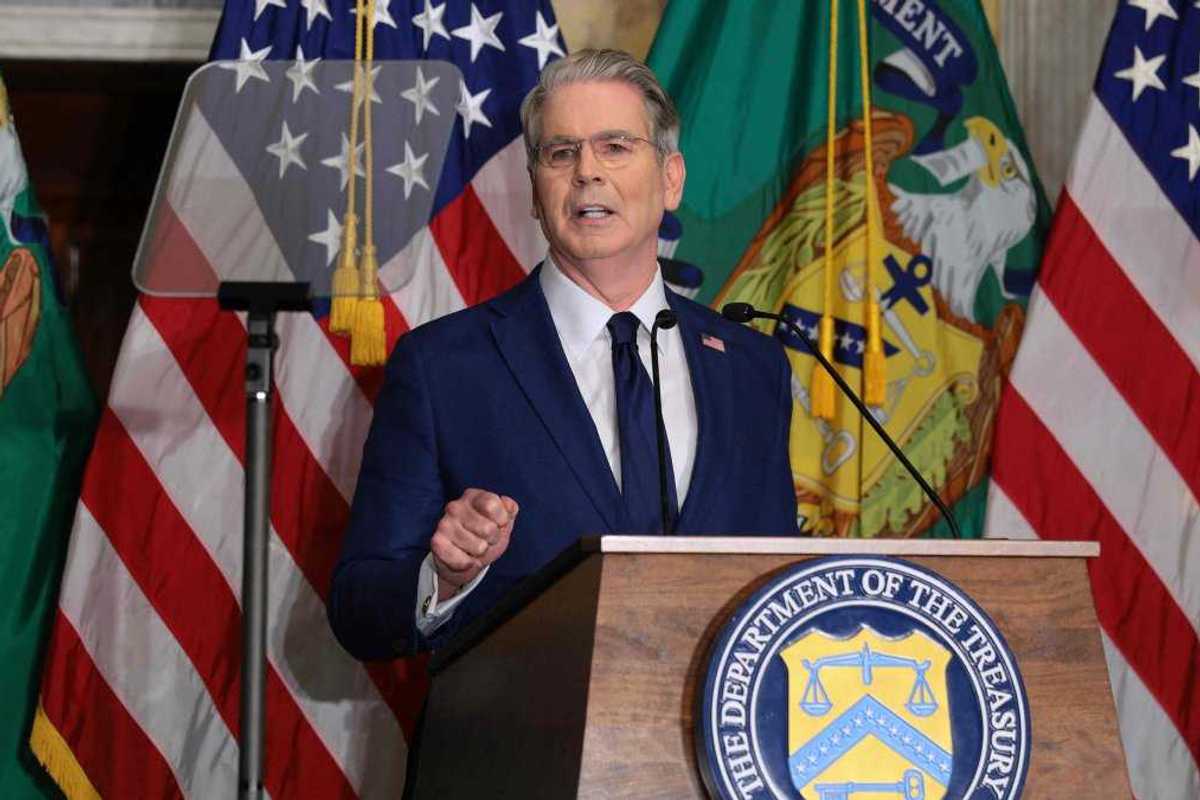
U.S. Treasury Secretary Scott Bessent announces a new set of sanctions against Iran, describing them as "an economic D-Day," in the Cash Room at the Treasury Department in Washington, U.S., Aug. 24, 2026.
AFP
US Treasury Secretary Scott Bessent on Monday laid out plans for the "economic asphyxiation" of Iran, expanding Washington's secondary sanctions threats and warning of dire consequences for countries that do not join the campaign. The announcement comes almost six months into a war on Iran that has ground to a stalemate.
What are the new US sanctions on Iran?
The Treasury Department said expanded secondary sanctions would target Iran's digital assets, technology, gold, aviation and shipping sectors. Bessent vowed that any entity facilitating money laundering on behalf of Iran would be removed from the US dollar system, though his announcement named no specific countries beyond Iran and no timelines.
What did Bessent say about economic asphyxiation of Iran?
"Around the globe, our objective is to sever every economic lifeline that sustains this tyrannical regime until Tehran stands alone," Bessent told a press conference. He said countries not joining US sanctions would share in Iran's isolation, and noted that President Donald Trump was calling world leaders asking them to stop interactions with Tehran. Asked whether Chinese banks would be targeted, Bessent said no one is above the reach of US sanctions.
How has Iran responded to the new US sanctions?
Deputy Foreign Minister Kazem Gharibabadi said the latest US threats were an admission of military defeat, warning countries against aiding Washington. He questioned why, if Washington had achieved its goals, there was a need for what he called the largest financial invasion in history and the mobilization of all US institutions and powers. Iran's parliamentary speaker and chief negotiator Mohammad Bagher Ghalibaf dismissed the threats, saying on X that the United States is not economically positioned to further restrict its relations with other countries.
Why is the Strait of Hormuz central to the Iran war?
The US and Israel linked the launch of their war in February to Iran's nuclear program, but the focus since the early days of fighting has shifted to the Strait of Hormuz, a vital route for global oil and gas supplies. Tehran continues to blockade the strait, which it did not restrict before the war, driving up global inflation and heaping domestic pressure on Trump ahead of November's mid-term elections.
How have sanctions affected Iran's oil exports?
Iran has weathered decades of crushing international sanctions, and before the war it continued exporting millions of barrels of oil, mostly to China, evading sanctions through complex international financial networks. The US naval blockade has since driven Iran's oil exports via the Strait of Hormuz down from two million barrels a day before the war to just 0.4 million by mid-August, according to maritime tracker Kpler.
How are ordinary Iranians affected by the economic pressure?
For ordinary Iranians, the standoff is likely to bring further economic pain after years of rampant inflation, which fueled massive anti-government protests in December and January. Sarah Hassanbeigi, a 32-year-old pharmacist in Tehran, said she does not think people can take much more of the pressure.
What diplomatic efforts are underway to end the Iran war?
Iranian President Masoud Pezeshkian, considered a relative moderate, said last week that Tehran should bring the war to an end now while in a position of power. That followed Supreme Leader Mojtaba Khamenei appointing hardliners to key security positions. Throughout the war, mediators have pushed diplomatic efforts seeking a negotiated end to the conflict.
On Monday, Pakistan's army chief Asim Munir visited Iran and met with Ghalibaf. Islamabad led mediation in talks that helped secure an April ceasefire that later fell apart, and remains a major trading partner of Iran, potentially exposing it to the new sanctions. Oman's foreign minister was due in Iran on Tuesday, as Muscat and Tehran seek a deal on regulating passage through Hormuz.


Comments
See what people are discussing