

Pakistan's weekly inflation up 8.2%, highest since Nov 2024
The year-on-year increase comes on the back of higher fuel, gas prices

Business Desk
The Business Desk tracks economic trends, market movements, and business developments, offering analysis of both local and global financial news.
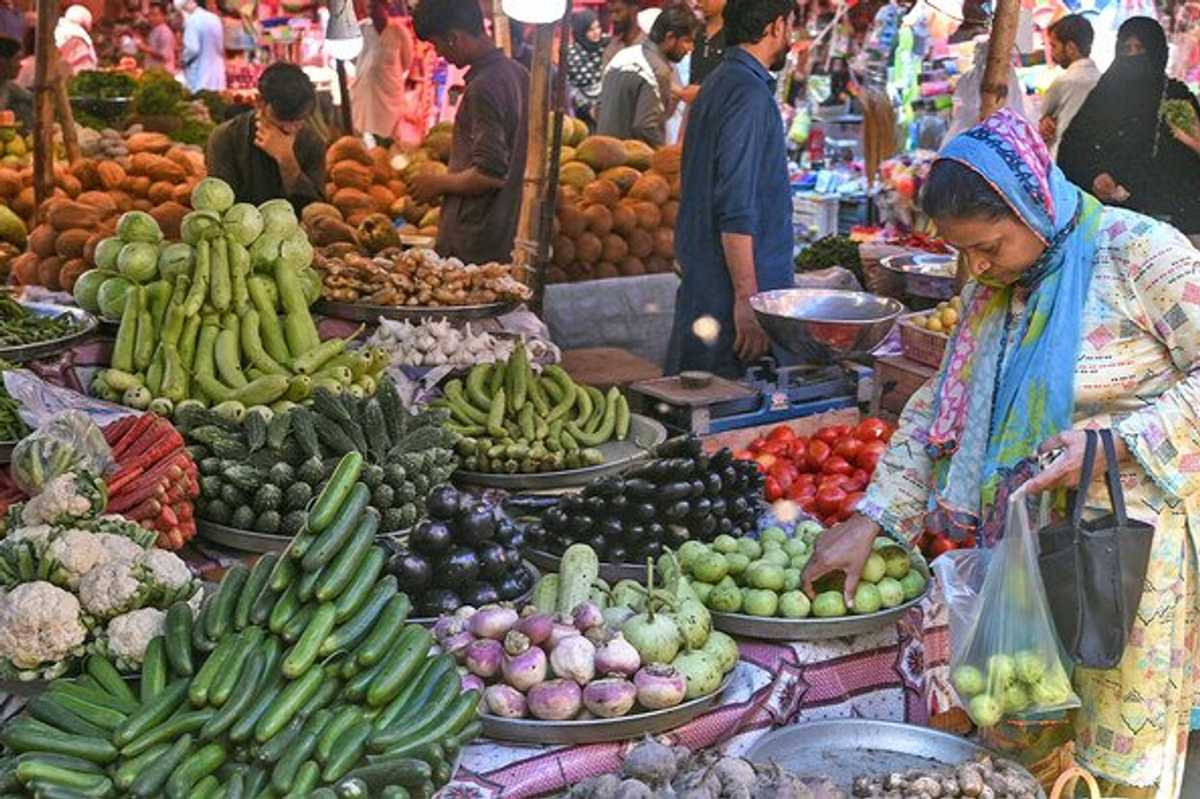
The biggest year-on-year increase was observed in the prices of LPG and fuel
Pakistan's weekly inflation accelerated to 8.24% in the week ending March 26 — the highest reading since November 2024 — as the impact of the fuel price shock reflects into broader inflationary pressures.
On a week-on-week basis, the Sensitive Price Indicator (SPI) surged by 0.97%.
The spike follows the government's decision earlier this month to raise petrol and diesel prices by PKR 55 per liter, with the fuel price shock now fully manifesting in broader inflationary pressures across essential commodities and utility costs.
According to data released by the Pakistan Bureau of Statistics (PBS), the biggest year-on-year increase was observed in the prices of LPG (34.73%), diesel (29.94%), gas (29.85%), wheat flour (25.76%), and petrol (25.75%).
The biggest week-on-week increase was observed in the prices of onions (18.10%), tomatoes (11.38%), LPG (10.05%), chicken (8.70%), and potatoes (8.11%).
The fuel price increase has triggered cascading effects across the economy. Electricity charges jumped 6.11% week-on-week, compounding pressure on household budgets already strained by rising food costs.
Pakistan tracks inflation weekly and monthly. The former is tracked through the SPI and the latter through the Consumer Price Index (CPI).
The SPI, which tracks the prices of 51 essential commodities from 50 markets across 17 cities, is used as a key gauge of short-term inflation trends.
During the week ended March 26, out of 51 items, the prices of 23 items increased, six items decreased, and 22 items remained stable.
In February, the CPI or headline inflation jumped 7% year-on-year, marking the highest level since October 2024. The increase was primarily driven by electricity price hikes after subsidy cuts and revised tariff structures, with the housing, water, electricity, gas, and fuels index rising 9.65% annually.
In early March, the State Bank of Pakistan (SBP) kept the key policy rate unchanged at 10.5% for the second consecutive meeting, citing heightened uncertainty from the Middle East conflict and rising global oil prices. The decision came after the central bank had slashed rates by 1,150 basis points cumulatively since June 2024.
The MPC noted that the conflict in the Middle East has led to a sharp increase in global fuel prices and freight and insurance costs, while also affecting cross-border trade and travel. The central bank projects inflation to largely stay within the 5-7% range in FY26, though the outlook remains subject to risks from volatile international commodity prices, global trade uncertainty, and unanticipated adjustments in domestic administered energy prices.



Comments
See what people are discussing