

Zain Ul Abideen
Senior Producer
Zain Ul Abideen is an experienced digital journalist with over 12 years in the media industry, having held key editorial positions at top news organizations in Pakistan.

Ahmer Rehman
Senior Correspondent
Ahmer Rehman Khan is a experienced Journalist with over 17 years of expertise, specializing in crime and investigative reporting. His career includes serving as the Chief Crime Reporter at Samaa TV, where he led significant coverage of crime events. Prior to that, he held Senior Correspondent roles at major news networks including Geo TV, Dunya TV, Express TV, and Aaj News.
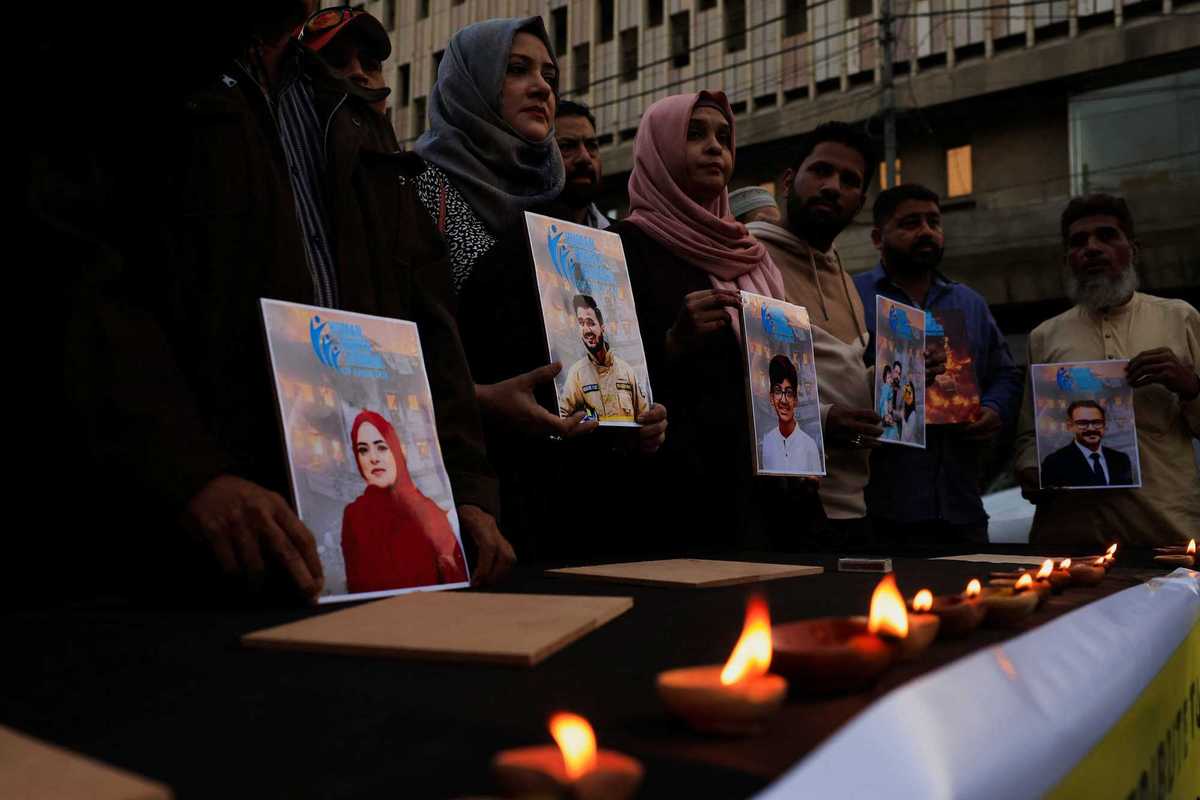
People gather to pay tribute to the victims, following a massive fire that broke out in the Gul Plaza Shopping Mall in Karachi, Pakistan, January 21, 2026.
Reuters
As the death toll from Karachi’s devastating Gul Plaza fire climbs to at least 60, families of the missing are grappling with an agonizing question: Why is the identification of victims taking so long?
Forensic experts say the delay is not due to inaction or lack of capacity, but the brutal realities of fire-related fatalities, where bodies arrive late, remain incomplete and are often burned beyond recognition.
The fire erupted late Saturday night at Gul Plaza on MA Jinnah Road and burned for several hours. Parts of the ground-plus-three-storey building collapsed, trapping dozens inside. Rescue teams recovered bodies gradually over several days, many from deep inside the debris.
That timeline alone complicates identification, according to Dr Rohina Hassan, a former police surgeon in the Sindh Police.
“Identification is a process that begins with when bodies actually reach the hospital,” Hassan told Nukta. “The incident may have happened on Saturday, but bodies are recovered gradually. Until they arrive and complete the full medico-legal process, identification cannot be finalized.”
Bodies do not arrive all at once
In mass-casualty fires, recovery is staggered. At Gul Plaza, dozens of bodies were discovered days later, including at least 30 from a single crockery shop on the mezzanine floor.
That creates uncertainty for families and investigators alike.
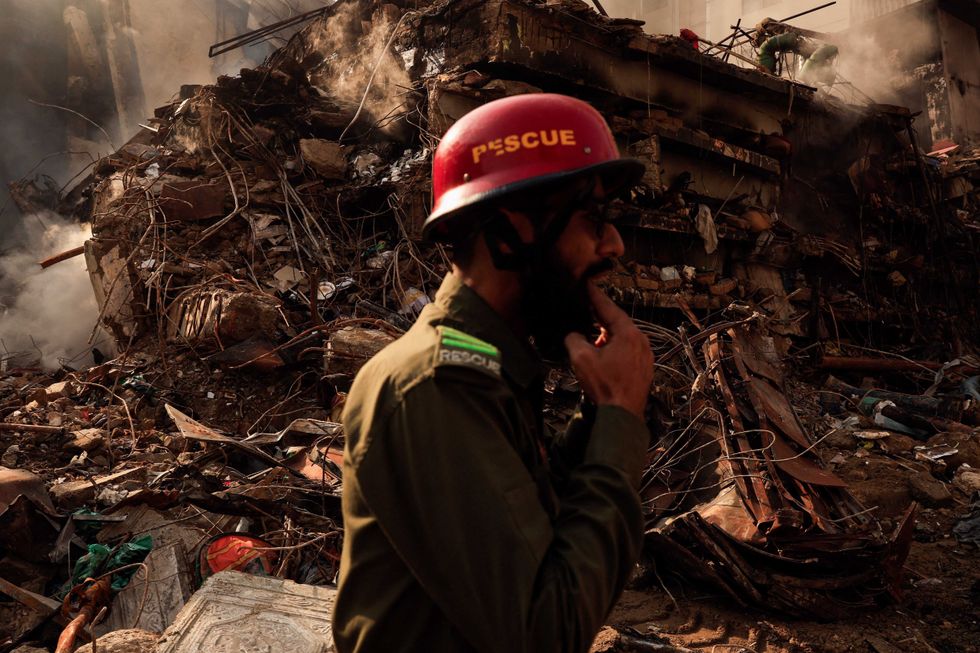 A rescue worker whistles to call his team member (not pictured) as he walks past the collapsed floors, following a massive fire that broke out at the Gul Plaza Shopping Mall, in Karachi, Pakistan, January 21, 2026. Reuters
“If 30 bodies have arrived so far, we don’t know which family each body belongs to,” Hassan said. “You cannot assume that the remains recovered so far correspond to specific missing persons.”
Doctors cannot identify bodies independently. Police must first submit inquest papers detailing where and when the remains were recovered. Only then does the forensic process formally begin.
When fire destroys faces, DNA becomes the last option
In many Gul Plaza cases, visual identification is impossible.
“When a body is 100% burnt and features and clothes are destroyed, we move to DNA,” Hassan said.
Extreme heat often eliminates hair, skin and soft tissue. In such cases, forensic teams extract samples from bones that best preserve genetic material — typically the clavicle or long bones.
The clavicle, a small curved bone near the neck, is particularly useful. Bone marrow inside long bones can also contain DNA that survives heat better than blood or muscle.
But even that method has limits.
“Fire degrades DNA,” Hassan explained. “We need cells that are relatively unharmed. If bones are too badly burnt, DNA extraction may fail.”
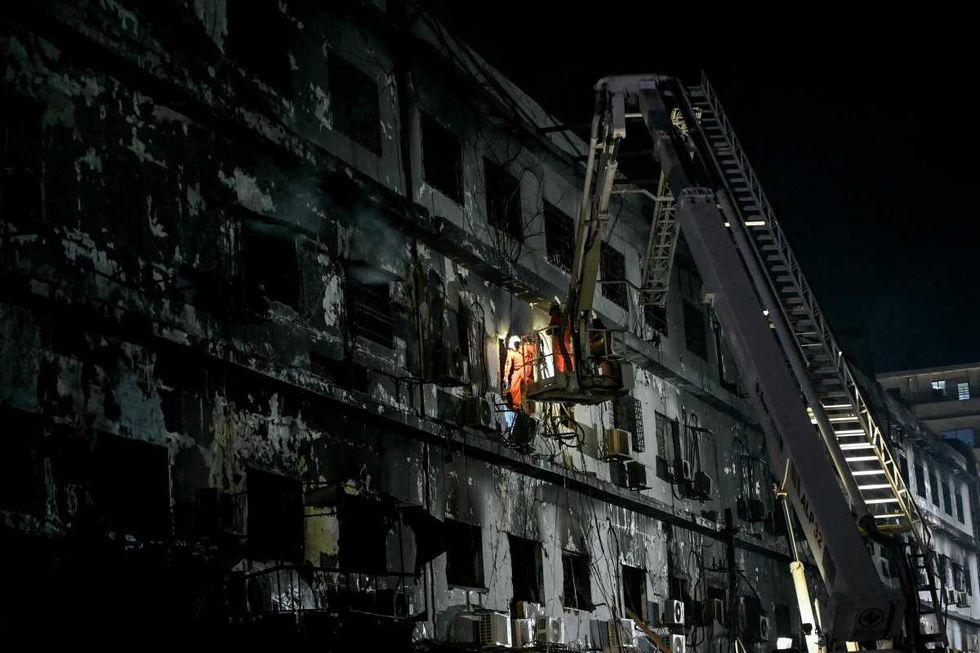 Rescue workers search for bodies among the rubble after a massive fire broke out at a shopping mall in Karachi on January 21, 2026.AFP
Samples are sealed and handed to investigating officers, who transport them to forensic laboratories. Often, officers wait to collect multiple samples before submitting them together, adding further time.
In some cases, laboratories reject samples because the bone is too damaged, forcing doctors to reopen remains stored in cold storage and attempt extraction again.
“It is a very time-consuming process,” Hassan said. “This is not like a blood test where you get results the same day.”
Pugilistic posture and fragmented remains
Fire also alters the human body in ways that complicate forensic work.
Burned bodies often assume what experts call a “pugilistic appearance,” where limbs contract toward the torso due to heat-induced protein changes. This can obscure injuries, gender markers and identifying features.
In the Gul Plaza fire, many remains are fragmented rather than intact.
Sindh Police Surgeon Dr Sumaiyya Syed said that while some bodies were identifiable early on, later recoveries have been far more challenging.
“On January 18, we received the first bodies,” she told Nukta. “Six were identifiable and were handed over immediately.”
Another body was identified through a CNIC, while a woman’s remains were identified through a locket bearing the name “Misbah.”
“But now we are getting fragmented bony remains, from which DNA extraction becomes very difficult,” Syed said.
She said 45 sets of remains have reached the department so far, with DNA samples taken wherever possible and dispatched immediately to laboratories.
Families are part of the process
DNA identification cannot proceed without family cooperation.
“For DNA matching, families must come forward and provide blood samples,” Hassan said. “Their participation is essential.”
Dental records and distinctive features can sometimes help. Teeth often withstand heat better than other body parts, making dental implants, silver or gold teeth valuable identifiers.
But when neither dental markers nor viable DNA survive, identification may never be completed.
Syed pointed to the example of the 9/11 attacks in the United States.
“Even after all these years, about 40% of victims remain unidentified,” she said. “The fire there was intense, and it is the same here. Heat destroys DNA.”
No fixed timeline in mass fires
Experts caution against expecting quick closure.
“In such incidents, timelines cannot be fixed,” Hassan said, citing past Karachi factory fires where identification of hundreds of victims took weeks or longer.
The Gul Plaza fire, now among the deadliest in Karachi in a decade, follows a grim pattern in a city that recorded around 2,400 fire incidents in 2025 alone.
For now, forensic teams say they will continue working through every possible method, even when success is uncertain.
“We have not given up hope,” Syed said. “We are doing everything within our capacity to identify every possible victim.”
For families waiting outside morgues and hospitals, that process may feel unbearably slow. For forensic experts, it is a race against science, fire damage and time — one that cannot be rushed without risking irreversible errors.



Comments
See what people are discussing