

In town hit by wildfire, PM says UK must 'face up to climate change'
UK PM Andy Burnham says Britain must face up to climate change after wildfire destroys homes in Stourbridge

News Desk
The News Desk provides timely and factual coverage of national and international events, with an emphasis on accuracy and clarity.
Reuters
British Prime Minister Andy Burnham said Friday the UK has to face up to the changing climate and accelerate its move to clean energy.
He spoke while visiting Stourbridge, a central England town where a wildfire gutted homes, after the West Midlands Fire Service reported 19 houses destroyed and 18 damaged.
What did the UK prime minister say about climate change?
Burnham said Britain must face up to its changing climate and accelerate the transition to clean energy following the wildfire in Stourbridge. "I've never seen scenes like this in Britain, where you just see a whole house gutted, smouldering," he said. He added that denying the country's situation was pointless and stressed the need for more clean energy.
Meeting firefighters after viewing the scene, Burnham appeared shocked and said the "combustible situation" was linked to climate change. He described Britain as "a tinderbox," citing 37 fires smouldering around the country at the time. The government introduced a ban on selling disposable barbecue equipment, and Burnham warned against lighting any fires outdoors.
How much damage did the Stourbridge wildfire cause?
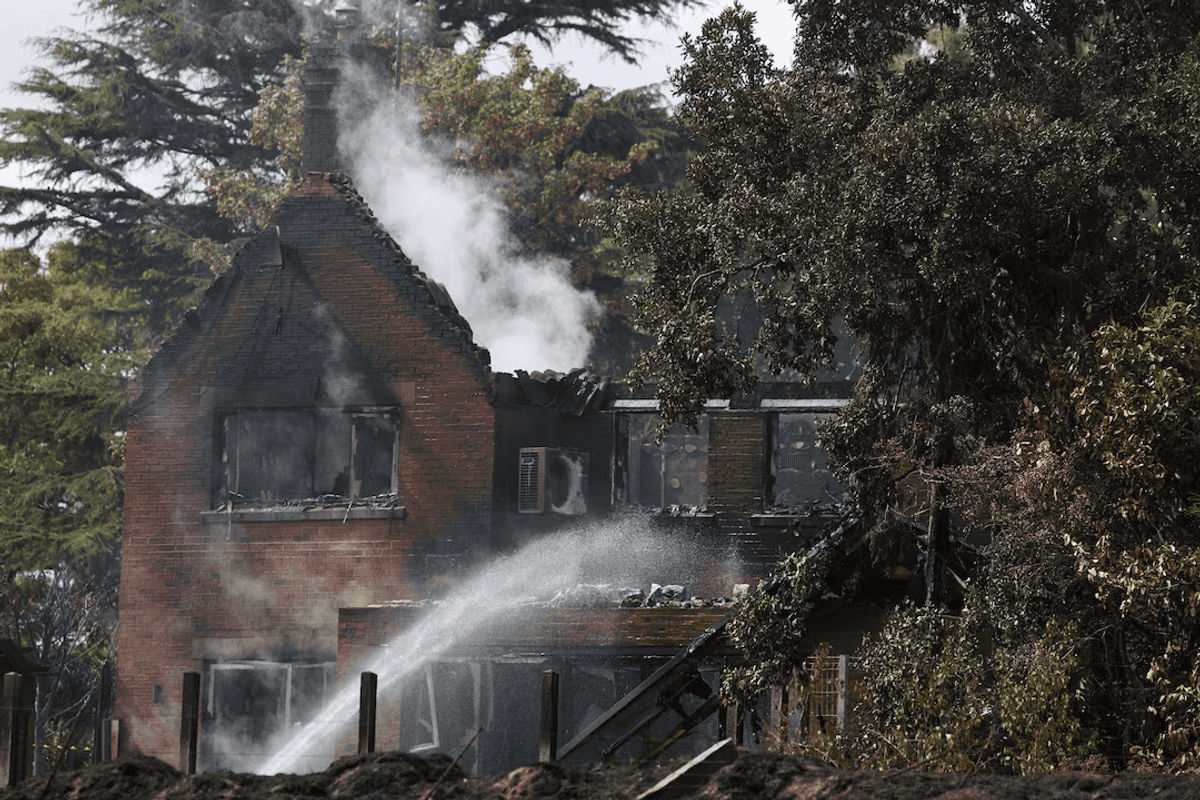
In Stourbridge, near Birmingham, smoke rose from smouldering ruins of several roofless houses as firefighters sprayed water on the wreckage Friday, an AFP photographer saw. The West Midlands Fire Service confirmed 19 houses were completely destroyed and 18 others damaged in the town. Residents were evacuated and treated for smoke inhalation after the fire spread on Thursday, the UK's hottest day of the year so far.
Three firefighters were hospitalised after fighting the blaze in Stourbridge, where the fire service said Friday morning it was still extinguishing hotspots in open grassland, along a railway line and in gardens. At least six properties in the town were affected, and emergency services said some of the blazes were set deliberately in grasslands before spreading.
How many people were hurt by wildfires in the West Midlands?
As dry conditions sparked multiple wildfires, six other firefighters farther north in Staffordshire were taken to hospital suffering from smoke inhalation and heat exhaustion, the local fire service said. The ambulance service covering the West Midlands region, including Stourbridge and Staffordshire, said it treated 68 people with symptoms such as smoke inhalation on Thursday, 25 of whom were hospitalized.
The West Midlands region, alongside nearly three quarters of England, is in drought after weeks of high temperatures and scant rainfall, increasing the risk of fires. Chief fire officer Simon Tuhill called it "one of the most significant incidents that West Midlands Fire Service has ever attended," blaming the rapid spread on tinder dry conditions and describing the devastation as extensive.
What is the government doing to respond to the wildfires?
Burnham promised to convene a summit with fire services, acknowledging the government had not supplied enough resources to deal with such incidents. He also revealed plans to commission firefighting planes of the type used to douse flames in Europe and the United States. So far this summer, firefighters have mainly battled wildfires in rural areas and moorland across the country.
Phil Garrigan, head of the National Fire Chiefs Council, told BBC Radio 4 it had been "a particularly difficult, busy period" for the fire and rescue service, which has been under significant pressure.
"Firefighters have been on the front line of climate change for a number of years. They're doing their absolute best to protect communities and properties," he said. Fire chiefs warned investment was falling short and urged the government to boost support to keep pace with growing wildfire risks. "The risk is growing faster than our collective capacity to respond. Climate change, prolonged periods of extreme heat and changing land use are creating more frequent, larger and more complex wildfires," the NFCC said.





Comments
See what people are discussing