

'Are we bound by the FCC order?': SC raises key jurisdictional question over Imran Khan case
Three-member Supreme Court bench questioned whether it is legally bound by the Federal Constitutional Court's order to transfer case records of Imran Khan, granting the Attorney General two weeks to provide constitutional guidance

Aamir Abbasi
Editor, Islamabad
Aamir; a journalist with 15 years of experience, working in Newspaper, TV and Digital Media. Worked in Field, covered Big Legal Constitutional and Political Events in Pakistan since 2009 with Pakistan’s Top Media Organizations. Graduate of Quaid I Azam University Islamabad.
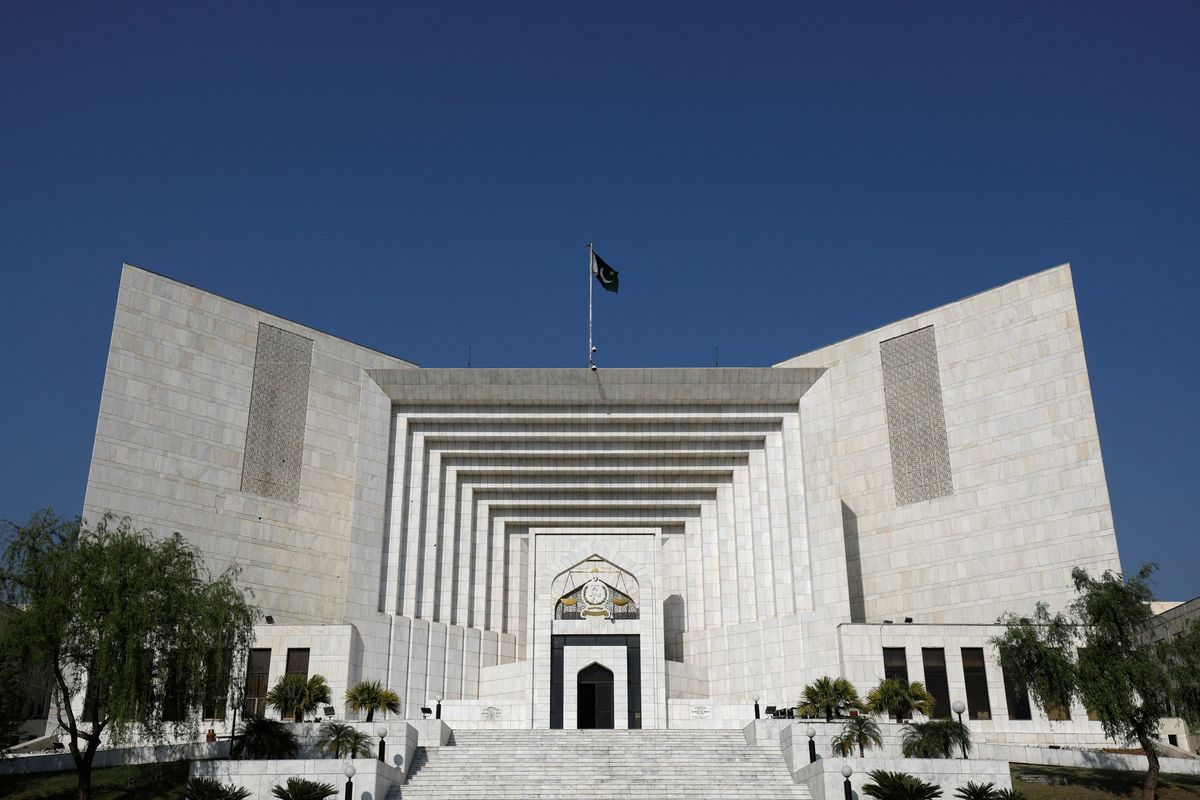
A three-member bench of the Supreme Court of Pakistan raised fundamental questions regarding judicial authority on Wednesday, asking whether the apex court is legally bound by orders issued by the newly established Federal Constitutional Court (FCC).
The inquiry was raised during proceedings led by Justice Shahid Waheed after the FCC directed that records of pending petitions regarding former Prime Minister Imran Khan's hospital transfer be moved to its docket.
What jurisdictional questions did the Supreme Court raise regarding the FCC?
The Supreme Court bench, comprising Justice Shahid Waheed, Justice Naeem Akhtar Afghan, and Justice Ishtiaq Ibrahim, addressed the unprecedented clash between Pakistan's two highest judicial bodies. Justice Waheed directly questioned the legal authority and intent behind the FCC's transfer directive, asking in court, "Are we bound by the FCC order?"
Justice Waheed emphasized that every criminal case fundamentally involves the constitutional right to a fair trial, questioning whether administrative directives from the FCC could override Supreme Court judgments based on the Quran and Sunnah.
Attorney General Mansoor Usman Awan submitted that while the FCC evaluates specific constitutional provisions under Article 175E, broader criminal matters, contempt proceedings, and Islamic jurisprudence remain under the Supreme Court's jurisdiction. The Attorney General acknowledged that the jurisdictional impasse between the two superior forums is entirely "unprecedented" and requested a two-week adjournment to prepare a formal legal submission.
How did the bench respond to non-compliance over Imran Khan's hospital transfer?
In addition to the constitutional debate, the Supreme Court expressed severe outrage over government non-compliance regarding its August 18 directive to move incarcerated PTI founder Imran Khan from Rawalpindi's Adiala Jail to Shifa International Hospital for medical treatment.
Defense counsel Salman Akram Raja informed the bench that state authorities have continued to defy explicit court orders, while PTI advocate Uzma Khan noted that family access remains severely restricted to only one sister. Citing the initial absence of federal law officers and jail administration at the start of the session, Justice Waheed questioned whether arrest warrants should be issued for the Adiala Jail superintendent before granting the government's requested 14-day adjournment.
The Supreme Court adjourned the hearing for two weeks, directing the Attorney General to present a comprehensive brief on the limits of FCC jurisdiction and judicial compliance.





Comments
See what people are discussing