

Bilal Bin Saqib discusses blockchain and Islamic finance at Harvard conference
PVARA chairman calls for a "Golden Age 2.0" built on knowledge production rather than technology adoption alone

Business Desk
The Business Desk tracks economic trends, market movements, and business developments, offering analysis of both local and global financial news.
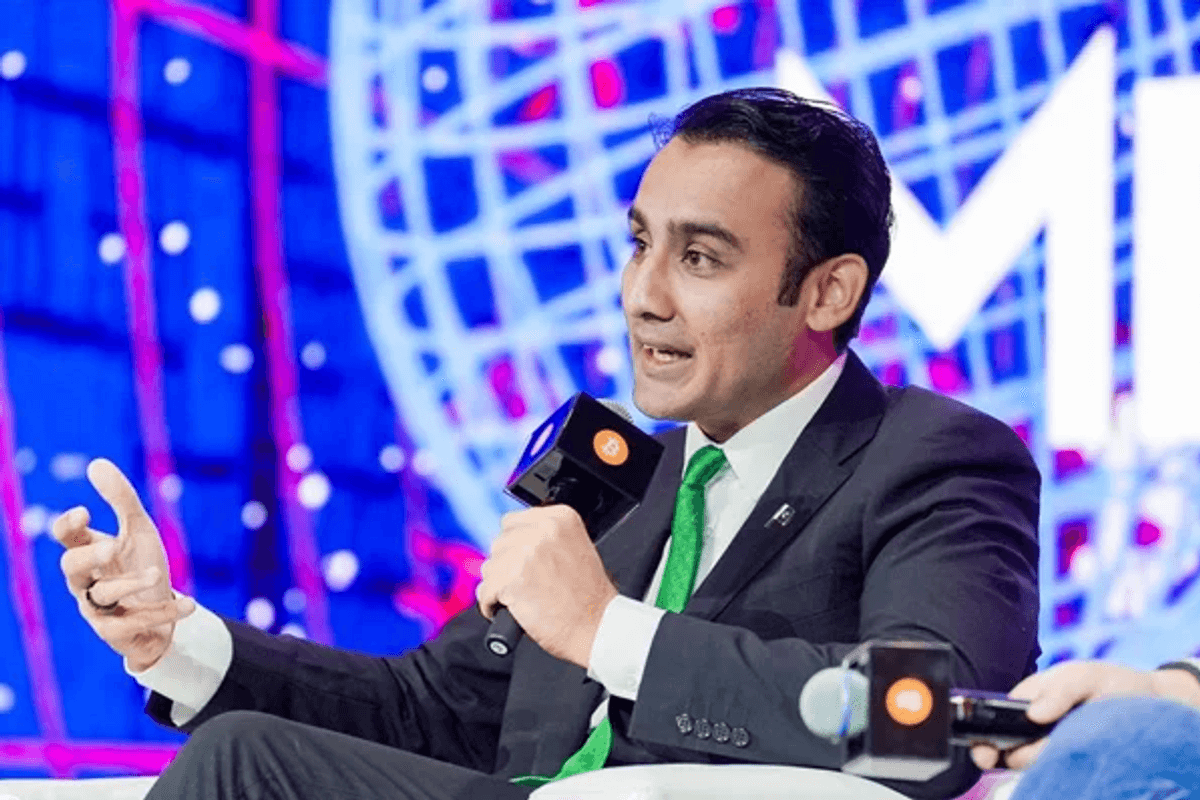
Bilal Bin Saqib, Minister of State and Chairman of Pakistan's Virtual Assets Regulatory Authority (PVARA), participated in a keynote conversation at the Harvard Islamic Finance Conference at Harvard University on September 29.
The session, titled "The Future of Blockchain and Islamic Finance," featured a conversation with Imran Sayeed, Senior Lecturer at the MIT Sloan School of Management, examining the relationship between digital assets, regulatory innovation and Shariah-compliant financial frameworks.
Bin Saqib connected the intellectual legacy of the Islamic Golden Age to contemporary questions about research, enterprise and technological capability, framing the idea of a "Golden Age 2.0." He distinguished between simply adopting technology and developing the knowledge, skills and institutions needed to create with it.
"We honour the past through what we create, not only through what we celebrate," he said. "A new golden age is not a return to the past. It is a return to producing knowledge, building capability and solving human problems."
The conversation explored how universities, financial institutions, entrepreneurs and qualified Shariah scholars could collaborate on practical applications of emerging technologies, including cross-border payments, business financing and digital representations of financial assets, with a focus on whether such solutions improve affordability, accessibility and reliability for users.
Drawing on his work in Pakistan, Bin Saqib discussed the shift from promoting technological possibilities to overseeing the responsibilities that come with financial services. Pakistan's Virtual Assets Act, 2026 provides the statutory framework for PVARA's licensing and supervisory functions, while the authority's published application pathways cover regulatory sandbox participation, no-objection certificates and licences.
He distinguished between establishing a regulatory framework and the ongoing work of implementation, including supervision, customer protection and institutional capacity.
"The rulebook is a beginning. The public experience is the test," he said. "The question is not simply whether a technology works, but whether people can use it with clear rights, understandable risks and somewhere to turn when things go wrong."
For the Islamic finance audience, the discussion examined how regulatory oversight and Shariah expertise can inform product development while retaining their distinct responsibilities, with a focus on both the opportunities and challenges of building Shariah-compliant frameworks for virtual assets.
Addressing students and young professionals, Bin Saqib discussed practical avenues for collaboration across Muslim societies, including joint research, multidisciplinary teams and supervised testing of financial technologies, framing shared endeavour around measurable contributions rather than technology adoption alone.
"A shared past gives us connection. Shared work gives us direction," he said. "Let unity be something a young researcher can experience, not only something a speaker can describe."
The conference, marking its 29th anniversary, was convened under the theme "Global Finance in Transition: Stability, Pluralism, and the Role of Islamic Finance." It was organised and sponsored by Harvard University Muslim Alumni and the Harvard Islamic Society.




Comments
See what people are discussing