

China, Pakistan propose five-point plan to de-escalate Middle East tensions
Beijing and Islamabad urge dialogue, warn against attacks on infrastructure and shipping routes
Aamir Abbasi
Editor, Islamabad
Aamir; a journalist with 15 years of experience, working in Newspaper, TV and Digital Media. Worked in Field, covered Big Legal Constitutional and Political Events in Pakistan since 2009 with Pakistan’s Top Media Organizations. Graduate of Quaid I Azam University Islamabad.
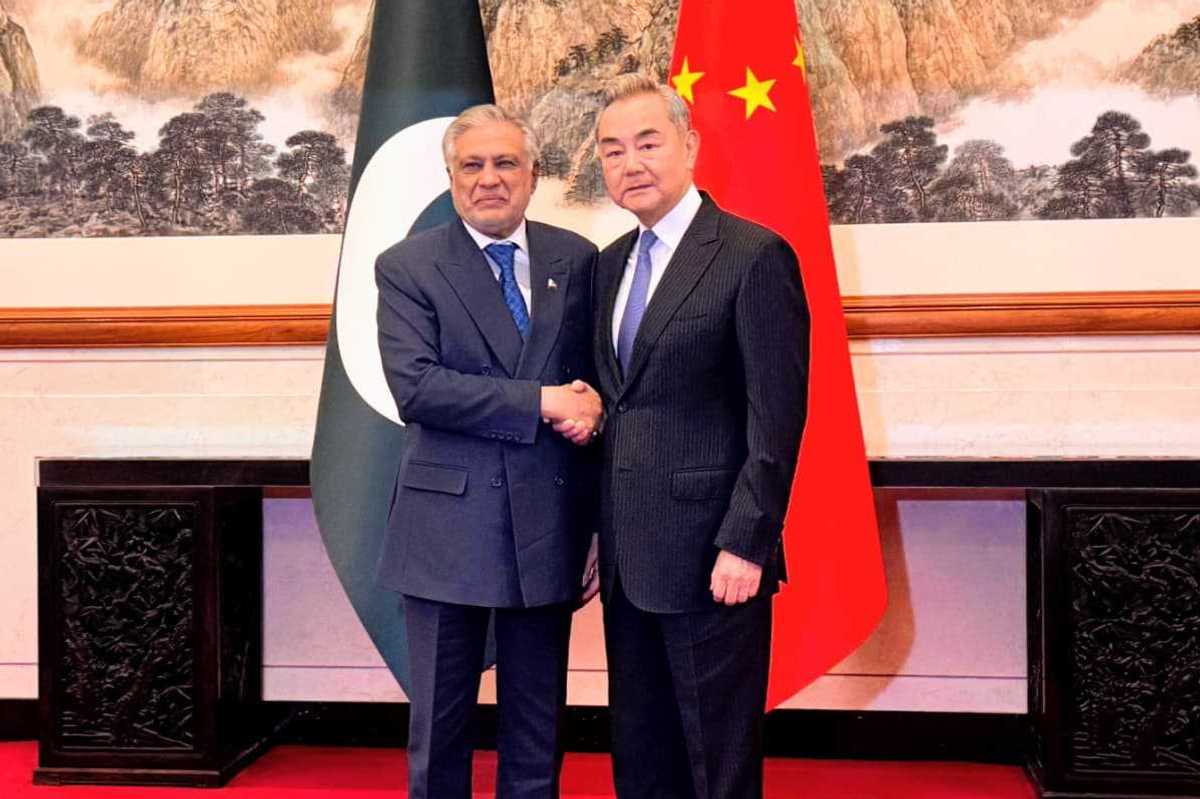
Pakistan and China call for an immediate cessation of hostilities and urge all parties to prevent further escalation.
Courtesy: X/ @ForeignOfficePk
China and Pakistan have jointly proposed a five-point initiative aimed at restoring peace and stability in the Gulf and Middle East, Pakistan’s Ministry of Foreign Affairs said Tuesday after a high-level meeting in Beijing.
The proposal followed talks between Chinese Foreign Minister Wang Yi and Pakistan’s Deputy Prime Minister and Foreign Minister Ishaq Dar, who arrived in Beijing earlier in the day on an official visit at China’s invitation.
🔊PR No.8️⃣5️⃣/2️⃣0️⃣2️⃣6️⃣
Five-Point Initiative of China and Pakistan for Restoring Peace and Stability in the Gulf and Middle East Region (Beijing, March 31,2026)
🔗⬇️ pic.twitter.com/E3qOU2VhjC
— Ministry of Foreign Affairs - Pakistan (@ForeignOfficePk) March 31, 2026
Call for ceasefire and dialogue
According to an official statement by Pakistan's Ministry of Foreign Affairs, both sides called for an immediate cessation of hostilities and urged all parties to prevent further escalation.
They stressed the need for unhindered humanitarian assistance to conflict-affected areas and said diplomacy remains the only viable path to resolving the crisis.
Sovereignty and civilian protection emphasized
The joint initiative underscored the importance of safeguarding the sovereignty, territorial integrity and security of Iran and other Gulf states.
Both countries urged all stakeholders to begin peace talks and refrain from the use or threat of force.
Deputy Prime Minister/ Foreign Minister, Senator Mohammad Ishaq Dar @MIshaqDar50 is received by Foreign Minister of China, Wang Yi at the Diaoytai State Guest House for their bilateral meeting. pic.twitter.com/UU62BIukfT
— Ministry of Foreign Affairs - Pakistan (@ForeignOfficePk) March 31, 2026
They also called for the protection of civilians and non-military infrastructure, emphasizing adherence to international humanitarian law. The statement warned against attacks on critical facilities, including energy installations, desalination plants, power infrastructure and peaceful nuclear sites.
Focus on shipping routes and global trade
China and Pakistan highlighted concerns over the security of global shipping routes, particularly the Strait of Hormuz, a key corridor for global trade and energy supplies.
They called for ensuring the safety of vessels and crews and for the swift restoration of normal maritime traffic through the waterway.
Concerns have grown internationally about potential disruptions to maritime flows amid ongoing fighting in the region.
Support for UN-led multilateral framework
The two countries reaffirmed the central role of the United Nations in addressing the crisis and called for “true multilateralism.”
They urged the international community to work toward a comprehensive and lasting peace framework in line with the UN Charter and international law.
China described its relationship with Pakistan as an “all-weather” strategic partnership and said both sides would coordinate closely on regional security issues.
Rising tensions and diplomatic efforts
Dar’s visit comes amid heightened tensions following U.S.-Israeli strikes on Iran on Feb. 28 that triggered ongoing fighting.
On Sunday, Dar hosted counterparts from Saudi Arabia, Egypt and Turkey in Islamabad for talks aimed at ending the conflict, according to Pakistani officials.
Pakistan has said it is ready to host “meaningful talks” between the United States and Iran, while both Islamabad and Beijing have called for de-escalation.
China, a key partner of Iran, has not announced any military assistance to Tehran and has repeatedly called for a ceasefire.
Iran has not acknowledged official talks with Washington but conveyed a response to a reported 15-point plan by U.S. President Donald Trump through Islamabad, according to an anonymous source cited by Iran’s Tasnim news agency.



Comments
See what people are discussing