


News Desk
The News Desk provides timely and factual coverage of national and international events, with an emphasis on accuracy and clarity.
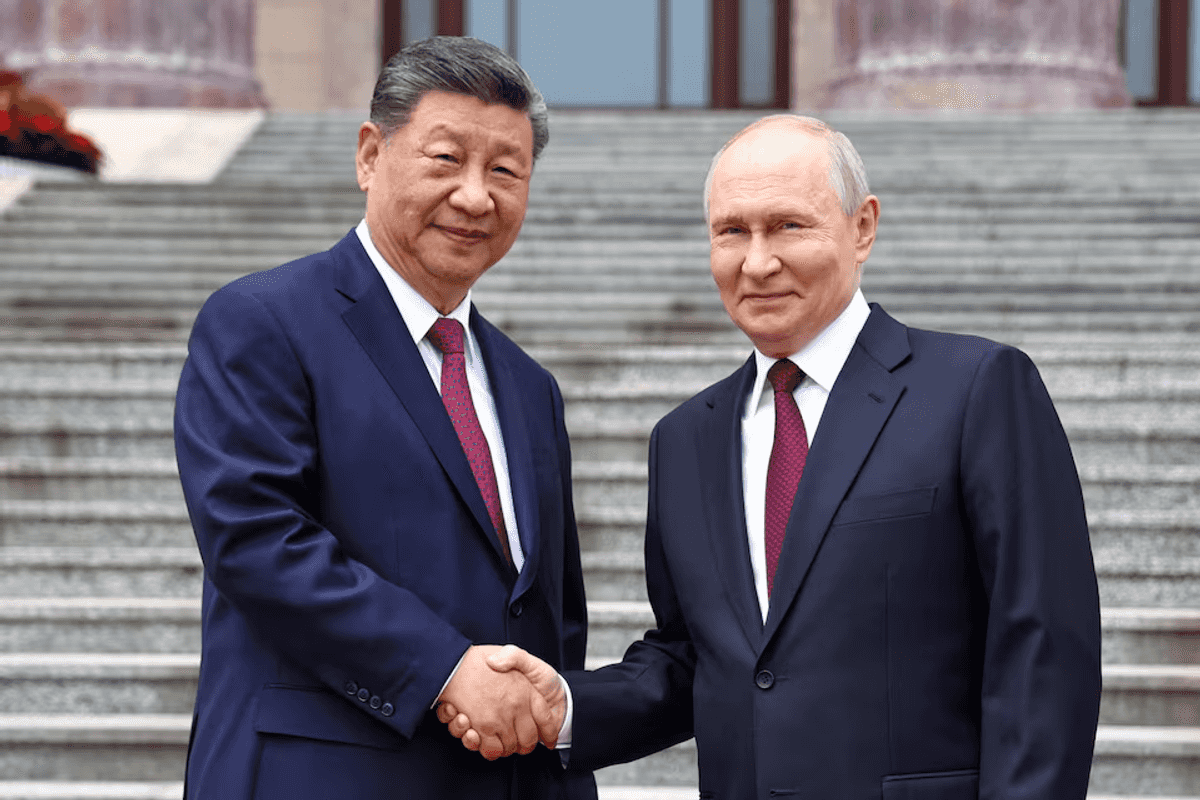
Russian President Vladimir Putin shakes hands with Chinese President Xi Jinping during a welcoming ceremony at the Great Hall of the People in Beijing, China May 20, 2026.
Reuters
Chinese President Xi Jinping and Russian President Vladimir Putin met in Beijing on Wednesday, praising the depth of their strategic partnership and pushing forward on energy cooperation.
Putin's visit came just days after US President Donald Trump's trip to the Chinese capital, making the summit one of the most closely watched diplomatic meetings of the year. Around 40 documents and a 47-page joint statement are expected to be signed.
What did Xi and Putin agree on at the Beijing summit?
Xi said both countries should focus on long-term strategy and promote a "more just and reasonable" global governance system. Putin described the Russia-China relationship as reaching an "unprecedented level" and said it was helping ensure global stability. He also stressed that Russia remained a reliable energy supplier, particularly amid disruption caused by the conflict in the Middle East.
Xi welcomed Putin with an honour guard and a gun salute at the Great Hall of the People, as children waved Chinese and Russian flags. The formal talks are expected to be followed by an intimate meeting over tea, a setting Xi reserves for leaders he regards highly. Putin also invited Xi to visit Russia next year.
What is the Power of Siberia 2 pipeline and why does it matter?
The Power of Siberia 2 pipeline is a long-planned gas supply route from Russia to China that has been under negotiation for more than a decade. During Putin's last visit in September 2025, Russian gas giant Gazprom said both sides had agreed to move forward with the project. China, however, has said very little publicly about it, and key issues such as gas pricing remain unresolved.
Russia is pushing for progress on the pipeline deal, and energy supply shortages linked to the Iran conflict may strengthen Moscow's case for securing a long-term supply agreement. Beijing, however, may prefer to maintain its supply diversification strategy rather than commit heavily to Russian gas. Negotiations could still take years.
China remains the largest buyer of Russian oil, covering both pipeline supplies and sea-borne shipments. Putin acknowledged at the summit that bilateral trade had dipped last year and signalled a need to reverse that trend. Russia depends heavily on Chinese trade as an economic lifeline while Western sanctions continue to weigh on its economy.
How does the Putin summit compare to Trump's recent Beijing visit?
The back-to-back summits have drawn inevitable comparisons. When Xi hosted Putin, the two leaders are expected to share an informal tea in Zhongnanhai, the former imperial garden housing the Communist Party's offices, mirroring a similar outdoor meeting the two held in May 2024. Trump's visit last week included a stroll through a secret garden and a tour of the Temple of Heaven, which observers described as more choreographed.
Kremlin spokesman Dmitry Peskov dismissed the comparisons, saying people should focus on the content of the visits rather than the ceremony. China sent its own signal about its priorities on the same day: its commerce ministry confirmed a purchase of 200 Boeing jets announced after the Trump-Xi summit. Beijing also said it would push for an extension of its trade truce with the US and seek reciprocal tariff cuts on $30 billion or more of goods each.
What does the China-Russia partnership mean for global order?
The so-called "no limits" partnership between China and Russia has deepened since the West imposed sanctions over Russia's war in Ukraine. The Kremlin described its expectations for the visit as "serious," with a signing ceremony, a banquet and a joint statement all planned. Patricia Kim, a foreign policy fellow at the Brookings Institution in Washington, said the summit's symbolism would carry weight regardless of the specific substance of agreements reached.
"It would reinforce the message that the China-Russia partnership remains strong, institutionalized, and coordinated across a broad range of strategic issues," Kim said. Xi has previously described Putin as his "best and most intimate friend," while Putin has called Xi a "dear friend." The depth of that personal relationship continues to underpin one of the most consequential bilateral partnerships in contemporary geopolitics.



Comments
See what people are discussing