

Combined China-Nepal flood death toll surpasses 1,000 as tunnel rescue efforts face grim odds
The total death toll from the Himalayan glacial outburst flood passed 1,003 on Tuesday, September 1, 2026, as search teams worked desperately to reach nearly 100 workers trapped in flooded hydroelectric tunnels across northern Nepal

News Desk
The News Desk provides timely and factual coverage of national and international events, with an emphasis on accuracy and clarity.
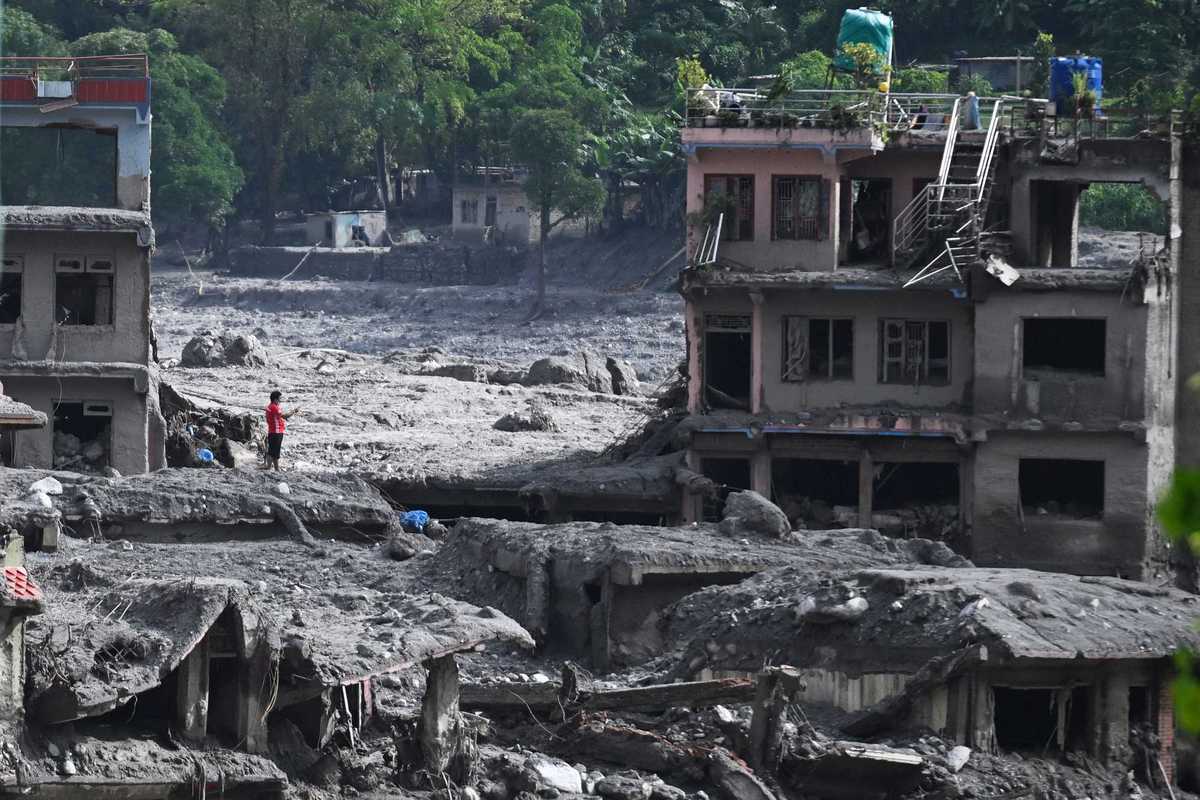
People search for usable in the ruins of flash floods in Nepal's Nuwakot district on September 1, 2026.
AFP
The combined death toll from last week's catastrophic Himalayan glacial flood crossed the 1,000 mark on Tuesday, as rescue operations across Nepal and China's Tibet region transitioned into high-risk recovery missions, according to the BBC.
CNN reports Emergency crews, backed by military engineering units, concentrated their efforts on subterranean hydroelectric project tunnels where dozens of construction workers remain cut off by dense glacial sludge and mountain debris.
How are rescue teams addressing the hydropower tunnel crisis?
Nepali Army spokesman Raja Ram Basnet confirmed that specialized military personnel are utilizing heavy drilling equipment and controlled explosives to clear blocked access shafts at major hydroelectric installations, including sites along the Trishuli River corridor. Approximately 100 workers remain unaccounted for inside deep subterranean passages. However, rescue teams entering freed sections have recovered only deceased victims as water and mud filled the subterranean infrastructure.
According to the BBC, overall casualties stand at 1,003 fatalities—comprising 987 confirmed dead in Nepal and 16 in Tibet. Furthermore, at least 17 bodies have been recovered far downstream in neighboring India after being carried along swollen river channels. Authorities in Kathmandu noted that overflowing morgues have forced emergency health officials to conduct mass burials after extracting DNA samples to enable future victim identification.
What is the scale of missing persons, and how are authorities responding?
Disaster management agencies report that 4,462 people remain missing across the border region, including 3,916 in Nepal and 546 in China's Tibet Autonomous Region. The missing list includes 844 foreign nationals from over 30 countries, consisting of high-altitude trekkers, international tourists, and Hindu pilgrims traveling to Mount Kailash.
In Tibet, Chinese state media reported that over 2,000 emergency personnel held a formal memorial service on Tuesday while continuing road clearance toward the isolated border port of Gyirong. Meanwhile, exile advocacy groups, such as the International Campaign for Tibet, called for independent verification of casualty figures in Chinese-controlled territory.
Prime Minister Balendra Shah reiterated demands for global climate accountability, stating that Nepal—which contributes minimally to global carbon emissions—is bearing the fatal brunt of climate-driven glacial instability in the Himalayas. Early government estimates indicate that restoring shattered transportation links, power grids, and local communities will require billions of dollars in foreign financial and engineering support.




Comments
See what people are discussing