

Debate erupts in US over Israel’s role in Iran conflict
Kamran Khan says central question now circulating in Washington is whether the conflict represents an American decision or one shaped by Israeli strategy and pressure

News Desk
The News Desk provides timely and factual coverage of national and international events, with an emphasis on accuracy and clarity.
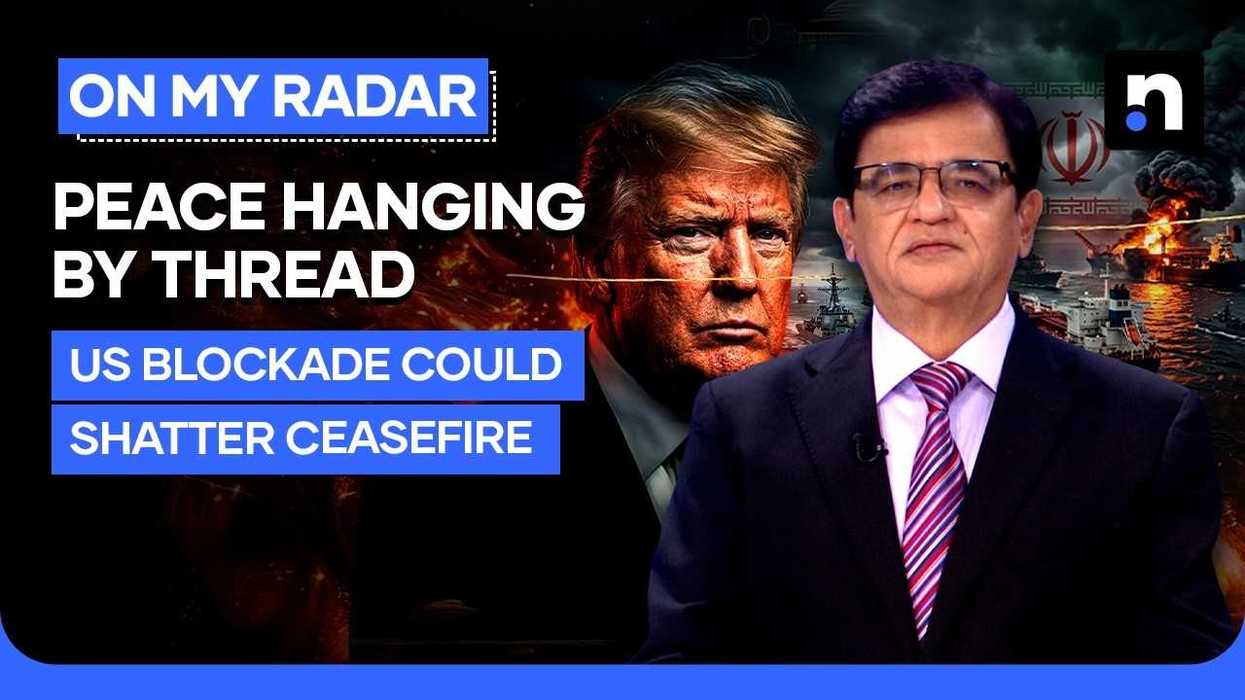
A political debate has erupted in the United States over Israel’s role in the Iran conflict, with lawmakers, analysts and media figures questioning whether Washington entered the war independently or was pushed into it through external influence, according to remarks aired by Kamran Khan on his “On My Radar” program.
Khan said the central question now circulating in Washington is whether the conflict represents an American decision or one shaped by Israeli strategy and pressure.
The New York Times, as referenced in the program, reported that Israeli Prime Minister Benjamin Netanyahu visited the White House seven times in a single year. In a pre-conflict meeting, Netanyahu reportedly convinced President Donald Trump that Iran could be quickly weakened through military strikes and that regime change could follow.
Netanyahu also assured Trump that a public uprising would emerge inside Iran. However, U.S. intelligence agencies reportedly warned that while Iran’s capabilities could be damaged, regime change was unlikely.
Khan said internal divisions existed within the U.S. government over the decision to strike. Vice President JD Vance reportedly opposed military action, warning it could trigger a wider regional crisis, disrupt global oil supplies and become uncontrollable.
Despite those concerns, most senior advisers ultimately deferred to Trump. Believing the conflict would be short and decisive, he approved military action against Iran.
Former U.S. Secretaries of State John Kerry and Antony Blinken were also cited in the program as saying Netanyahu had spent years attempting to persuade multiple U.S. administrations to support military action against Iran. Presidents George W. Bush, Barack Obama and Joe Biden had all reportedly declined.
Only Trump agreed, according to the remarks cited on the program.
Sen. Chris Van Hollen was quoted as saying Netanyahu had waited decades for a U.S. president willing to support an attack on Iran, describing Trump’s decision as reckless.
Joe Kent, a senior counterterrorism official, resigned and said Iran did not pose an immediate threat to the United States. He argued the war was driven by Israeli pressure and said Israel must be restrained to end the conflict.
California Gov. Gavin Newsom also criticized the U.S. role, blaming Israeli leadership for drawing Washington into the war and calling for a reassessment of military aid to Israel.
Conservative commentators including Megyn Kelly and Tucker Carlson also opposed the action. Kelly questioned who influenced Trump’s decision and suggested both Netanyahu and Sen. Lindsey Graham bore responsibility. Carlson said Netanyahu has long sought to draw the United States into regional wars.
In Congress, lawmakers from both parties, including Sens. Tim Kaine, Mark Warner and Republican Rep. Thomas Massie, said there was no immediate Iranian threat justifying war. Sen. Chris Murphy said Netanyahu convinced Trump that U.S. interests were at risk, raising questions about American sovereignty.
Polling cited from the Pew Research Center showed 53% of Americans now hold negative views of Israel, a notable increase over the past three years.
Khan concluded that the central question in Washington remains whether the Iran conflict reflects independent U.S. policy or external influence shaping American decisions.





Comments
See what people are discussing