

Pakistan, Turkey, Saudi Arabia plan military chiefs' meeting in Riyadh amid Houthi attacks: report
Pakistan, Turkey and Saudi Arabia plan an urgent military chiefs' meeting in Riyadh under their defence pact as Houthi attacks intensify

News Desk
The News Desk provides timely and factual coverage of national and international events, with an emphasis on accuracy and clarity.
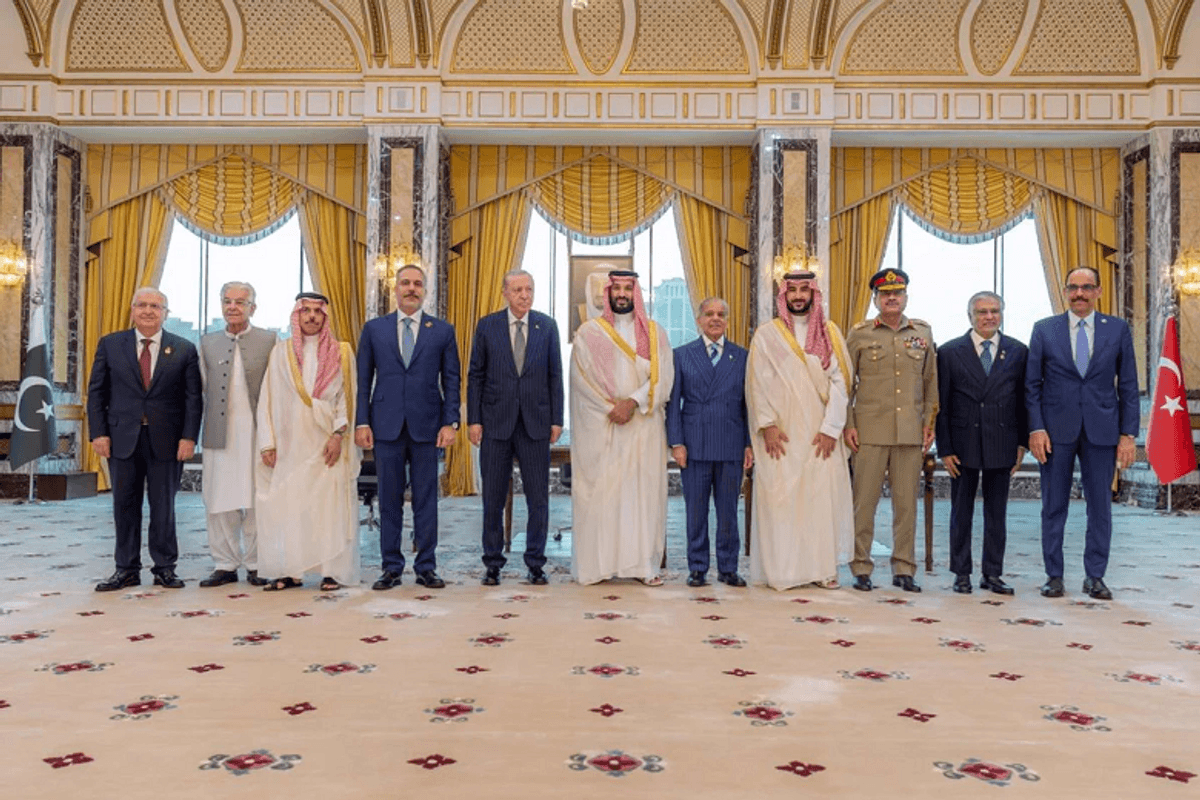
Saudi Arabia said the three countries agreed on arrangements for the Riyadh meeting in New York.
File
Saudi Arabia, Pakistan and Turkey are preparing to hold an urgent meeting of their military chiefs in Riyadh to discuss support for the kingdom under a newly signed defense pact, as attacks by Yemen's Houthis intensify, Al Jazeera reported.
Why are Pakistan, Turkey and Saudi Arabia planning a military chiefs' meeting?
Saudi Arabia's Foreign Ministry said the three countries agreed on arrangements for the meeting during talks between their foreign ministers in New York.
The move follows a fresh wave of Houthi missile and drone attacks on Saudi territory and comes under the framework of their joint defense pact.
The Iran-backed group has escalated attacks on Saudi Arabia since July, ending a years-long truce and declaring a maritime blockade as it seeks to disrupt Saudi oil exports.
Who will attend the meeting in Riyadh?
Turkey confirmed that its Chief of General Staff, General Selcuk Bayraktaroglu, will travel to Riyadh to meet his Saudi and Pakistani counterparts. The Turkish defence ministry said he would travel on Friday to attend the meeting, although it was unclear whether the talks would take place the same day.
The plan follows talks on Thursday between Pakistani Deputy Prime Minister and Foreign Minister Ishaq Dar, Saudi Foreign Minister Prince Faisal bin Farhan, and Turkish Foreign Minister Hakan Fidan on the sidelines of the UN General Assembly.
Dar said the three ministers reviewed progress on building institutional structures under the Makkah Joint Defence Agreement and exchanged views on regional and international security issues.
Saudi Arabia's ministry said the ministers condemned recent attacks on the kingdom, including those linked to the Houthis, and discussed preparations for the urgent chiefs of staff meeting.
They also condemned Houthi attacks targeting civilian and economic facilities in Saudi Arabia, as well as reported attacks on Mecca, Islam's holiest city. The Houthis have denied carrying out attacks on Mecca.
What is the Saudi-Pakistan-Turkey defense pact?
The pact, signed by Saudi Arabia, Pakistan and Turkey on August 7, states that an attack on any one of the three countries will be treated as an attack on all three, establishing a framework for collective defence.
Despite the mutual-defence provision, Pakistan and Turkey have so far not carried out retaliatory strikes against the Houthis.
The agreement is still being implemented. At their first committee meeting in Istanbul on August 31, officials from the three countries agreed on mechanisms for putting the pact into effect and decided its secretariat would be based in Riyadh, with Pakistan heading it.
Retired Pakistani Lieutenant General Nauman Mahmood was appointed the pact's first secretary general on September 23, according to Pakistan's Dawn newspaper.
How serious are the latest Houthi attacks on Saudi Arabia?
The diplomatic moves come as Saudi Arabia faces a renewed wave of attacks from the Houthis, an Iran-aligned group fighting Yemen's internationally recognized government.
Saudi authorities said on Thursday that air defences intercepted six ballistic missiles launched towards the kingdom, while the Houthis claimed missile and drone strikes on targets in Riyadh and Yanbu.
Saudi Arabia is the world's top crude oil exporter, making the security of its energy infrastructure and export routes a major regional concern.
Saudi Arabia's foreign ministry said the three ministers praised the readiness of Saudi forces and affirmed Riyadh's right to take measures it considers necessary for self-defence under Article 51 of the UN Charter.
They also reviewed preparations for the pact's secretariat, committees and working groups, and called for respect for international law, state sovereignty and freedom of maritime navigation, while reiterating support for peaceful solutions to regional conflicts.
Saudi Grand Mufti Sheikh Saleh bin Fawzan bin Abdullah Al-Fawzan separately called on Saudi soldiers to remain prepared to carry out their duties and prayed for the defeat of the Houthi group and its supporters.



Comments
See what people are discussing