

Dubai real estate braces for short-term impact from regional conflict
UAE developer says strong policies and stable leadership will keep long-term investor confidence intact

Business Desk
The Business Desk tracks economic trends, market movements, and business developments, offering analysis of both local and global financial news.
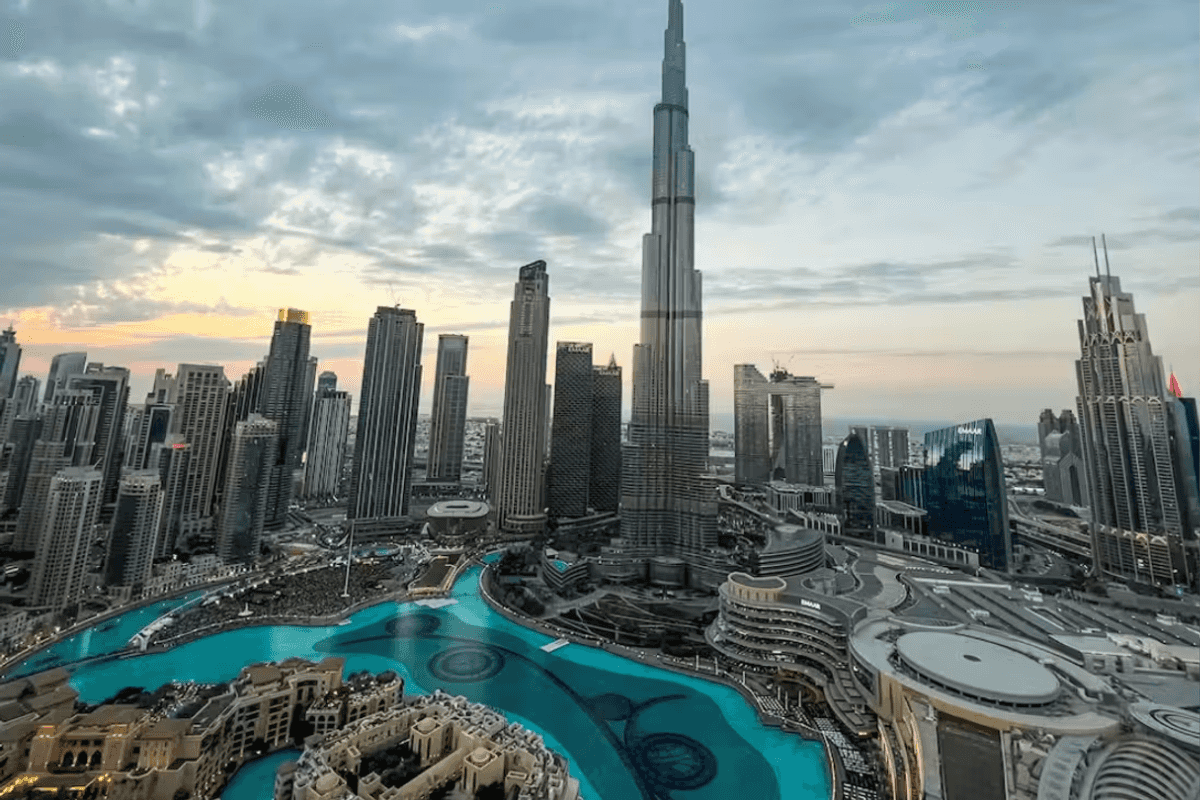
A view of Dubai Downtown showing the world's tallest building, Burj Al Khalifa
Reuters
Dubai’s property market could experience a temporary slowdown following recent missile strikes linked to the escalating Middle East conflict, but long-term investor confidence is likely to remain strong, according to one of the United Arab Emirates’ leading developers.
Mohamed Alabbar, founder of Emaar Properties — the developer behind the Burj Khalifa — said on Thursday that while a brief “cooldown” in the market is possible, he does not expect a major downturn.
“There could be a bit of a cooldown, but I really don’t see it,” Alabbar told CNBC. He noted that the UAE’s real estate sector is not heavily dependent on bank borrowing. “Bank borrowing is really restricted in this market. Consumer confidence will be shaken a little bit, but the policies of this country bring the confidence back so fast,” he said.
Alabbar spoke on the sixth day of a widening regional conflict in which the UAE has been struck by retaliatory Iranian missile attacks after the United States and Israel launched strikes on Tehran on Saturday.
The attacks disrupted parts of the country’s infrastructure. Dubai International Airport — one of the world’s busiest aviation hubs — was hit, causing flight disruptions, while hotels and ports across the country were also affected. Several countries began repatriating their citizens.
“I was surprised, and I was shocked,” Alabbar said of the strikes. “But people with true capital understand that a country like this, with stable leadership and the safety it has shown, can deliver. They will double down on this.”
He said daily footfall at Dubai Mall — owned by Emaar and located next to the Burj Khalifa — has already begun to recover. The mall is currently seeing about 190,000 visitors per day compared with its typical prewar average of 250,000.
“The number of customers that come to our restaurants, our numbers are close to about 80% to 85%, and it has been only four or five days,” Alabbar said. “Life is coming back to normality.”
Asked why Iran targeted the UAE, Alabbar described the country as a major global business hub and symbol of prosperity.
“This is the global business hub — what prosperity should be, what positivity should be,” he said. “People who have no respect for progress or good quality of life probably feel that this is one of their targets.”
Iranian Foreign Minister Abbas Araghchi has reportedly said the attacks were not intended to target Gulf countries but rather U.S. assets.
“They are not targeting our brothers or neighbors in the Persian Gulf. But we are targeting U.S. targets,” Araghchi said, according to reports.
Some analysts and security experts, however, say the conflict has already shaken confidence among expatriates and multinational companies based in Dubai.
Dale Buckner, chief executive of security firm Global Guardian and a former U.S. Army Green Beret, said the company had seven corporate clients by Tuesday morning seeking to evacuate between 1,000 and 3,000 employees.
“This looks very much like Ukraine,” Buckner said.
Jim Krane, a fellow at Rice University’s Baker Institute, said Dubai’s economic model depends heavily on expatriates who bring expertise, labor and investment.
“The U.S.-Israel war on Iran is upending that crucial aura of security in Dubai,” Krane said. “You need stability and security to bring in smart foreigners.”
Others in the aviation sector say departures from Dubai are largely routine travel rather than an exodus.
Ameerh Naran, chief executive of Vimana Private Jet, said many residents leaving the city were doing so for business meetings rather than for safety concerns.
“They don’t feel unsafe,” Naran said. “It’s pretty much life as normal — just a bit of extra noise in the background with all these missiles. But life has to go on. They need to travel.”


Comments
See what people are discussing