

Energy price spike raises Pakistan risks but lifts E&P outlook
Higher oil prices strain imports, but domestic producers stand to gain

Business Desk
The Business Desk tracks economic trends, market movements, and business developments, offering analysis of both local and global financial news.
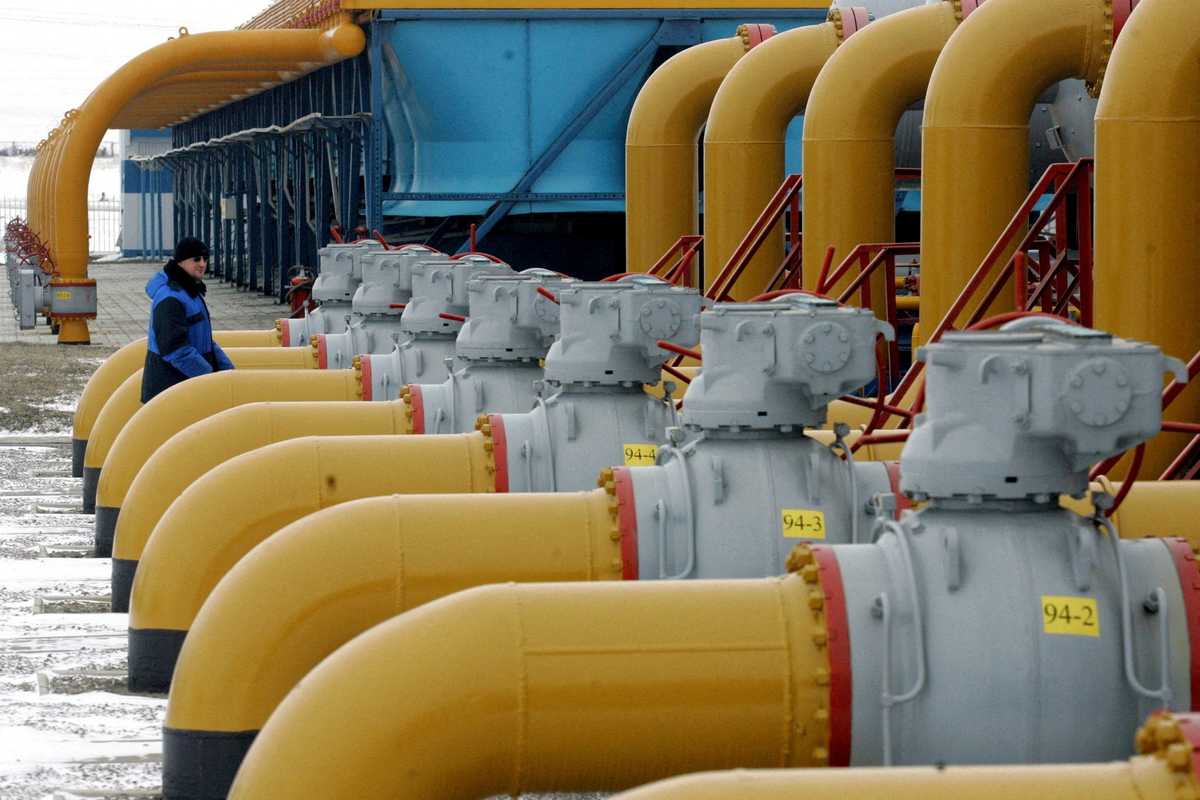
A gas worker walks between pipes in a compressor and distribution station
Global energy market volatility driven by escalating military tensions involving the United States, Israel and Iran has pushed digital oil benchmarks sharply higher, creating both economic risks for Pakistan and opportunities for its exploration and production sector, brokerage firm Insight Securities said in a report.
The firm said disruptions around the strategically vital Strait of Hormuz, which handles nearly 20% of global oil and liquefied natural gas trade, have tightened supply chains and lifted prices. Arab Light crude has climbed to about $120 per barrel, while diesel and petrol prices have surged to roughly $190 and $140 per barrel, respectively.
Domestic production's comeback
“While this environment poses macroeconomic challenges for Pakistan through a higher import bill and inflationary pressures, it simultaneously creates a strong tailwind for the domestic E&P sector,” Insight Securities said.
The report noted that disruptions in global LNG logistics, including the shutdown of Qatar’s Ras Laffan Industrial City and restrictions on shipping routes, have constrained supplies. This is expected to benefit local upstream companies by allowing a recovery in domestic gas production.
Pakistan, which imports around 900 million cubic feet per day of LNG to meet its energy needs, had previously curtailed local production due to excess imported supply under take-or-pay contracts. With LNG availability now tightening, an estimated 350 million cubic feet per day of previously curtailed domestic output could gradually be restored, the report said.
Increase in oil revenues
The surge in global energy prices has already filtered into the domestic market, with petrol and diesel prices rising by PKR 55 per liter. While this adds to inflationary pressure, Insight Securities said upstream firms stand to gain as their revenues are linked to international oil benchmarks.
“An uptick in oil revenues is expected to materialize almost immediately, while the impact on gas revenues is likely to emerge with a lag,” the firm said.
The brokerage also highlighted currency dynamics as another key factor supporting the sector. A widening trade deficit due to higher energy imports could weaken the Pakistani rupee, indirectly boosting earnings for E&P companies whose pricing is largely dollar-indexed.
However, the report cautioned that risks remain. While lower LNG imports may reduce the weighted average cost of gas and support payment flows to producers in the near term, a prolonged conflict could strain public finances.
“If the war prolongs and necessitates gas price revisions, any delay or partial pass-through by the government could bring pressure on the circular debt chain,” Insight Securities said, warning that receivables for E&P companies could begin to accumulate again.


Comments
See what people are discussing