

FATF warns hawala and underground banking are fueling global money laundering
A new FATF report warns that hawala and underground banking networks are increasingly exploited for money laundering, citing an Oman-Pakistan case.

Business Desk
The Business Desk tracks economic trends, market movements, and business developments, offering analysis of both local and global financial news.
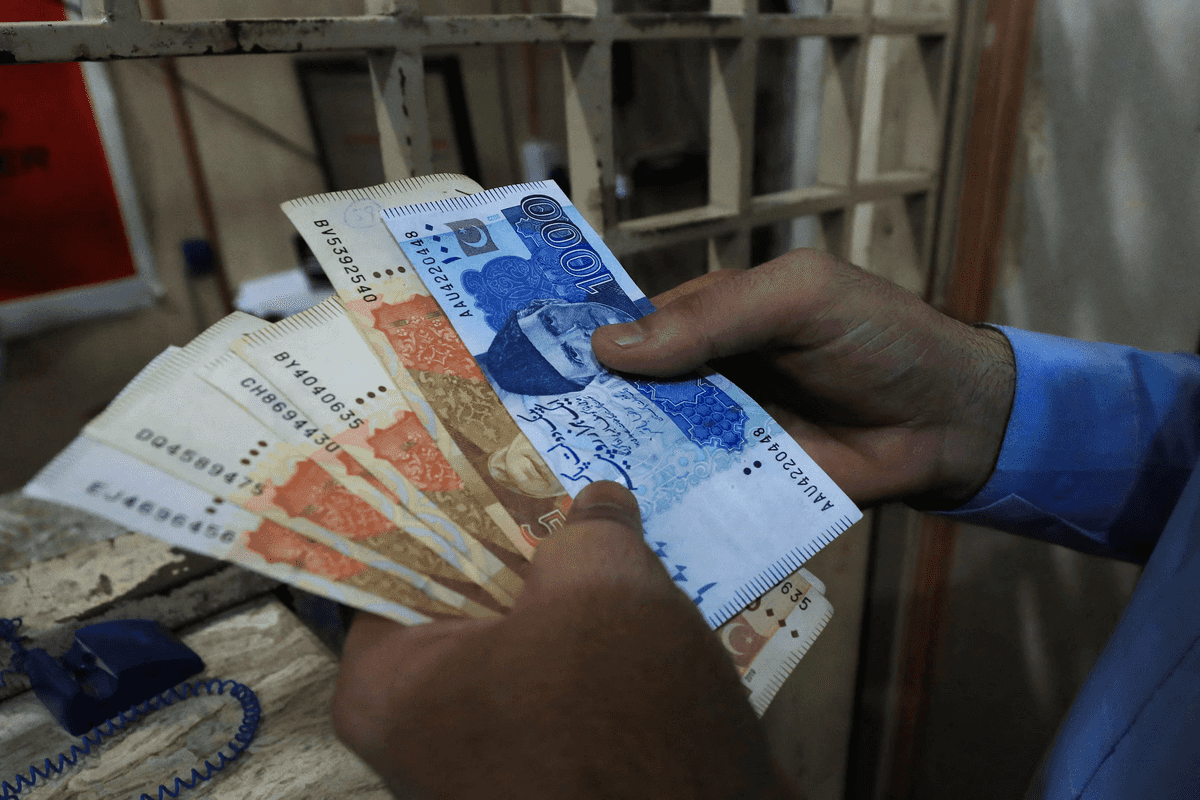
The Financial Action Task Force (FATF) has warned that hawala and other underground banking networks are increasingly used to launder money from a widening range of crimes.
The report said underground banking and other similar service providers, known as HOSSPs, are long-standing informal and decentralized value-transfer systems that can operate outside or alongside the regulated financial sector.
Their defining feature is the transfer of value without physically moving funds across borders. Obligations can instead be settled through trade transactions, cash pooling, formal financial channels or movements of alternative assets.
The report stressed that the use of underground banking and HOSSPs is not inherently criminal, as such systems can be used to transfer both legitimate and illicit funds.
However, it said that in most countries, providing underground banking or unregistered HOSSP services is generally a criminal offense and violates Financial Action Task Force standards, which recommend that countries require such service providers to be licensed or registered.
Broader criminal use
Criminal misuse of underground banking and HOSSPs for money laundering is a widespread global phenomenon, regardless of whether such systems are legally recognized, the report said.
The misuse is particularly prevalent along certain financial corridors and in regions characterized by strong remittance flows, extensive trade links, established diaspora communities and low levels of formal financial intermediation.
The report also identified growing convergence between traditional informal transfer networks and increasingly sophisticated and professionalized money laundering structures.
Underground banking and HOSSP-related money laundering is no longer limited to cash-intensive crimes such as drug trafficking and smuggling, according to the report.
It is increasingly being used to support criminal economies involving fraud, cyber-enabled crime, corruption, tax evasion, terrorist financing, undeclared work, illegal gaming and gambling, and transnational organized crime.
Rise of digital hawala
One of the most significant developments identified by the report is the digital transformation of underground banking and HOSSP activity.
Digital technologies are increasingly being used to coordinate, execute, settle or conceal informal value transfers, including those linked to money laundering.
The report described this trend, sometimes referred to as “digital hawala,” as a broad spectrum rather than a single model. It ranges from digital communications between operators to the integration of virtual assets and electronic payment technologies into settlement mechanisms.
Digitalization can accelerate interactions between customers and operators and facilitate cross-border settlement, while increasing opacity and creating additional evidentiary challenges for authorities, the report said.
It can also expand opportunities for layering illicit funds and increase the geographic reach and resilience of money laundering networks using underground banking and HOSSPs.
Closer links with formal finance
The report identified several broader trends, including increasingly diverse client profiles and greater professionalization of informal money laundering schemes.
These networks are becoming more structured and service-oriented, with specialized roles, standardized processes and greater use of professional intermediaries and other enablers.
At the same time, money laundering actors are increasingly combining informal value-transfer mechanisms with legitimate financial infrastructure to exploit differences in regulation and supervisory gaps.
Such infrastructure can include formal financial accounts, fintech platforms, payment service providers, virtual IBANs and prepaid cards.
Regulatory challenges
Authorities face significant challenges in regulating, detecting, investigating and prosecuting the misuse of underground banking and HOSSPs, the report said.
These include fragmented terminology and definitions, limited knowledge of how informal systems operate and regulatory differences across borders and within jurisdictions that can create opportunities for regulatory arbitrage.
Authorities can also struggle to distinguish legitimate activity from criminal misuse.
The report warned that de-risking pressures and financial incentives may, in some cases, push legitimate remittance users and some formal money or value transfer service providers toward informal channels.
Operational challenges also remain, including the fragmented and resilient structure of money laundering networks, limited standardized intelligence and red flags, difficulties in monitoring digital components and constraints on traditional investigative approaches.


Comments
See what people are discussing