

Global focus shifts to Islamabad as US, Iran pause hostilities
Kamran Khan notes Iran celebrates as Trump halts military action, credits Pakistani leaders

News Desk
The News Desk provides timely and factual coverage of national and international events, with an emphasis on accuracy and clarity.
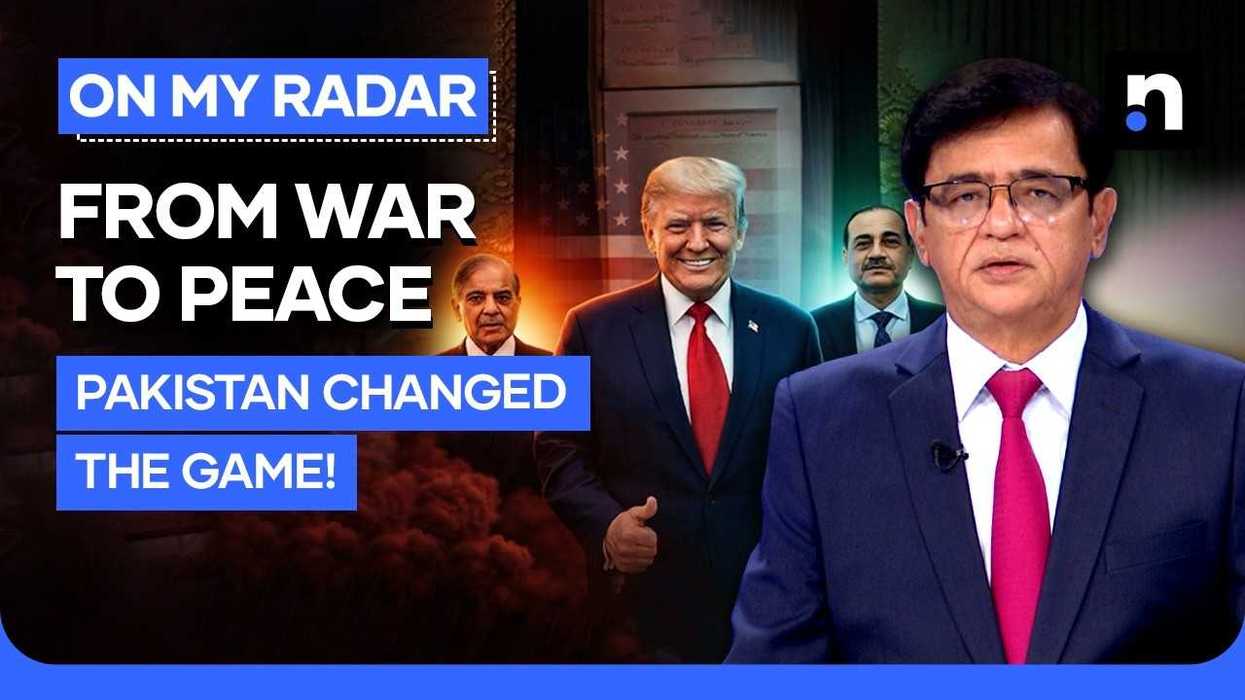
Time appeared to stand still as a U.S. deadline loomed over Iran, with fears that President Donald Trump could unleash full military force alongside Israel if Tehran failed to comply.
Speaking on his program “On My Radar,” Kamran Khan described a tense global atmosphere as only hours remained before the cutoff that many believed could trigger massive escalation against the country of nearly 100 million people.
Then, at 3:32 a.m., Trump announced on Truth Social that a ceasefire would take effect.
In the first line of his message, Trump credited Pakistan Prime Minister Shehbaz Sharif and Field Marshal Syed Asim Munir for their role in defusing the crisis, Khan said.
According to Khan, Trump wrote that following a request from Sharif and Munir — and Iran’s willingness to reopen the Strait of Hormuz — the United States would suspend bombing and military action against Iran for two weeks.
Trump described the pause as a bilateral ceasefire and said Washington had received a 10-point proposal from Iran that it considered a workable basis for negotiations, Khan said.
Iran also announced a ceasefire, welcoming Pakistan’s diplomatic efforts.
Iranian Foreign Minister Abbas Araghchi, in a letter to Sharif, expressed gratitude for Islamabad’s role, Khan said. He added that after what he described as U.S. acceptance of a 15-point American proposal and Iran’s 10-point plan, Tehran agreed to conditionally reopen the Strait of Hormuz for two weeks.
Scenes of celebration were reported in Iran after the announcement. According to Khan, people came out onto the streets late at night to mark the ceasefire.
Khan said Pakistan’s diplomatic intervention shifted the trajectory of what had appeared to be an imminent war between Washington and Tehran.
He said global media outlets, including CNN and Al Jazeera, were now focused on Islamabad, portraying Pakistan — particularly Munir — as playing a decisive role in the breakthrough.
Khan outlined key elements of Iran’s reported 10-point proposal, which he said Trump had accepted as a basis for talks.
These included guarantees that the United States would not carry out further aggression, immediate withdrawal of U.S. forces from the region, recognition of Iran’s rights over the Strait of Hormuz, and acknowledgment of its right to uranium enrichment.
Iran also called for the lifting of all U.S. and United Nations sanctions, an end to hostilities on all fronts including Lebanon, and compensation for war-related destruction, Khan said. In return, Tehran pledged full cooperation with the International Atomic Energy Agency.
Khan said Pakistan had earlier prepared a five-point peace plan for both sides, referred to as the Islamabad accord.
In its first phase, the plan proposed an immediate ceasefire and reopening of the Strait of Hormuz. The second phase envisioned a comprehensive peace accord within 15 to 20 days, including limits on Iran’s nuclear program.
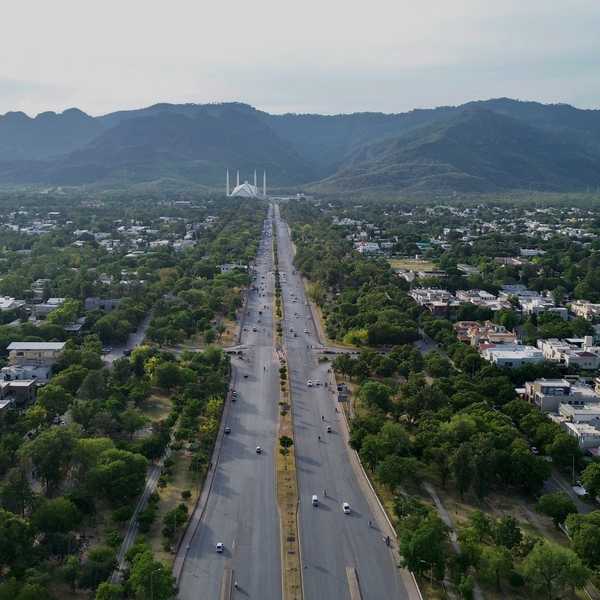
Attention has now shifted to planned negotiations in Islamabad.
According to Khan, U.S. Vice President JD Vance is expected to lead the American delegation, while Iranian Parliament Speaker Mohammad Bagher Ghalibaf will head Tehran’s team. Formal talks are expected to begin Friday, with Pakistan acting as facilitator.
Vance said that if Iran engages seriously and in good faith, a deal is possible and an acceptable agreement could emerge, Khan said.
Khan added that global hopes are pinned on the success of the Islamabad talks, with expectations that a formal peace accord could stabilize regional tensions and ease pressure on the world economy.
He also said Trump’s handling of the crisis had damaged his political standing in the United States. According to Khan, criticism over threats to destroy Iran’s ancient civilization sparked backlash not only from Democrats but also from members of Trump’s own Republican Party.
Khan said calls for impeachment and discussions of invoking the 25th Amendment had surfaced, along with questions about Trump’s mental fitness. These claims could not be independently verified.
Pakistan’s Deputy Prime Minister and Foreign Minister Ishaq Dar told the Senate that Israeli actions had attempted to sabotage ceasefire efforts, Khan said. Former U.S. counterterrorism chief Joe Kent was also quoted as saying restraint by Israel would be necessary for the truce to hold.
Khan said the diplomatic development has unsettled India, where analysts are closely watching what they see as a shift in regional power dynamics.
For now, he said, the world’s attention remains fixed on Islamabad, where the next phase of negotiations could determine whether the ceasefire leads to lasting peace.


Comments
See what people are discussing