

Gulf security shaken as Iran adopts strategy of endurance in war
Kamran Khan says Iran seeks to prolong war with U.S. and Israel as oil prices rise and Gulf security fears deepen

News Desk
The News Desk provides timely and factual coverage of national and international events, with an emphasis on accuracy and clarity.
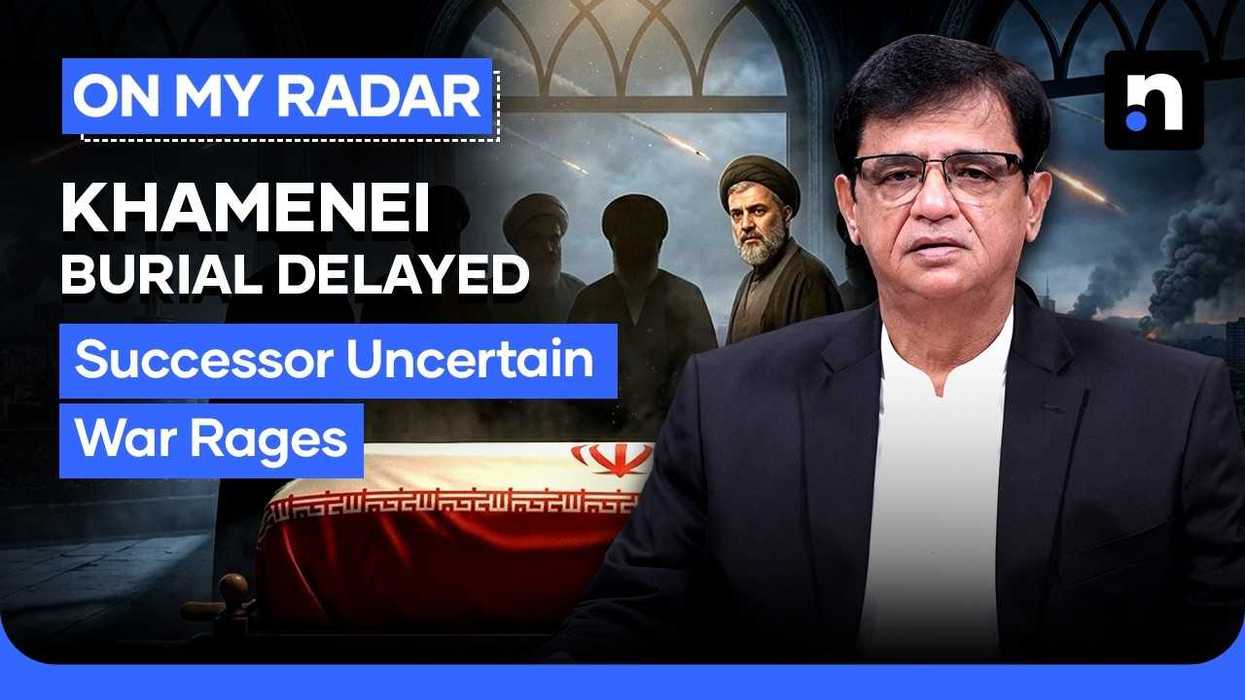
Iran appears to be pursuing a strategy of endurance and deterrence in its escalating confrontation with the United States and Israel, aiming to prolong the conflict rather than seek a swift military victory.
Speaking on the latest episode of “On My Radar,” Kamran Khan said the Iranian state and public have shown remarkable resilience and unity during what he described as an existential struggle for survival.
“At the same time,” Khan said, “the United States and Israel appear determined to intensify pressure on Iran to the point where life for its government and population becomes unbearable.”
He said the intensity of the conflict is reflected in the aftermath of the reported death of Iran’s Supreme Leader Ayatollah Ali Khamenei. According to Khan, six days after the event, authorities had still not announced funeral arrangements, amid claims by Israel that it could target any such gathering as well as the next Iranian supreme leader.
Strategy of endurance
Khan said Iran’s military thinking currently revolves around three principles — endurance, resilience and deterrence.
Rather than attempting a decisive battlefield victory, he said Tehran appears focused on turning the war into a long, expensive and complex conflict that would gradually exhaust its adversaries.
“In the first week alone, a clear pattern has emerged,” Khan said.
According to Khan, the United States and Israel carried out thousands of airstrikes across Iranian cities, targeting bases of the Islamic Revolutionary Guard Corps, missile installations and other military facilities.
In response, Iran launched missile and drone attacks not only toward Israel but across a wide geographic area of the Middle East.
Khan said Iranian military planners likely anticipated that defeating the technological superiority of the United States and Israel in a conventional war would be extremely difficult.
Instead, he said, Iran has shifted to a multilayered pressure strategy built around ballistic missiles, long-range drones and a network of allied groups across the region.
The goal, he said, is not only to hit military installations but also to challenge the economic and psychological confidence of the United States and its regional allies.
“Every missile or drone that breaches advanced air defense systems carries a symbolic message,” Khan said. “Even the most sophisticated defenses cannot guarantee complete protection.”
Drones and regional pressure
Khan said another notable development in the past 48 hours has been Iran’s increasing reliance on drones rather than ballistic missiles.
Iranian Shahed drones, he said, have emerged as a major operational challenge for the United States and Israel.
According to Khan, each drone costs roughly $20,000, while intercepting them can require missiles worth up to $4 million.
“That means Iran can compel its rivals to spend billions while it spends relatively little,” he said.
Khan added that the conflict has dramatically altered the security landscape of the Gulf region.
Iranian strikes, he said, have not only targeted Israel but also energy facilities, U.S. military bases and commercial centers across Gulf states.
He cited reported attacks on a major oil refinery in Saudi Arabia and the Ras Laffan liquefied natural gas facility in Qatar.
The war has also disrupted civil aviation, he said, with an estimated 25,000 flights canceled amid drone attacks and heightened regional tensions.
“This has effectively transferred the pressure of war directly onto Gulf states,” Khan said.
Gulf doubts over US security guarantees
Khan said the conflict has triggered an intense strategic debate across Arab states that have long relied on the United States for security guarantees.
For decades, Gulf countries have hosted U.S. military bases and purchased billions of dollars in American weapons while maintaining close alliances with Washington.
But Khan said the current war has left many of those countries feeling increasingly vulnerable.
He cited comments by prominent Emirati businessman Khalaf Al Habtoor, who criticized Washington and U.S. President Donald Trump in a social media post.
Al Habtoor questioned who had authorized the United States to drag the region into war with Iran and asked whether the consequences for the region had been fully considered.
“He said Gulf states have spent billions in the name of stability and development,” Khan noted. “So they have the right to ask where that money has gone.”
Former Saudi intelligence chief Prince Turki Al-Faisal also expressed skepticism about U.S. security commitments, Khan said, recalling that Washington did not intervene militarily after attacks on Saudi oil facilities in 2019.
According to Khan, declining confidence in U.S. protection has pushed Gulf states to explore closer cooperation with Europe.
He pointed to a recent emergency meeting between European Union and Gulf Cooperation Council foreign ministers that focused on increasing cooperation to maintain regional stability.
Oil prices and global economic impact
Khan said the economic consequences of the conflict are becoming increasingly visible.
Global energy markets are under pressure, with oil prices rising sharply since the start of the war.
He said Brent crude was trading at $72.87 per barrel when the conflict began Feb. 28 and has climbed to around $86 per barrel — an increase of about $14 within a week.
The Strait of Hormuz, through which roughly one-fifth of the world’s oil and gas shipments pass, has become a central source of concern.
Khan said Iran does not necessarily need to close the vital waterway to disrupt markets.
“Simply creating uncertainty around its security is enough to shake global energy markets,” he said.
Reports of attacks or threats against oil tankers have already driven up insurance costs and slowed maritime traffic, he added.
At least 10 reported attacks on oil tankers within seven days have heightened global anxiety, Khan said, affecting major Asian economies.
Japan, South Korea and Taiwan have begun searching for alternative energy supplies, while China has reportedly moved to protect its internal reserves by reducing fuel exports.
He added that the Trump administration has allowed India to continue purchasing Russian oil for 30 days amid the uncertainty.
Expanding regional impact
Khan said the war’s effects are also spreading beyond the immediate battlefield.
Azerbaijan has reported a drone strike originating from Iranian territory, he said, while fears of Israeli attacks in Lebanon have forced thousands of people to flee parts of Beirut.
At the same time, he said, Gulf tourism, aviation and business activities have suffered major disruptions, increasing economic pressure on regional governments.
Khan also noted that Saudi Arabia, the United Arab Emirates and Qatar collectively pledged about $3.2 trillion in investment commitments to the United States last year through their sovereign wealth funds.
But he said the conflict has prompted quiet reassessments of some of those projects.
“That could become a significant development for the U.S. economy,” he said.
War with no quick end
Khan said Iran’s strategy appears designed to keep sustained economic, political and strategic pressure on its adversaries.
From Tehran’s perspective, he said, outright military victory may not be necessary.
“It may be enough for Iran to maintain continuous pressure that forces its rivals to reconsider the cost of the war,” Khan said.
As the conflict moves into its second week, he added, growing unease among Gulf states suggests that Iran’s endurance strategy may already be influencing the regional balance.
At the same time, he said, Iran itself is facing devastating consequences from ongoing U.S. and Israeli strikes that have damaged military assets, economic infrastructure and civilian facilities.
Khan said the outcome of the conflict remains uncertain.
“Washington and Tel Aviv believe they can dismantle the remaining structure of the Iranian state,” he said. “Whether that vision succeeds or fails is a question that history will ultimately answer.”




Comments
See what people are discussing