

Gulf states can weather Hormuz closure within ratings: Fitch
Credit agency says Kuwait and Qatar best placed to absorb shock; Bahrain and Iraq face greater pressure

Business Desk
The Business Desk tracks economic trends, market movements, and business developments, offering analysis of both local and global financial news.
Reuters
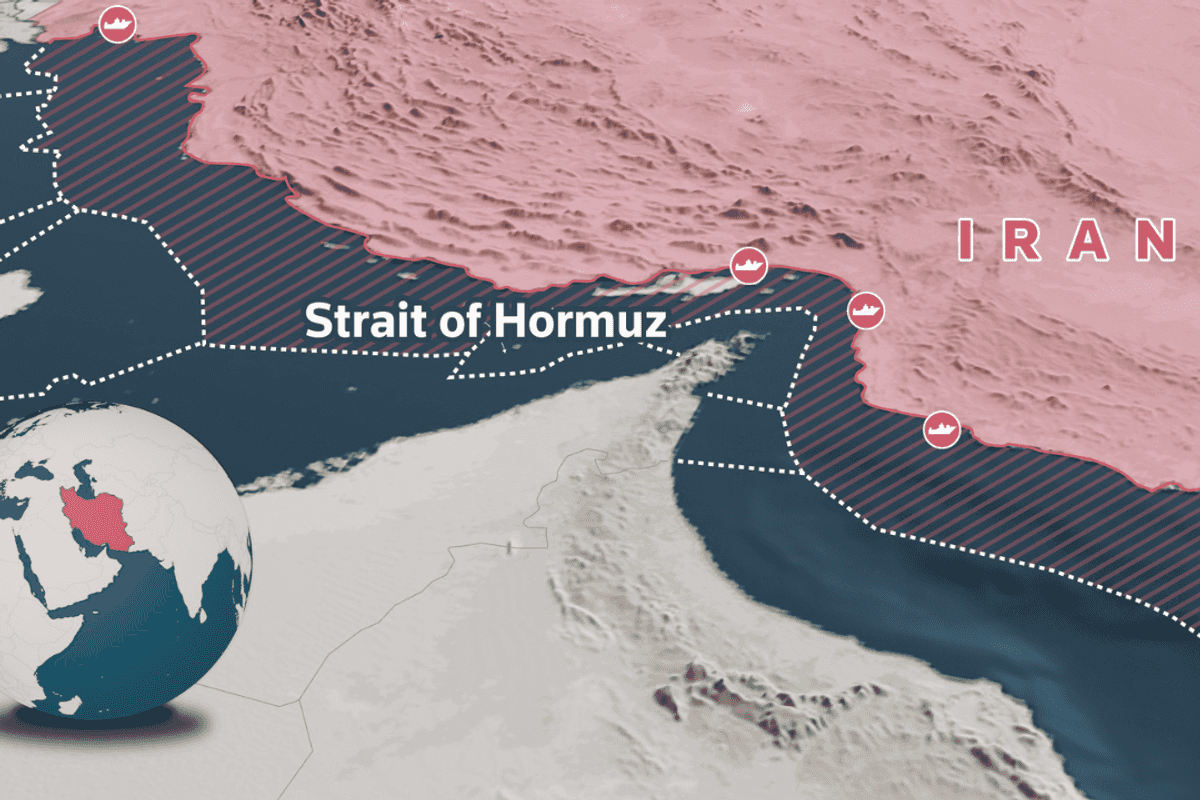
All Middle East sovereigns exposed to the effective closure of the Strait of Hormuz can absorb the economic hit within their current credit rating levels, Fitch Ratings said, provided the disruption lasts less than a month and leaves energy infrastructure intact.
The agency said its baseline scenario assumed no major damage to production and transport facilities, while cautioning that "there are significant risks to these assumptions."
Heaviest exposure for Bahrain, Iraq, Kuwait and Qatar
Bahrain, Iraq, Kuwait and Qatar are among the most exposed, each routing between 87% and 95% of their hydrocarbon exports through the strait. Iraq and Qatar have already shut down a significant portion of their output since the conflict began.
Fitch estimated that every week of closure would trim hydrocarbon export proceeds by roughly 0.4% of GDP for those four countries, based on 2025 shipping data and an assumed oil price of $85 a barrel. The agency said some losses could be offset through drawdowns of stored supply — and that exports had reportedly been accelerated ahead of hostilities — but warned that a full revenue recovery would be difficult.
Kuwait and Qatar are best positioned to ride out the disruption. Fitch put their foreign asset holdings at an estimated 606% and 223% of GDP respectively at end-2025, giving both countries "significant sovereign balance-sheet buffers" and leaving their ratings able to "comfortably weather" an export disruption in line with the baseline scenario.
Bahrain and Iraq lack comparable cushions, reflected in their lower ratings, but each has mitigating factors. Fitch said it expects other Gulf Cooperation Council members to provide Bahrain with financing and potentially other support, adding that the "propensity to support" could be elevated given the nature of the shock.
Iraq's position is complicated further by its decision to halt crude exports not only through the strait but also through the Kirkuk-Ceyhan pipeline to Turkey for security reasons. That pipeline has a designed capacity equivalent to around 30% of Iraq's pre-conflict export levels. Baghdad could cushion the blow by drawing down cash deposits or cutting public capital spending, which the agency described as high by historical standards.
Saudi Arabia, UAE have routes around the bottleneck
Saudi Arabia and the United Arab Emirates are less exposed because both have hydrocarbon export infrastructure that bypasses Hormuz entirely.
Abu Dhabi's crude pipeline and the port of Fujairah together can handle 1.5 million barrels per day — equivalent to about 55% of the emirate's total hydrocarbon export value. Fitch estimated each week of closure would reduce Abu Dhabi's hydrocarbon export proceeds by only about 0.15% of GDP, an impact it described as small relative to an expected large budget surplus.
Saudi Arabia's east-west pipeline has a stated capacity of 7 million barrels per day, though Fitch noted it was unclear whether that flow rate could be sustained and exported through port over a prolonged period. If Riyadh does manage to push through the full 7 million bpd at $85 a barrel, "export revenues will be slightly higher than under our pre-conflict baseline," the agency said.
Oman stands to gain
Alone among the countries reviewed, Oman stands to benefit from the disruption. Because its exports do not transit the strait, the sultanate is positioned to profit from the higher oil prices that a supply squeeze would generate.





Comments
See what people are discussing