


News Desk
The News Desk provides timely and factual coverage of national and international events, with an emphasis on accuracy and clarity.
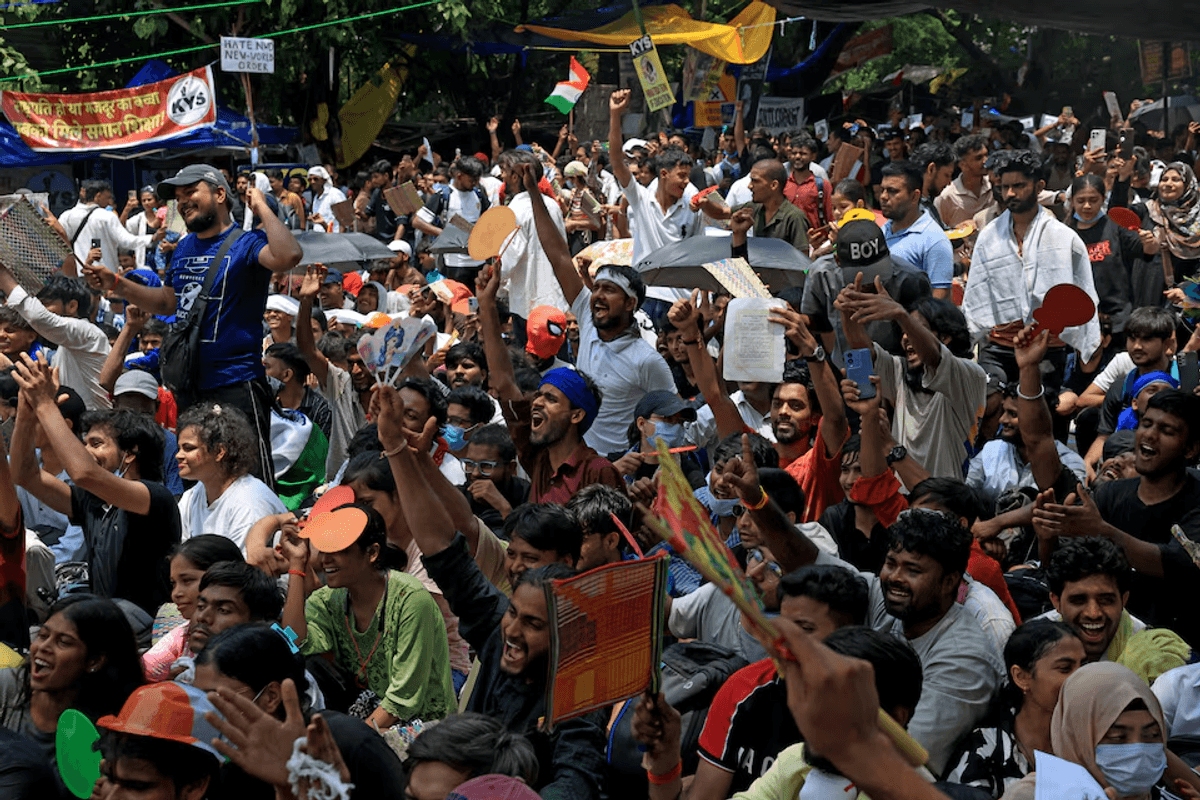
India's Supreme Court dropped criminal cases on Tuesday against most protesters involved in July's nationwide demonstrations over a leaked medical exam paper that led to the education minister's resignation. The court used its special constitutional powers to grant relief to protesters who joined the CJP-led movement in New Delhi and other states.
Why did India's Supreme Court drop the protest cases?
The Supreme Court invoked its special constitutional powers to quash criminal cases filed against protesters who took part in July's demonstrations. Chief Justice Surya Kant said the order aimed to ease tensions between the government and protesters, noting that issues can be resolved gradually if both sides act in good faith.
What sparked the July protests?
The demonstrations were triggered by anger over the leak of a medical exam paper, an episode that forced the education minister to resign. They were led by the online Cockroach Janta Party (CJP) movement and turned violent on July 20, when police clashed with tens of thousands of protesters marching toward parliament in New Delhi.
Clashes also broke out in Bihar and West Bengal as the unrest spread beyond the capital. Police subsequently filed cases against hundreds of students, accusing them of rioting, violence and damage to public property.
Which protesters are still under investigation?
Investigations will continue against 2,873 protesters who have prior criminal records, the Press Trust of India reported. The Supreme Court's relief order therefore does not apply universally, leaving this group excluded from the case withdrawals granted to other demonstrators.
What compensation did the court order?
The court also directed the government to compensate, within three months, the families of students who reportedly died by suicide following the exam paper leak. The directive ties the court's relief order to accountability for the human toll of the controversy.
How has the CJP responded to the ruling?
Following the court's directions on Tuesday, the CJP said it was withdrawing its plans for a fresh protest in Delhi scheduled for Saturday. Ashutosh Ranka, a CJP spokesman, confirmed the decision in a statement, signalling a de-escalation after weeks of standoff with authorities.
Why do the protests matter for Modi's government?
What began as anger over the exam paper leak grew into a wider movement over unemployment and opportunities for young people. Critics have also linked the unrest to what they describe as Prime Minister Narendra Modi's increasingly authoritarian rule. The protests have proved the biggest challenge Modi has faced since winning a third term in 2024.



Comments
See what people are discussing