

Iran FM says 'no military solution' to Yemen conflict
Iran's FM Araghchi says there is no military solution to the Yemen conflict, urging dialogue as Saudi Arabia and the Houthis trade attacks

News Desk
The News Desk provides timely and factual coverage of national and international events, with an emphasis on accuracy and clarity.
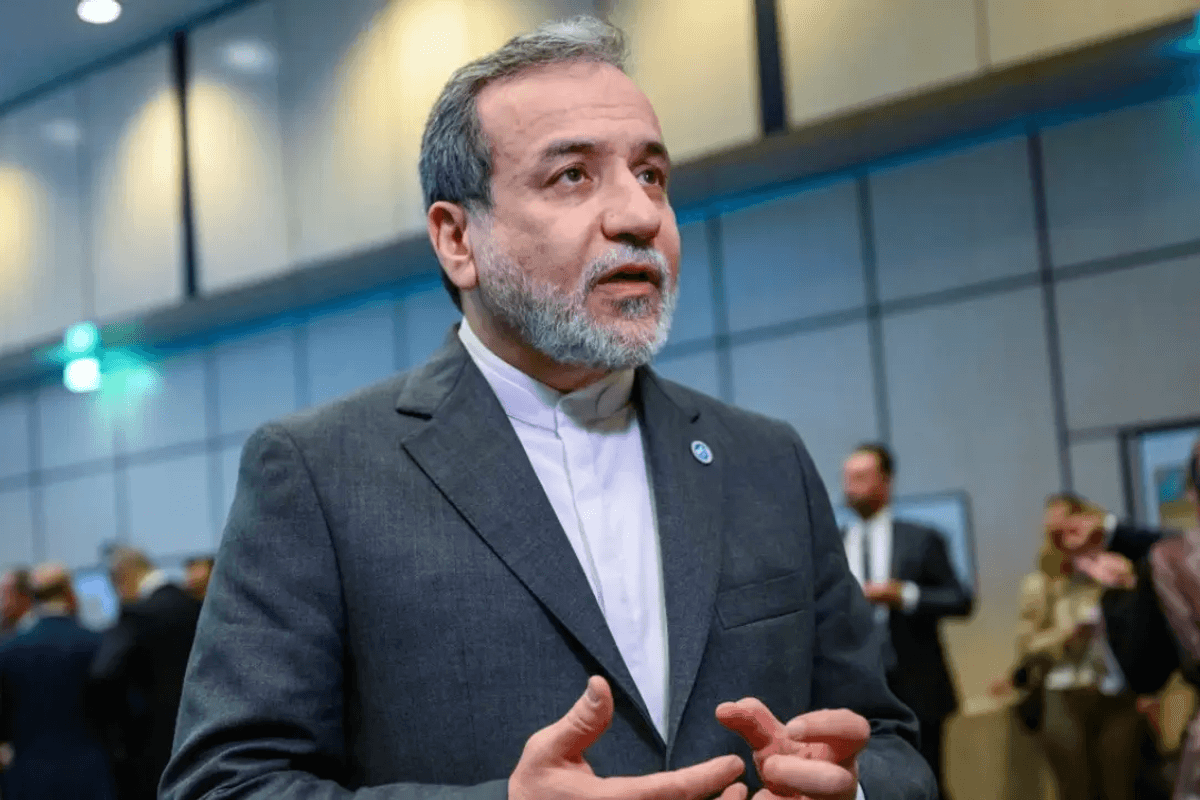
Iran's Foreign Minister Abbas Araghchi said on Saturday there was no military solution to the escalating conflict involving Saudi Arabia and the Tehran-backed Houthi movement in Yemen.
He urged dialogue after the two sides exchanged fresh attacks.
Why does Iran say there is no military solution to the Yemen conflict?
Araghchi said dialogue remained the only viable path to resolving the Yemen conflict and related regional disputes.
"We believe that there is no military solution to the issue of Yemen, Bab al-Mandab, and other regional issues," he said in an interview with the state-run Iran Daily newspaper. His remarks came as Saudi Arabia and the Houthis continued exchanging attacks.
What has Trump said about military action against Iran?
Araghchi's comments came as US President Donald Trump said on Friday he had not yet decided whether to authorise major strikes on Iran. Trump added that Tehran appeared to be taking negotiations with Washington more seriously. "No, I haven't," Trump told reporters in the Oval Office when asked whether he had reached a decision. "Look, we're talking to them right now. I think they're getting more and more serious as the days go by, for maybe the obvious reason."
The comments followed reports that Trump, increasingly frustrated by the prolonged conflict, met senior advisers on Friday to discuss a possible large-scale military operation against Iran. Trump said Tehran faced a choice between reaching an agreement or confronting a "much higher level" of military action, after nearly two weeks of US strikes shattered a ceasefire.
What is the current state of the US-Iran conflict?
Washington says its campaign aims to prevent Iran from closing the strategic Strait of Hormuz. Iran has retaliated with attacks on US bases that have killed four American service members. "We're locked and loaded and ready to go. But we're talking to them, so I think while we're talking, we'll see what comes of it," Trump said.
The conflict, which Trump had previously predicted would last only four or five weeks, is now approaching its fifth month. It has weighed on his approval ratings ahead of November's midterm elections. Trump said he had not identified a specific "tipping point" for military action but reiterated that Iran nearing the development of a nuclear weapon remained his red line.
Is Trump considering a 'massive attack' on Iran?
The New York Times reported that Trump met senior advisers on Friday, while Axios earlier quoted him as saying he was considering a "massive attack" on Iran. Trump also reiterated his assertion that neither China nor Russia was supplying weapons to Iran. This came despite reports suggesting both countries had provided Tehran with intelligence to help target US forces.
"I mean, I will tell you that President Xi said he will not partake, and President Putin said the same thing. I think you know I trust them," Trump told reporters. "I don't think they'd want to have me disappointed."
Has Trump warned Russia and China against arming Iran?
Trump earlier warned Moscow and Beijing on his Truth Social platform against selling weapons to Iran. "If they did, it would be very bad for them, certainly not in their best interests," he wrote. He said Chinese President Xi Jinping had assured him during their meeting in Beijing in May that China would not arm Iran "under any circumstances," while Russian President Vladimir Putin had made a similar commitment despite Moscow's war in Ukraine.
"He understands that I do not sell weapons to Ukraine, but to NATO countries. They pay full price, and how those weapons are distributed, I have no idea," Trump said. Trump has often adopted a more conciliatory tone towards Xi and Putin than towards some of Washington's traditional allies, arguing that the leaders of major world powers should be treated with respect.




Comments
See what people are discussing