

Iran has no plans to negotiate with US, state media reports
Iran has no plans to negotiate with US, state media reported Monday, as Trump expects talks to resume and the Strait of Hormuz dispute continues

News Desk
The News Desk provides timely and factual coverage of national and international events, with an emphasis on accuracy and clarity.
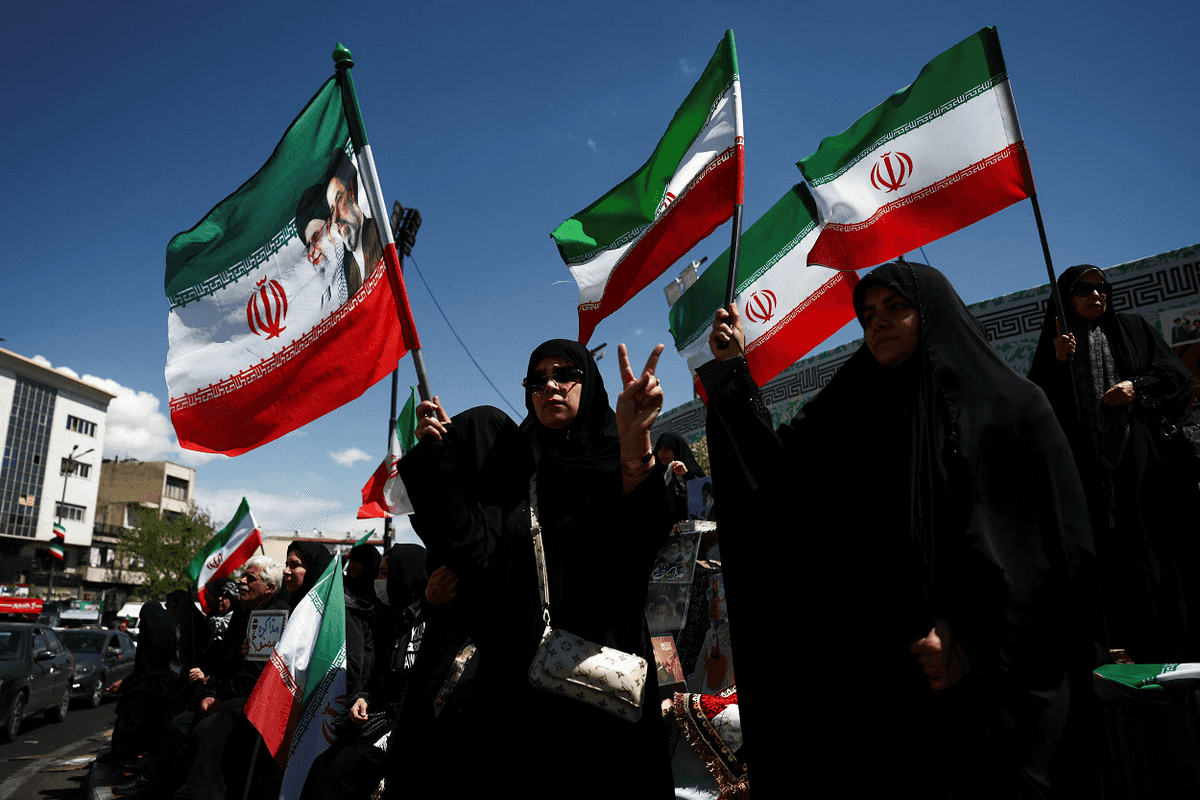
Iran says it has not closed the door to diplomacy, but it has no plans for new talks with Washington.
Reuters
Iran said on Monday its delegation at the United Nations has no plans to negotiate with the US, according to state news agency IRNA.
The statement follows US President Donald Trump's remark that he expected talks to resume soon, and reflects the dispute over conditions for reopening the Strait of Hormuz.
Does Iran plan to negotiate with the US?
Iran says it has not closed the door to diplomacy, but it has no plans for new talks with Washington. Foreign Minister Abbas Araghchi said any move to reopen the Strait of Hormuz depends on Iran's conditions being met, and that the choice now rests with the United States.
IRNA, citing an unnamed source close to the delegation in New York, reported that it "has no plans for negotiations with the United States." The report came after Trump said he expected negotiations to resume soon.
What did Trump and US officials say about the talks?
Trump told Axios on Sunday that he expected talks to resume, a day after rejecting a proposal from Tehran to reopen the strategic waterway within seven days. Axios, citing people familiar with the matter, reported that indirect talks between Washington and Tehran could take place as early as Monday.
"They want to make a deal, but it is not the deal that I want to make," Trump said, adding that it was similar to what Washington might have accepted a year ago. "They overplayed their hand," he said.
Mike Waltz, Washington's ambassador to the UN, also rejected Tehran's terms, saying Iran was demanding too much in return for resuming negotiations. "This was, I think, a pretty cynical attempt to put something on the table that they knew was unacceptable," Waltz told NBC News in an interview broadcast Sunday. He was referring to Iranian demands for an end to the blockade and sanctions and access to billions of dollars in frozen assets.
"I think it's kind of common sense that the president doesn't have a lot of confidence this time after we just tried a few months ago," he said.
What are Iran's conditions for reopening the Strait of Hormuz?
The Strait of Hormuz, through which a significant share of the world's oil and gas supplies passes, has become a major flashpoint in the conflict between Washington and Tehran. The conflict began nearly seven months ago after the United States and Israel launched strikes against Iran.
Araghchi said Tehran's proposal called for an end to hostilities across the Middle East, including in Lebanon, and a return to the terms of an earlier ceasefire agreement that later collapsed. According to Iranian officials, that agreement called for the release of frozen Iranian assets, the lifting of sanctions on Iranian oil and an end to the US naval blockade.
"Our conditions are clear, and any move toward reopening the Strait of Hormuz is contingent upon these conditions being fulfilled. We will not back down from them," Araghchi said on Sunday, according to state broadcaster IRIB. "We have never closed the door to diplomacy or negotiations, but at the same time, we have never backed down from our rights," he added.
Speaking at the UN, Araghchi said Tehran had sent Washington, through Qatar, a concrete seven-day plan for reopening the waterway. "The choice now rests with the United States," he said.
Hossein Mohebi, a spokesman for Iran's Revolutionary Guards, was quoted by Tasnim news agency as saying Tehran would continue its actions against the United States until its seven conditions were met. Mohebi had also told AFP in an interview on Tuesday that ending hostilities in Yemen was among Tehran's demands.
Why did the earlier US-Iran agreement break down?
Washington and Tehran signed a memorandum of understanding in June aimed at ending the conflict, reopening the Strait of Hormuz and starting talks on Iran's nuclear program. The arrangement subsequently broke down after Iran fired on commercial vessels in the waterway, accusing them of deviating from routes approved by Tehran.
Iran says vessels must obtain authorization before passing through the strait, citing security and sovereignty concerns. Ships that fail to comply have faced attacks, while the United States has periodically struck Iranian coastal areas in retaliation.
The confrontation was further complicated on Sunday, when Iran's Revolutionary Guards announced they had seized a US submersible drone in the Strait of Hormuz. The Guards said the underwater vehicle was being used "for espionage purposes" and was now in the hands of its specialists for data recovery.
The diplomatic standoff comes as Iran maintains that the Strait of Hormuz will remain subject to its conditions for reopening, while fighting continues elsewhere in the region, including in Yemen.





Comments
See what people are discussing