

Iran shows resilience after US, Israeli strikes
Iran avoided collapse after its leader’s killing, showing unity and endurance, Kamran Khan says

News Desk
The News Desk provides timely and factual coverage of national and international events, with an emphasis on accuracy and clarity.
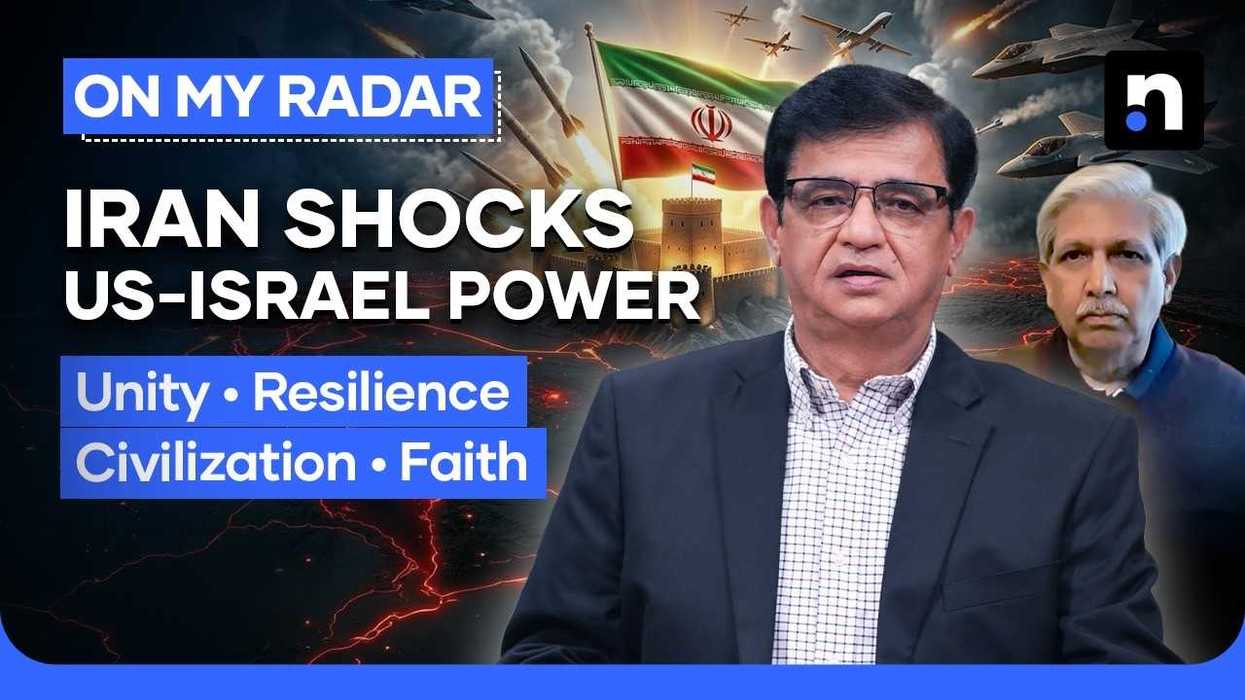
Kamran Khan said the United States and Israel have continued intense attacks on Iran for 12 days, but Tehran has responded with sustained military force and avoided the collapse many in Washington and Tel Aviv anticipated.
Speaking on his show “On My Radar,” Khan said the conflict has shaken the global economic system, sending oil and gas prices surging and disrupting business activity from Europe to the United States and Gulf states.
He said President Donald Trump and Israeli Prime Minister Benjamin Netanyahu appeared to believe that killing Iran’s Supreme Leader, Ayatollah Ali Khamenei, along with senior military figures, would cripple Iran’s resistance on the first day of the assault.
Instead, Khan said, “ground realities dashed those expectations.”
According to his account, Iran did not collapse immediately after the supreme leader’s death. Rather, it demonstrated what he described as institutional resilience, military endurance and national unity that surprised not only Trump and Netanyahu but also global observers.
Khan said that within hours of Khamenei’s killing, Iran activated its constitutional succession framework. An interim leadership council assumed control of the state apparatus. Within days, the Assembly of Experts elected Mojtaba Khamenei as the new supreme leader.
During the transition, Khan said, the civilian government remained functional. President Masoud Pezeshkian, senior adviser Ali Larijani and Foreign Minister Abbas Araghchi continued overseeing state affairs, while the Islamic Revolutionary Guard Corps took charge of military command.
He also challenged what he described as a key miscalculation by U.S. policymakers about Iran’s internal politics.
Khan said Washington had assumed Iranian society was on the brink of rebellion and that removing the supreme leader would trigger nationwide protests against the ruling system. Instead, he said, only scattered reactions appeared on social media.
There was no widespread uprising, he said, nor were there public celebrations across the country following Khamenei’s death.
On the contrary, Khan said millions of people took to the streets in various Iranian cities to mourn the slain leader and express loyalty to the new leadership.
He added that there were no visible fractures within Iran’s security institutions. There were no reports of significant defections from the Revolutionary Guard, police or intelligence agencies. No Iranian diplomat resigned, and there were no reports of diplomatic missions abroad breaking ranks, he said.
Even opposition figures failed to mobilize mass protests, Khan said, including Reza Pahlavi, the son of Iran’s last shah, who had urged public action.
After political stability, Khan said, the second surprising aspect was Iran’s military performance.
Despite weeks of U.S. and Israeli bombardment, Iran continued launching drones and missiles toward Israel and Gulf states, he said. Iranian sources, according to Khan, reported roughly 1,500 civilian deaths from U.S. and Israeli strikes, while confirmed military casualties numbered only in the dozens.
He said Iran’s ability to maintain its command-and-control network under heavy bombardment was viewed as a significant strategic achievement.
For the first time in the conflict, U.S. casualties also emerged, Khan said, adding that Iran had expanded the theater of confrontation across the Gulf region as part of its war strategy.
The economic consequences have been global.
Khan said Iran’s disruption of maritime trade routes in the Gulf pushed oil prices to $119 per barrel, triggering a fresh wave of inflation worldwide. He said voices opposing Trump’s war strategy were rising in Europe.
Trump, he said, appeared to shift his rhetoric, at times declaring the mission accomplished and at other times threatening strikes “20% more severe” if Iran closed the Strait of Hormuz.
Iran, Khan said, showed no sign of backing down.
He cited a post on X by Ali Larijani, secretary of Iran’s Supreme National Security Council, who addressed Trump directly and said Iran was not afraid of “hollow threats” and warned him to be cautious.
Khan said the deepest impact inside Iran has been psychological and social.
Khamenei’s death, he said, transformed the war from a military confrontation into a symbol of national resistance. Despite political divisions in a country of about 90 million people, he said, much of the population rallied around the state.
He noted that in Shiite culture, the concept of martyrdom and sacrifice plays a powerful role, reinforcing public unity in times of crisis.
That does not mean Iran faces no long-term challenges, Khan said. Economic pressure, sanctions and internal divisions remain significant issues.
But the events following Khamenei’s death, he argued, demonstrated that Iran’s system is not built around a single personality but around a state structure designed for survival.
“The United States and Israel succeeded in eliminating Iran’s most powerful figure,” Khan said. “But they did not succeed in bringing down the state structure he led.”
Iran has been shaken, he said, but it has not broken. It reorganized its leadership, preserved its state apparatus and continued fighting — a process that has surprised many global observers.



Comments
See what people are discussing