

Iran strikes US bases in Kuwait and Bahrain as Trump orders new attacks
Iran's Revolutionary Guards say they struck US bases in Kuwait and Bahrain, retaliating for new American strikes ordered by Trump

News Desk
The News Desk provides timely and factual coverage of national and international events, with an emphasis on accuracy and clarity.
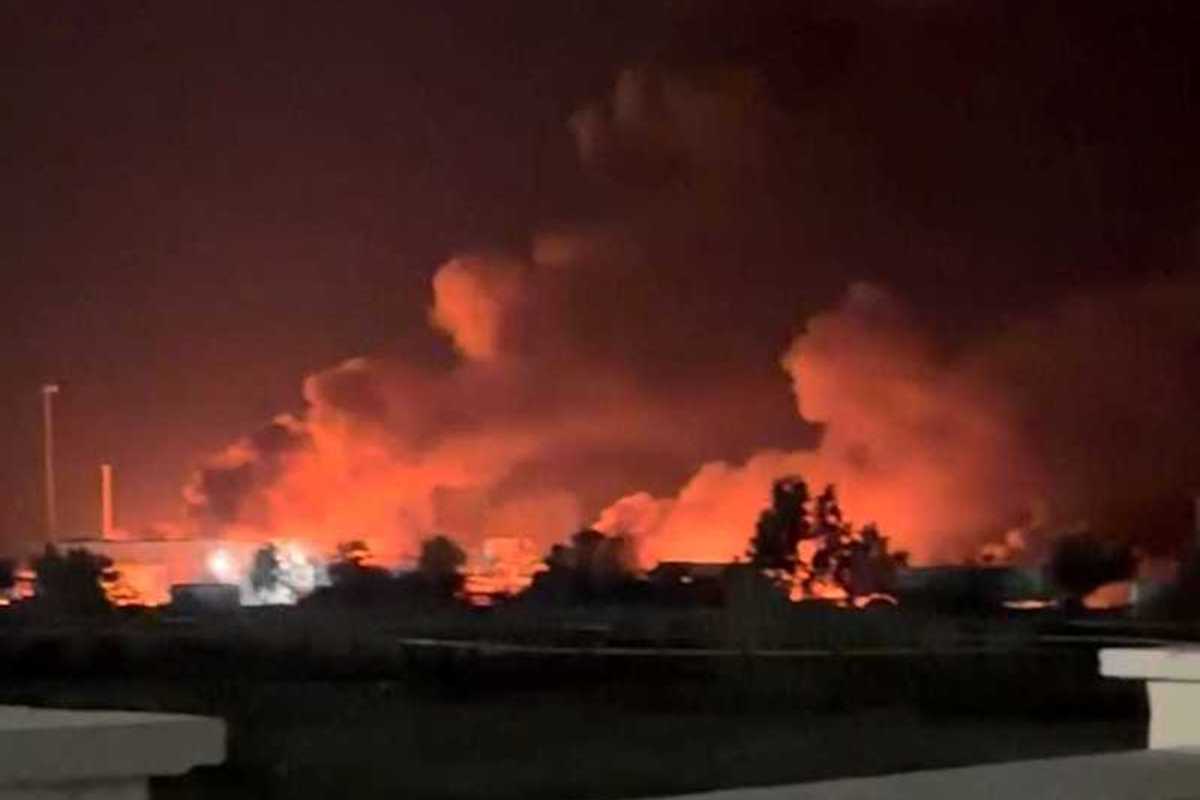
Smoke rises from a port in Kuhestak, Iran, July 8, 2026, in this screengrab obtained from a social media video.
Reuters
Iran's Revolutionary Guards said Thursday they struck US military bases in Kuwait and Bahrain, retaliating for new American strikes on Iranian territory.
The Guards warned that further attacks could hit additional US facilities across the region if Washington strikes again.
Why did Iran strike US bases in Kuwait and Bahrain?
Iran said the strikes were retaliation after President Trump ordered new attacks on Iranian soil, which the US said were meant to protect shipping through the Strait of Hormuz. The Revolutionary Guards said they hit "key infrastructure and facilities" at the Arifjan and Ali Al Salem bases in Kuwait and the Juffair and Sheikh Isa bases in Bahrain, using missiles and drones.
Kuwait said it intercepted two ballistic missiles and 13 drones, and a US military official said the attacks caused no American casualties and no major damage.
What did the US strikes on Iran target?
Trump ordered the new strikes Wednesday, saying they were retribution for Iranian attacks on commercial ships in the Strait of Hormuz a day earlier. "This is in retribution for yesterday's bombing of ships by Iran," Trump wrote on Truth Social. "If it happens again, it will get much worse!"
CENTCOM said US forces struck more than 80 targets Tuesday, including air defense systems, coastal radar sites and 60 small boats operated by the Revolutionary Guards, and said the goal was to reduce Iran's ability to threaten freedom of navigation in the strait. Iranian state media reported explosions in Bandar Abbas, Konarak and Chabahar, and said part of Chabahar lost electricity. Iranian television said the first wave of US strikes killed eight Iranian military personnel.
At the direction of the Commander in Chief, U.S. Central Command forces have started conducting additional strikes against Iran to further degrade their ability to threaten freedom of navigation in the Strait of Hormuz. The United States is holding Iran accountable for recent…
— U.S. Central Command (@CENTCOM) July 8, 2026
The strikes came just ahead of the Thursday burial of former supreme leader Ali Khamenei, who was killed when the war broke out on Feb. 28. Iran's chief negotiator, Mohammad Bagher Ghalibaf, said the Strait of Hormuz would reopen only under "Iranian arrangements" and warned Washington on X: "If you strike, you will be struck."
آمریکا هنوز یاد نگرفته است که زورگویی و بدعهدی دیگر بیهزینه نیست. شفاف بگویم: بزنید، میخورید.
دست و پای بیهوده نزنید که بیشتر فرو خواهید رفت: تنگه هرمز، فقط با «ترتیبات ایرانی» باز میشود نه با تهدیدات آمریکایی.
— محمدباقر قالیباف | MB Ghalibaf (@mb_ghalibaf) July 9, 2026
What is happening in the Strait of Hormuz?
Since the fighting resumed, Tehran has insisted on controlling transit through the strait, saying it would charge passage fees and warning vessels against straying from Iranian-authorized routes. About one-fifth of the world's oil and liquefied natural gas normally moves through the waterway, and oil prices rose 8% after Trump declared the earlier ceasefire over.
Although shipping had started to resume after Washington and Tehran signed a deal ending hostilities last month, nearly 6,000 seafarers remain stranded in the area, International Maritime Organisation chief Arsenio Dominguez said Wednesday. Oman, which sits across the strait from Iran, condemned the strikes on Bahrain and Kuwait as well as the attacks on shipping, but stopped short of blaming Iran directly, maintaining the neutral stance it has held throughout the conflict.
How are Gulf states and world leaders responding?
UN Secretary-General António Guterres urged all sides to show "maximum restraint," and Pakistan, which has mediated between the US and Iran, also called for de-escalation. Iran said Foreign Minister Abbas Araghchi spoke by phone with Qatar's prime minister Wednesday, and both stressed the need for continued diplomacy.
Aboard Air Force One, Trump said Iranian representatives had reached out wanting "to make a deal so badly," though he did not say who contacted the US, and he separately called the Iranians "sort of crazy." In Bahrain, civil servant Nawal Saad said she feared the conflict was widening again. "The spectre of war is looming once more," she said. "I do not want to go through that experience of fear and anxiety again."


Comments
See what people are discussing