

Iran-US understanding suggests gradual economic normalization
Kamran Khan said Iran-US talks point to an expanded post-conflict economic plan covering reconstruction, investment and asset unfreezing

News Desk
The News Desk provides timely and factual coverage of national and international events, with an emphasis on accuracy and clarity.
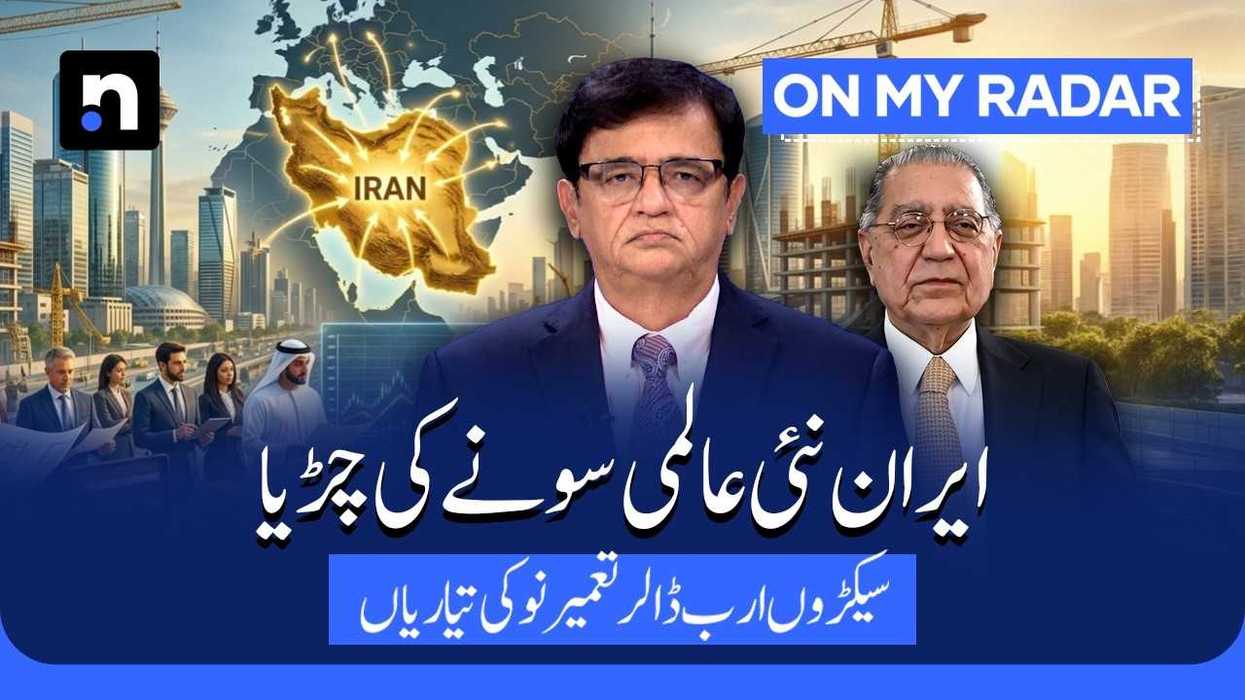
A potential breakthrough peace arrangement between Iran and the United States is increasingly being described not just as a diplomatic development, but as the beginning of a broader geopolitical and financial reset for the region.
According to media reports, the emerging framework signals the possible end of decades of hostility and the start of a large-scale reconstruction and investment phase for a “new Iran,” backed by major global financial stakeholders.
In the latest episode of On My Radar, Kamran Khan noted that the reported developments around the Iran–US understanding point to a far more ambitious post-conflict economic roadmap than previously anticipated, with discussions increasingly centered on reconstruction financing, regional investment participation, and the unfreezing of Iranian assets.
Against this backdrop, Pakistan’s political and military leadership is expected to play a visible role in the unfolding diplomatic moment. Prime Minister Shehbaz Sharif is scheduled to travel to Switzerland tomorrow for what is being described as a historic signing ceremony between Iran and the United States. Field Marshal Syed Asim Munir is also expected to accompany him. Pakistan is reported to be hosting the event, and the agreement itself is said to be roughly one and a half pages in length.
The United States will reportedly be represented at the signing by Vice President JD Vance, who has also suggested that President Donald Trump may attend the ceremony. Iran, meanwhile, is expected to be represented by Parliament Speaker Mohammad Baqer Ghalibaf.
Following the initial agreement, a second phase of negotiations between Washington and Tehran is expected to begin. According to The Wall Street Journal, the next round of talks could take place in Islamabad, where both sides will attempt to resolve remaining issues, including Iran’s nuclear program.
At the core of the emerging framework is a set of significant economic provisions. Reports suggest discussions around a $300 billion reconstruction and investment fund, alongside the potential release of approximately $100 billion in frozen Iranian assets, effectively amounting to a broader economic reintegration package for Iran after years of sanctions.
US Vice President JD Vance has indicated that if Iran complies with the terms of the agreement, it could gain access to a reconstruction fund potentially financed in cooperation with Gulf states. Reuters has further reported that more than half of the proposed $300 billion private investment component has already been committed, underscoring the scale of financial interest tied to the initiative.
However, key questions remain unresolved: where this capital will ultimately originate, what role Arab states will formally play, and whether Iran will indeed regain substantial access to its frozen overseas assets after decades of restrictions.
The evolving situation has also triggered strong political reactions, particularly in Israel. Reports suggest heightened concern in Tel Aviv over the direction of US–Iran engagement, with Israeli Prime Minister Benjamin Netanyahu reportedly expressing unease following tense exchanges with US President Donald Trump.
Tensions between Washington and Tel Aviv appear to be widening over the Iran file. Israel is said to have requested access to the draft agreement text, a request reportedly declined by the United States.
At the same time, Trump has also expressed frustration with Netanyahu over broader regional issues, including Lebanon, further deepening visible strains in the alliance. In one reported remark, he even stated that Israel’s existence would not have been possible without US support.




Comments
See what people are discussing