

Iran-US standoff threatens energy, supply chains globally
Kamran Khan warns that the hostilities could spark food and fertilizer price shocks globally

News Desk
The News Desk provides timely and factual coverage of national and international events, with an emphasis on accuracy and clarity.
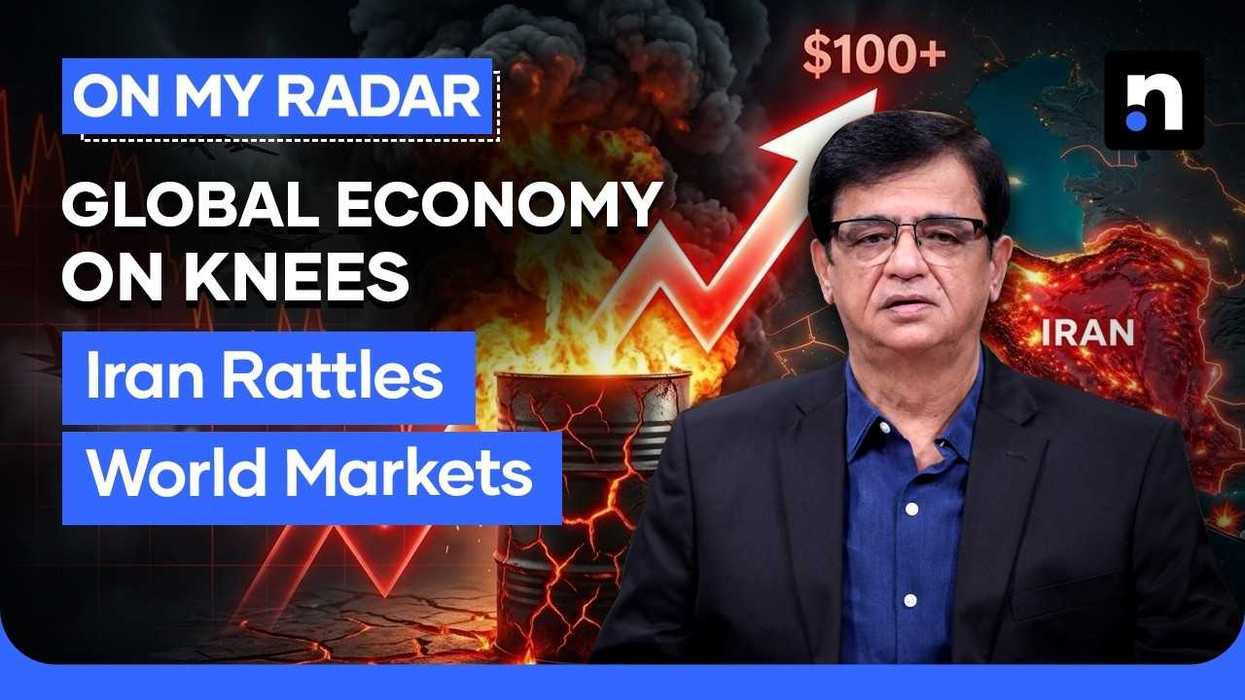
The conflict sparked by U.S. and Israeli actions against Iran is rapidly escalating, with global economic repercussions and widening gaps between major powers.
In his latest episode of On My Radar, Kamran Khan said the Strait of Hormuz blockade has disrupted supply chains spanning three continents, and even the United States struggles to reopen the crucial oil corridor.
“Despite being the world’s largest military power, the U.S. cannot control the Strait of Hormuz,” Khan said. “Iran holds the key, not America.”
Khan cited U.S. President Donald Trump’s appeals—and occasional threats—to regional countries and allies to provide military support. Trump requested assistance from China, France, Japan, South Korea, and the United Kingdom to protect the strait, but most declined, including Japan.
Frustrated by the refusals, Trump reportedly warned NATO allies that failing to secure the strait could imperil the organization’s future. He also threatened to postpone a planned visit to China and expressed anger at the U.K., a top ally, for refusing to help, according to Khan.
The president’s frustration has grown despite a U.S. military presence of 50,000 troops in the Middle East. Trump has deployed an additional 2,500 Marines following last week’s U.S. strike on Iran’s Kharg Island, a major oil export facility. Tehran had previously warned that attacks on its oil infrastructure would prompt retaliatory strikes against regional oil assets and U.S. interests.
Khan highlighted that the conflict has intensified in the Gulf, including drone attacks on UAE ports and assaults on 16 oil tankers, cargo ships, and other commercial vessels since the hostilities began.
“This war is no longer just about crude oil prices,” Khan said. “It has disrupted energy supply routes, maritime trade corridors, fertilizer supply chains, financial markets, and Western investments across the Gulf.”
Shipping companies face soaring war insurance premiums, and some have suspended operations or rerouted vessels. The disruptions have driven Brent crude above $100 per barrel, the largest oil market shock since the early stages of the Ukraine war.
European and Asian industries reliant on Gulf logistics for components and raw materials may face production delays and higher transportation costs if disruptions persist, Khan said, potentially fueling inflation. Companies liken the situation to supply chain crises seen during the COVID-19 pandemic.
Agriculture could face severe consequences. The Gulf supplies natural gas and petrochemical feedstocks for fertilizer production, and supply disruptions have pushed global urea prices from roughly $487 per ton to about $700 per ton. Higher fertilizer costs may limit crop yields, driving up food prices, particularly in emerging economies.
Global financial markets are reacting as well. Stock markets in the U.S., Europe, and Asia have experienced volatility as investors weigh geopolitical risks. History shows that oil shocks often precede economic slowdowns or recessions, and today’s global economy is already burdened with high debt, inflation, and slow growth, Khan said.
The economic effects may persist even if diplomacy resolves the conflict quickly. Energy markets operate on expectations, and sustained geopolitical risk could keep shipping routes and insurance premiums altered for years. Multinational companies may reevaluate Gulf-dependent supply chains, potentially reshaping logistics strategies worldwide.
Khan concluded that the Persian Gulf, long the world’s key energy corridor, has become a potential domino threatening the global economy.
“Even if immediate military tensions ease, the disruption to supply chains, energy markets, and investor confidence will take years to reverse,” he said.




Comments
See what people are discussing