

Islamabad authorizes jail trial of Imaan Mazari and Hadi Chattha
Islamabad authorized a jail trial of Imaan Mazari and Hadi Chattha after police failed to produce them in court. See what the judge and lawyers said.

Aamir Abbasi
Editor, Islamabad
Aamir; a journalist with 15 years of experience, working in Newspaper, TV and Digital Media. Worked in Field, covered Big Legal Constitutional and Political Events in Pakistan since 2009 with Pakistan’s Top Media Organizations. Graduate of Quaid I Azam University Islamabad.
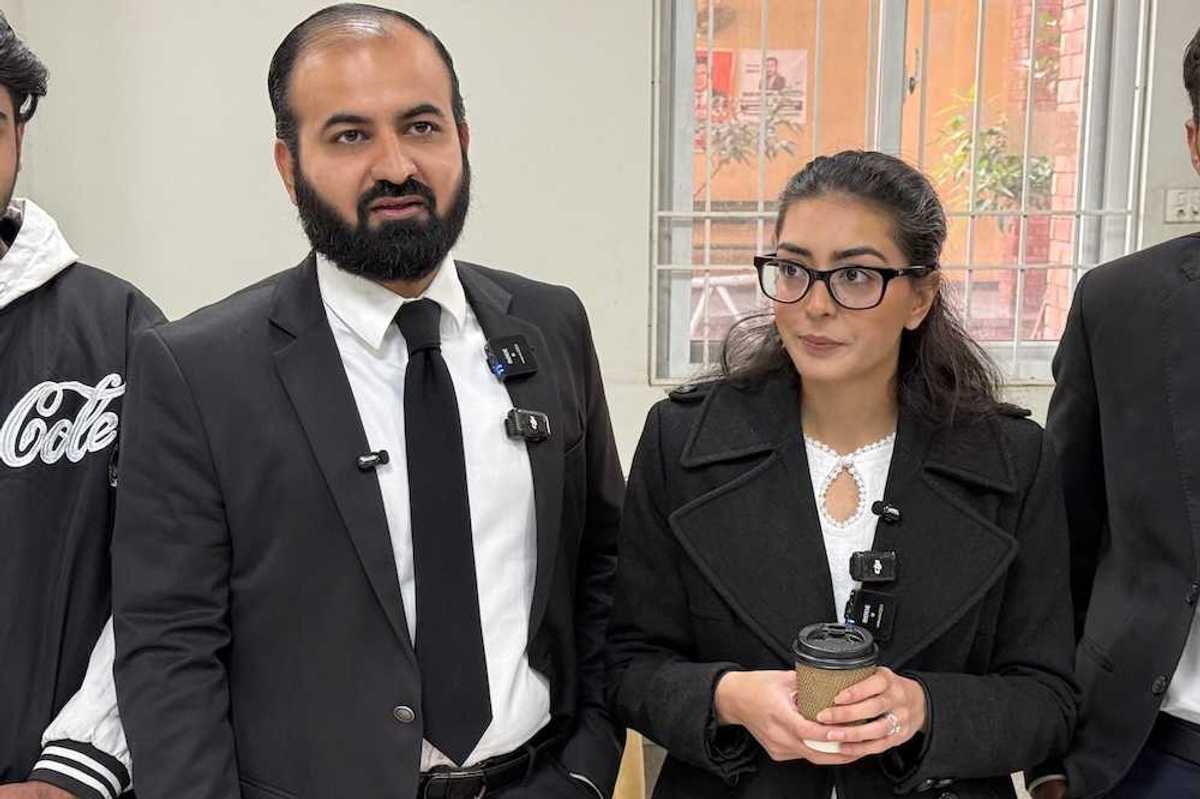
Islamabad's chief commissioner on Thursday authorized Anti-Terrorism Court-II to hold the jail trial of lawyer Imaan Mazari and her husband, Hadi Chattha, in two cases, after police repeatedly failed to produce them in court despite the judge's directions.
Why was a jail trial authorized for Imaan Mazari and Hadi Chattha?
Police said a personnel shortage made it hard to bring the accused to court, as much of the force was deployed in Khyber Pakhtunkhwa and on duties for visiting high-level delegations. SP Headquarters Pari Gul recommended a jail trial, citing transport difficulties, and the district magistrate also requested it.
The notification was issued under provisions of the Code of Criminal Procedure, 1898, and followed requests from the Islamabad district magistrate and the senior superintendent of police (headquarters). Copies were sent to the Interior Ministry, judicial officials, Islamabad Police and the district attorney.
The trial covers two cases. FIR No. 276/2025 was registered at Kohsar police station on March 23, 2025, under various sections of the Pakistan Penal Code and Section 7 of the Anti-Terrorism Act. FIR No. 1161/2024 was registered at Aabpara police station on Oct. 25, 2024, under multiple penal code provisions and Section 7 of the anti-terrorism law.
What did the defense say about access to lawyers and case documents?
During Thursday's hearing, presided over by Judge Tahir Abbas Supra, defense lawyers challenged the circumstances of the accused's absence. They also raised concerns about the accused's ability to consult their lawyers and access case documents.
Defense counsel Eamil Khan Mandokhail submitted an affidavit describing difficulties he said he faced while meeting his clients at Adiala Jail. He said he received a certified copy of the court order at 2:52 p.m. and reached the prison at 3:50 p.m., requesting a confidential meeting under the court's directions and the Pakistan Prison Rules, 1978.
According to the affidavit, he waited nearly an hour before meeting the accused at 4:45 p.m. The meeting ended at 5:10 p.m. in a conference room where, he alleged, conversations were recorded and confidentiality was not maintained.
Mandokhail said he had brought copies of case documents but was not allowed to hand them over. He also alleged that two female police personnel stayed with Mazari throughout, the door was left open and male personnel stood outside, allowing prison officials to hear the conversation.
The lawyer said these conditions prevented a proper discussion of the case. He added that Mazari and Chattha had repeatedly complained that they had not received relevant documents before or after charges were framed.
According to the affidavit, both accused denied boycotting the trial and said they wanted to appear in person. They also cited audio and internet problems during video-link proceedings, saying these prevented them from following hearings properly and consulting their lawyers.
What did the judge say about the accused not being produced in court?
Defense counsel Raja Riasat Ali Azad questioned how the trial could proceed without the accused being physically present. Judge Supra expressed displeasure over their absence and asked prison authorities to explain why they had not been produced.
He directed that the Islamabad Police SP Headquarters be summoned if the required report was not submitted. The judge said he had issued directions for four to five days to secure their appearance and described the situation as a failure of the system. He also asked why police had not raised the possibility of a jail trial earlier.
SP Gul later appeared before the court after being summoned. Police then submitted an application seeking authorization for a jail trial, and the matter remained under consideration during the hearing.
The judge questioned police over what he described as changing explanations, including claims that vehicles and personnel were unavailable. He expressed regret over the handling of the matter but said he would not comment on the legal merits of the request for a jail trial.
What did Imaan Mazari and Hadi Chattha say about a jail trial?
Azad urged the court to set a date for further proceedings. Mazari's mother, former federal minister Shireen Mazari, questioned why authorities had previously managed to bring the accused to court, including at night and with multiple vehicles.
Mazari and Chattha later appeared before the court through a video link, where Judge Supra briefed them on the proceedings and the circumstances of their absence. Chattha said both physical appearances in court and a jail trial would be acceptable to them, provided lawyers and journalists were allowed to attend proceedings inside the prison.
SP Gul told the court that a formal notification authorizing the jail trial was expected Thursday. The chief commissioner's notification subsequently authorized ATC Court-II to conduct the trial in both cases.





Comments
See what people are discussing