

Islamabad hosts high-stakes US-Iran peace talks after Pakistan-brokered ceasefire
Kamran Khan describes Islamabad as 'Amanabad,' highlighting its role as a symbol of global peace efforts

News Desk
The News Desk provides timely and factual coverage of national and international events, with an emphasis on accuracy and clarity.
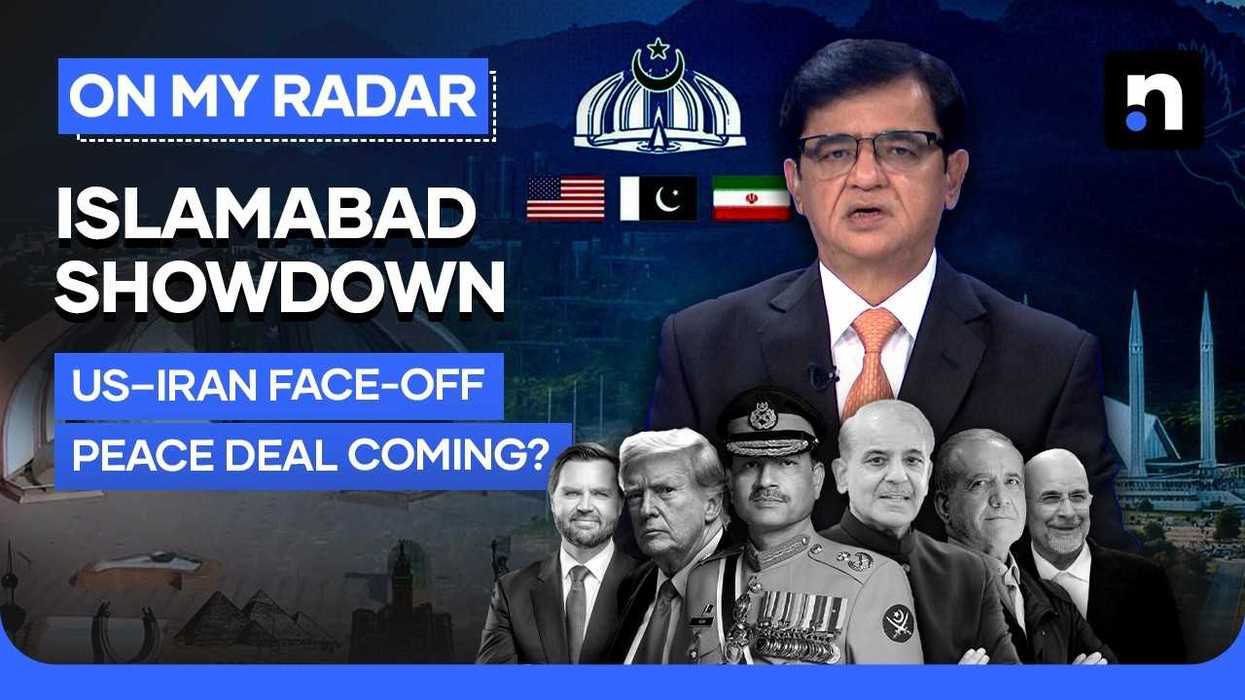
Pakistan’s capital has emerged as a focal point for global diplomacy as senior leaders from the United States and Iran are set to arrive for high-stakes negotiations aimed at transforming a fragile ceasefire into a lasting peace agreement.
Speaking on the latest episode of “On My Radar,” journalist Kamran Khan described the moment as historic, saying Islamabad, while retaining its name, has effectively become “Amanabad,” or the city of peace, reflecting the world’s growing desire for stability.
The talks follow a Pakistan-brokered ceasefire announced three days earlier, which halted six weeks of devastating conflict involving the United States, Israel and Iran. The war claimed thousands of lives and pushed the global economy to the brink of recession, shifting international attention away from the nearly four-year Russia-Ukraine conflict.
According to international media reports, U.S. Vice President JD Vance is leading the American delegation, accompanied by President Donald Trump’s close advisers Steve Witkoff and Jared Kushner. Before departing for Pakistan, Vance said he was traveling under Trump’s guidelines and expressed confidence that the negotiations would yield positive progress.
Iran is being represented by Parliament Speaker Mohammad Baqer Qalibaf, with Foreign Minister Abbas Araghchi and other senior officials also expected to participate. Their presence underscores the seriousness with which both sides are approaching the negotiations despite longstanding mistrust.
The Pakistani leadership has played a central role in facilitating the ceasefire and organizing the talks. Prime Minister Shehbaz Sharif and Chief of Army Staff Field Marshal Syed Asim Munir have led the diplomatic initiative. A meeting between the two leaders was held a day earlier to finalize Pakistan’s strategy for the peace negotiations.
Global attention is now firmly fixed on Islamabad. While the ceasefire remains in place, tensions in the Middle East persist, making the negotiations a critical test of whether diplomacy can prevail over conflict.
Key issues continue to challenge the peace process. Iran has expressed strong anger over Israeli military operations in Lebanon, describing them as inconsistent with the spirit of the ceasefire. Meanwhile, the United States remains concerned that Iran has not fully restored maritime activity in the Strait of Hormuz, a vital global energy corridor.
Despite these concerns, President Trump has voiced optimism about the prospects for a peace agreement. In an interview with NBC, he said Iranian leaders tend to be “more reasonable” in direct conversations than portrayed in the media. Trump also indicated that Israeli Prime Minister Benjamin Netanyahu would scale back military operations in Lebanon ahead of the negotiations.
Adding to the diplomatic momentum, Iran’s newly appointed Supreme Leader, Mojtaba Khamenei, stated on national television that Iran neither sought war in the past nor desires it now but would not relinquish its legitimate rights. In a significant development, Iranian Deputy Foreign Minister Saeed Khatibzadeh announced the partial reopening of the Strait of Hormuz, allowing the passage of U.S. naval vessels.
Pakistan’s mediation efforts have received broad international support, particularly from China. The Washington Post reported that Chinese officials encouraged Iranian authorities to accept the ceasefire terms facilitated by Pakistan, a claim later confirmed by Trump.
However, the path to peace remains fragile. The ceasefire faced a serious setback when Israel launched fresh strikes in Lebanon, prompting Iran to label the action a violation of the truce. According to The Wall Street Journal, Trump subsequently urged Netanyahu in a phone call to avoid sabotaging the negotiations and to reduce military operations. Shortly afterward, Israel announced the start of direct talks with Lebanon.
As negotiations commence in Islamabad, the world watches closely. The outcome will determine whether the recent ceasefire can evolve into a durable peace agreement or whether regional tensions will once again escalate.





Comments
See what people are discussing