

Islamabad poised for possible US-Iran peace talks
Kamran Khan says Pakistan is central to new efforts aimed at ending the US-Iran standoff quickly

News Desk
The News Desk provides timely and factual coverage of national and international events, with an emphasis on accuracy and clarity.
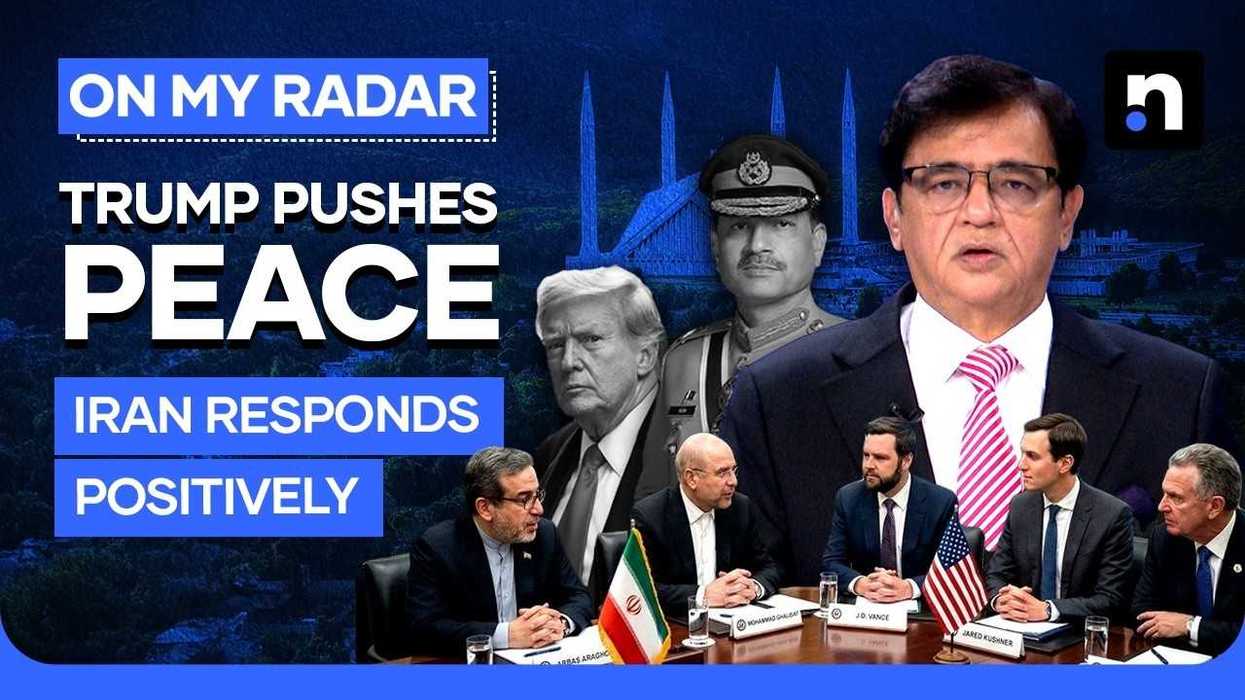
Kamran Khan says rapid diplomatic developments suggest Islamabad may soon host a new round of talks between the United States and Iran, potentially shifting tensions from the battlefield back to the negotiating table.
Speaking on his program “On My Radar,” Khan said it had appeared until recently that disagreements between Washington and Tehran had derailed diplomacy and pushed both sides back toward confrontation.
But he said recent moves now point to the possibility of a “grand deal” meeting in Pakistan’s capital within the next 24 to 48 hours.
Khan says preparations at two five-star hotels in Islamabad, where visiting delegations are expected to stay, indicate serious planning for what he described as a historic peace effort.
He cited a series of comments by U.S. President Donald Trump that he said changed the outlook suddenly.
Khan said Trump told the New York Post that Vice President JD Vance had departed for Pakistan with the U.S. negotiating team and would arrive in Islamabad within hours.
However, Khan noted that later reporting by CNN said Vance was expected to leave Washington for Pakistan on Tuesday instead.
He said the second round of talks between the United States and Iran is now expected in Islamabad on Wednesday, though the situation remains uncertain because both sides continue to issue tough public statements.
Kamran Khan says the White House responded by saying the delegation would depart soon, but no final decision had been made on timing.
He added that Trump also said he would be willing to meet Iranian leaders directly if negotiations produced a major breakthrough.
Meanwhile, Khan said Iran has shown some flexibility after three days of heightened tensions.
Citing Reuters, he said senior Iranian officials indicated Pakistan was working to help reopen the Strait of Hormuz and secure Iran’s participation in talks.
Those officials, he said, stated that Tehran was positively reviewing participation in peace negotiations with the United States, but had not yet made a final decision.
Kamran Khan says Pakistan and Iran’s foreign ministers also held a phone call focused on the proposed negotiations in Islamabad.
He further cited Reuters as reporting that Pakistan’s Chief of Defense Staff, Field Marshal Asim Munir, held a significant phone conversation with Trump.
According to Khan’s account of the Reuters report, Munir told Trump that the closure of the Strait of Hormuz remained the biggest obstacle to negotiations, and Trump said he would consider the proposal.
Khan said neither the White House nor Pakistani officials publicly rejected that report.
He added that Prime Minister Shehbaz Sharif also contacted Iranian President Masoud Pezeshkian and urged him to send a delegation to Pakistan.
According to Khan, Pezeshkian replied that Iran would not send negotiators until the Strait of Hormuz blockade was lifted.
Kamran Khan says diplomatic sources believe three major disputes still remain: reopening the Strait of Hormuz, the transfer of enriched uranium stockpiles, and restrictions on Iran’s nuclear program.
He said Trump had claimed Iran was ready to hand over its enriched uranium stockpile, but Tehran rejected the assertion and called the demand unacceptable.
Iran, Khan said, also opposes permanently shutting down its nuclear program, though it may consider temporary limits.
He added that Chinese President Xi Jinping, in talks with Saudi Crown Prince Mohammed bin Salman, called for reopening the Strait of Hormuz, an immediate ceasefire and a diplomatic resolution to the crisis.



Comments
See what people are discussing