

Israel escalation in Lebanon tests fragile US-Iran peace deal
Kamran Khan said Israel’s actions marked the first major test of the US–Iran understanding, as developments on the ground quickly challenged the durability of the deal

News Desk
The News Desk provides timely and factual coverage of national and international events, with an emphasis on accuracy and clarity.
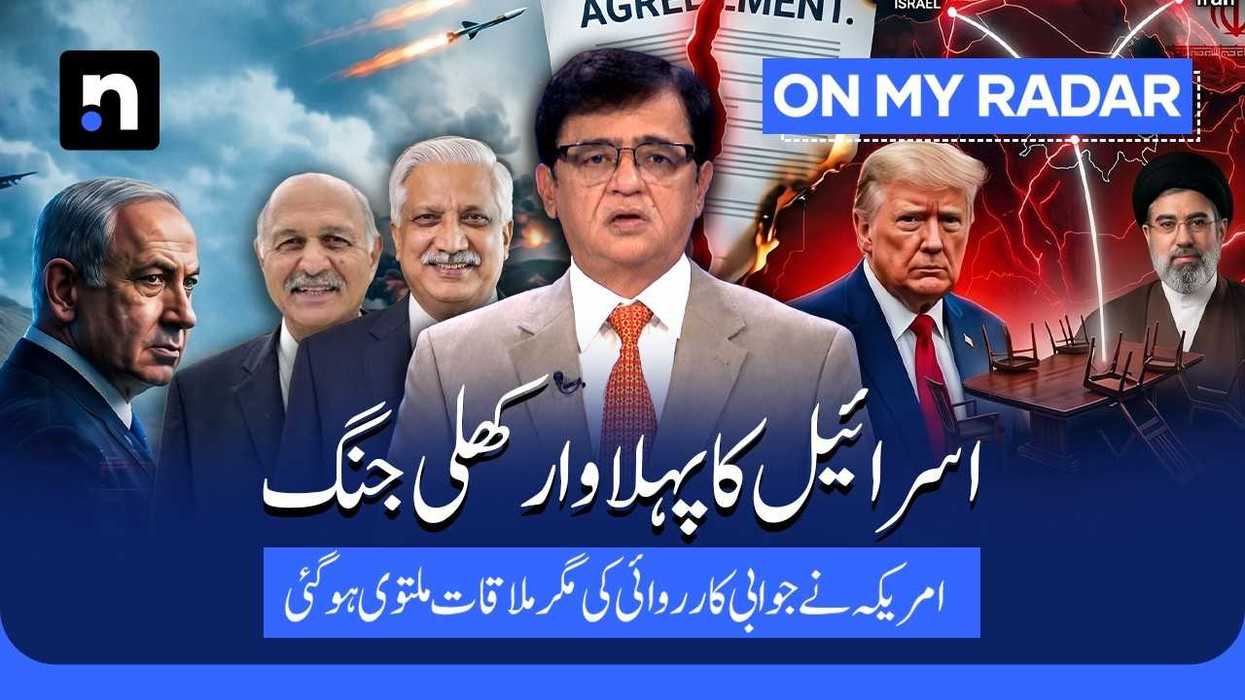
Israel’s renewed military escalation in Lebanon has cast immediate uncertainty over the fragile US–Iran peace framework, just days after its signing, raising questions about whether the agreement can withstand continued regional volatility.
In the latest episode of On My Radar, Kamran Khan said Israel’s actions appeared to represent the first major challenge to the US–Iran understanding, as events on the ground moved quickly to test the durability of the deal.
The agreement, signed 48 hours earlier, was intended to ease regional tensions, but developments in Lebanon have instead intensified them. On Friday, 18 people were killed in Israeli operations in southern Lebanon, while Hezbollah attacks reportedly killed four Israeli soldiers.
As the situation escalated, the United States intervened again to secure a ceasefire between Lebanon and Israel, with Qatar playing a key mediating role.
However, the latest violence and diplomatic strain led to the postponement of the first high-level US–Iran talks scheduled in Switzerland.
Iran subsequently delayed sending its delegation for technical consultations linked to the ceasefire framework. This came despite earlier signals from Supreme Leader Ayatollah Mojtaba Khamenei, who had indicated support for engagement with Washington.
According to CNN, Tehran has insisted that any resumption of talks must be preceded by guarantees that Israeli military operations in Lebanon will cease.
On the Israeli side, Prime Minister Benjamin Netanyahu said in his first response after the agreement that Israeli forces would remain deployed in Lebanon until Israel’s security requirements were fully met.
Meanwhile, the White House confirmed that US Vice President JD Vance had postponed his planned visit to Switzerland. A day earlier, Vance had issued unusually direct remarks to Israeli officials critical of the US–Iran agreement, stating that President Donald Trump remained the only global leader fully backing Israel.
He also pointed to Washington’s annual multibillion-dollar defence assistance to Israel, urging Israeli leaders to avoid public criticism of President Trump.
The comments reflected rare public friction between senior US officials and Israeli leadership at a sensitive diplomatic moment.
The unfolding developments now raise a central question highlighted in On My Radar: whether Israel’s actions risk derailing the emerging US–Iran peace framework, or whether Washington can rein in its closest regional ally to ensure the agreement is implemented as intended.



Comments
See what people are discussing