

Mari Energies expects Ghazij/Shawal gas output to reach 222 mmcfd by FY28
Mari Energies may spend about USD 1 billion on Ghazij/Shawal as security constraints curb North Waziristan growth and raise operating costs.

Business Desk
The Business Desk tracks economic trends, market movements, and business developments, offering analysis of both local and global financial news.
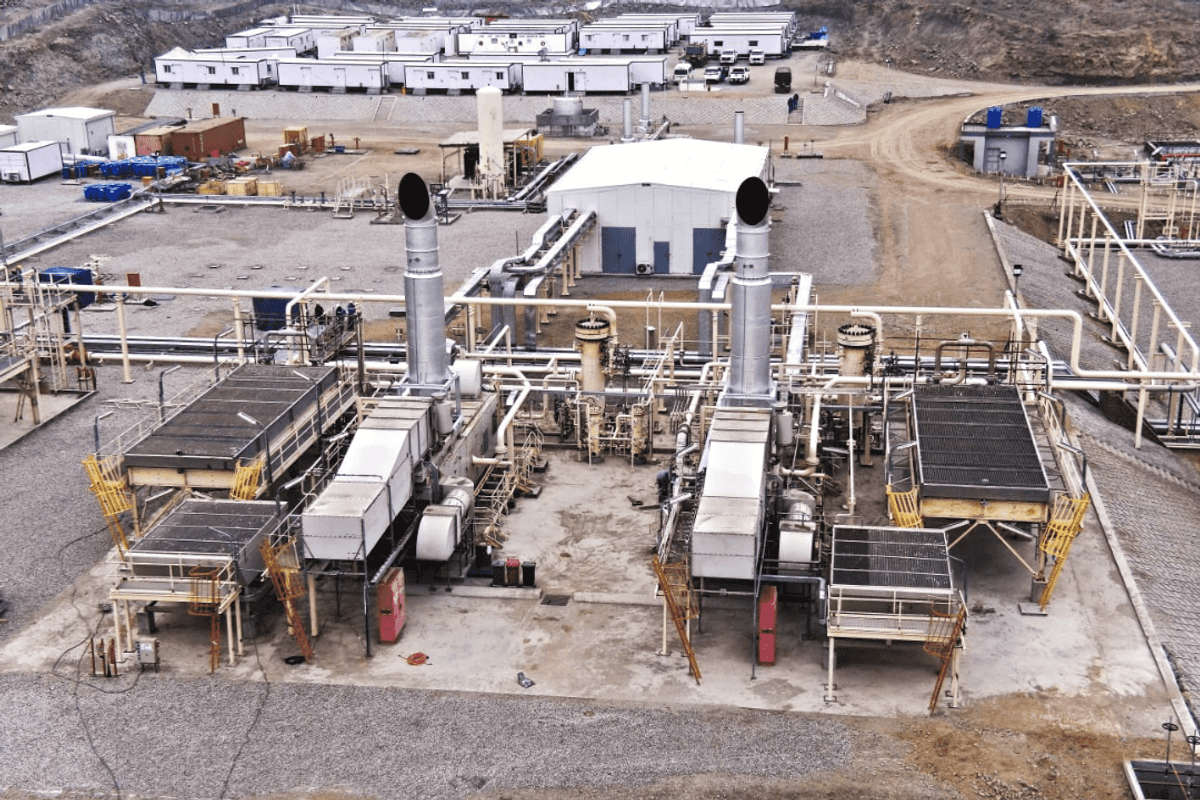
Management expects Ghazij/Shawal output to reach 120 mmcfd by the end of FY27 and 222 mmcfd in FY28.
Pakistan’s Mari Energies Ltd. expects gas output from Ghazij/Shawal to rise to 120 mmcfd by the end of FY27 and 222 mmcfd in FY28 as the development increasingly backfills declining production from the HRL reservoir, according to a Topline Securities briefing following the company’s annual general meeting.
How much gas does Mari Energies expect Ghazij/Shawal to produce?
Management expects Ghazij/Shawal output to reach 120 mmcfd by the end of FY27 and 222 mmcfd in FY28, according to Topline Securities. The development could eventually provide up to 400 mmcfd, although reaching that level may take several years as production from the HRL reservoir declines.
Muhammad Abdur Rafay, research analyst at Topline Securities, said Mari Energies plans more than 100 wells at Ghazij/Shawal, with some already drilled.
The company may need about USD 1 billion in capital expenditure over the next five to six years to develop Ghazij/Shawal, Rafay said. Fertiliser companies are expected to finance about USD 250 million of the investment, with Mari Energies funding the remainder, according to management.
Mari Energies recorded its highest-ever hydrocarbon sales of 41.28 MMBOE in FY26, up from 39.13 MMBOE a year earlier. The company independently confirms the 41.28 MMBOE sales record.
Rafay said production volumes averaged around 113,000 BOEPD during FY26, against production capacity of 136,000 BOEPD. Mari Energies currently reports production capacity of 136,000 BOEPD.
Management attributed part of the higher volumes to disruption in LNG supplies during the geopolitical crisis, which increased demand for domestic gas, Rafay said. An SNGPL pipeline incident last month also affected operations, according to the briefing.
Operating expenditure stood at USD 2.24 per BOE during FY26.
Why has Mari Energies lowered its North Waziristan gas outlook?
Management has reduced the expected production potential of its North Waziristan assets, including Shewa and Spinwam, to 200 mmcfd from an earlier estimate of 300 mmcfd, according to Topline.
Rafay said the revision followed a government gas-demand assessment, while security conditions are restricting Mari Energies’ ability to deploy additional drilling rigs.
The security situation has pushed operating costs in the region to around USD 3.5 to USD 4 per BOE, according to management.
Management also said a new government policy allows an additional USD 0.40 in gas pricing for qualifying new discoveries to compensate producers for higher security-related costs, with Spinwam eligible for the revised pricing.
The security challenges are not limited to Waziristan. Mari Energies’ Maiwand X-1 gas discovery in Block 28, announced in 2024, has yet to begin production because of security concerns, Rafay said. Mari’s records confirm that Maiwand X-1 was discovered in February 2024.
Management expects Maiwand to begin production within the next 12 to 18 months.
Production from the Soho discovery could take longer because of its high carbon dioxide content. Management said the field requires a gas-sweetening plant that could take another 24 months to complete, although the company is evaluating alternatives to bring Soho into production earlier.
How did Mari Energies perform in FY26 and where is it diversifying?
Mari Energies reported a 375% 2P reserve replacement ratio in FY26, while total 2P+2C reserves and resources reached 1,029 MMBOE. The company’s FY26 results independently confirm the reserve replacement ratio, while its website reports 1,029 MMBOE in reserves and resources as of June 30.
The company reported operating profit of PKR 82.6 billion and net profit of PKR 87.1 billion for FY26. It declared total dividends of PKR 27 per share, representing a payout ratio of about 37%. Mari’s financial highlights put the precise payout ratio at 37.23%.
Beyond oil and gas, management said Mari Energies is continuing its diversification strategy through minerals, including the Tuzgi project, digital infrastructure through Sky47 and emissions mitigation through GEM.
Rafay said the Islamabad data centre under Sky47 is operational, while construction of the Karachi data centre has started.




Comments
See what people are discussing