

Oil prices touch $110 a barrel for first time since May on Middle East, Russia supply fears
Oil prices touched $110 a barrel on Friday for the first time since May as Middle East tensions and Russia supply fears pushed Brent crude to $109.86

News Desk
The News Desk provides timely and factual coverage of national and international events, with an emphasis on accuracy and clarity.
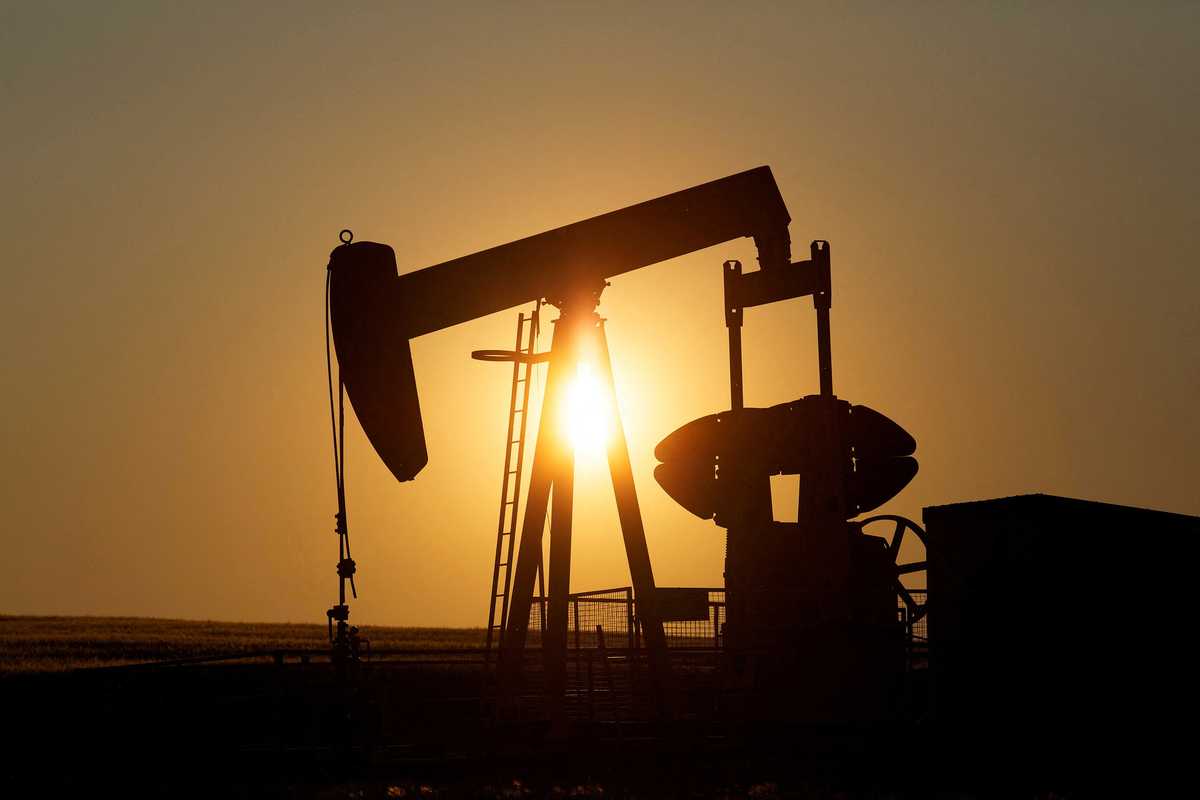
Oil prices touched $110 a barrel on Friday for the first time since May, as Brent crude futures settled 3.7% higher at $109.86.
Escalating Middle East tensions fed fears of tighter supplies, while investors assessed how much diesel Russia could supply to the global market.
Why are oil prices going up?
Prices rose on fears of Middle East escalation and doubts over Russian diesel supply. Rumours of attacks on Saudi energy infrastructure revived escalation fears, intensified Iranian attacks around the Strait of Hormuz cut Gulf crude flows, according to Kpler analysts, and a Ukrainian strike on a Russian refinery added to supply worries.
“Conflict in the Middle East still keeps coming back and I think it’s questionable how much diesel fuel Russia can actually deliver to the markets. Those two factors are just continuing to have traders be buyers,” said Dennis Kissler, senior vice president of trading at BOK Financial.
What is the current price of oil?
Brent crude futures settled $3.94, or 3.7%, higher at $109.86, the highest since May 19. US West Texas Intermediate (WTI) crude futures closed $3.44, or 3.5%, higher at $101.41, the highest since September 17.
So far this week, Brent has risen 4.9% and WTI 10.4%. Brent touched $110 a barrel during Friday’s session.
What is the oil situation in the Middle East?
“WTI and Brent reversed earlier losses as escalation fears resurfaced amid rumors of attacks on Saudi energy infrastructure,” research and consultancy Energy Aspects said in a note.
“Israeli reports suggest Iran may be preparing a pre-emptive strike following unusual military movements detected by Western intelligence. Although unverified, these developments reinforce our view that persistent escalation risks will keep flat prices supported,” Energy Aspects added.
A Saudi-led coalition said it intercepted and destroyed a ballistic missile launched towards the Red Sea city of Yanbu. The port is critical for Saudi Arabia’s efforts to bypass the Strait of Hormuz and keep oil flowing to international markets. Initial reports indicated no damage to Yanbu’s infrastructure, consultants Rapidan Energy Group said.
Attacks around the Strait of Hormuz surged over the past 10 days, with Iran saying it was stepping up strikes in response to the US blockade of its ports and tougher sanctions introduced last month.
“Intensified Iranian attacks drove Gulf crude flows sharply lower,” Kpler analysts said in a report on Thursday. They expected a slower and more uneven recovery in Hormuz flows in the absence of a comprehensive political deal.
How are Russian refinery attacks and supply releases affecting oil?
Ukraine struck a Russian oil refinery on Thursday after President Volodymyr Zelenskiy declared that Kyiv was abandoning a ceasefire covering energy sites announced by US President Donald Trump. Zelenskiy also criticised Trump’s willingness to strike deals with Moscow.
Russia’s Ryazan oil refinery has suspended operations at a primary crude distillation unit following a drone attack in the region on Thursday, two industry sources told Reuters.
To boost supply, the International Energy Agency agreed on Thursday to release more than 20 million barrels of fuel to the market. The United States also issued a request for proposal for an exchange of up to 17 million barrels of crude oil from the nation’s Strategic Petroleum Reserve (SPR), the Department of Energy said on Friday.
Washington previously agreed to loan 172 million barrels of oil from the SPR as part of a wider deal with about 30 countries in the International Energy Agency to release 400 million barrels from reserves around the world.
Brent crude was little changed on Thursday, while WTI settled up more than 3%. That followed news that the US was weighing plans to ease restrictions on the world’s “shadow fleet” of tankers, and a big US crude stock draw on hurricane production shut-ins.





Comments
See what people are discussing