

Oil slips after Trump says US will help free ships stranded in Strait of Hormuz
Oil prices dipped Monday as Trump announced Project Freedom to escort stranded ships through the Strait of Hormuz, but no US-Iran peace deal kept prices above $100

News Desk
The News Desk provides timely and factual coverage of national and international events, with an emphasis on accuracy and clarity.
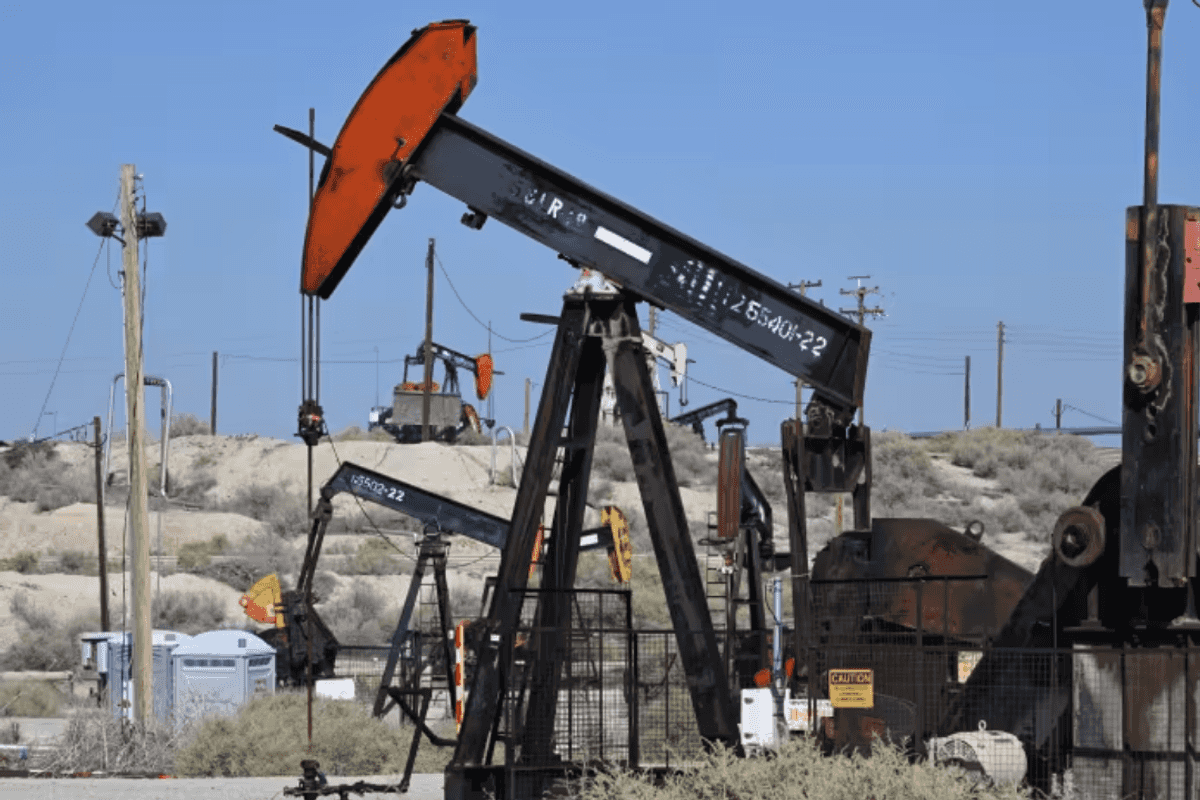
Oil prices eased on Monday after US President Donald Trump announced that the United States would begin escorting ships stranded in the Strait of Hormuz.
Brent crude and West Texas Intermediate both fell, though prices held above $100 a barrel with no peace deal in sight. The Strait of Hormuz remains largely closed to normal traffic amid the ongoing US-Iran standoff.
Why did oil prices slip after Trump's Strait of Hormuz announcement?
Trump's announcement of a ship-escort operation, dubbed Project Freedom, offered markets a signal of potential relief for blocked Gulf shipping.
However, with no US-Iran peace agreement reached and the strait still largely closed, traders kept prices elevated. The prospect of easing supply disruptions pushed prices lower, but the underlying blockade remained in place.
What are oil prices doing right now?
Brent crude futures fell 64 cents, or 0.59%, to $107.53 a barrel by 2308 GMT, after settling down $2.23 on Friday. US West Texas Intermediate dropped 84 cents, or 0.82%, to $101.10 a barrel, following a $3.13 loss the previous session.
Both benchmarks remained well above $100, reflecting the continued disruption to Gulf oil supplies through the Strait of Hormuz.
Trump wrote on Truth Social on Sunday that the US would "guide their Ships safely out of these restricted Waterways, so that they can freely and ably get on with their business."
The announcement came as US-Iran negotiations continued over the weekend, with both sides assessing each other's positions. ANZ analysts described the talks as stalled, saying "both sides refuse to move on their respective red lines."
Where do US-Iran peace talks stand?
Trump has made a nuclear deal with Tehran a central priority in the negotiations. Iran, by contrast, has proposed setting aside nuclear issues until after the war ends and both sides agree to lift opposing blockades on Gulf shipping.
The gap between the two positions has left talks deadlocked, keeping pressure on global oil markets.
What did OPEC+ decide about oil output in June?
On Sunday, OPEC+ agreed to raise oil output targets by 188,000 barrels per day in June for seven member countries, the third consecutive monthly increase.
The rise matches the May increase, minus the share of the United Arab Emirates, which left OPEC on May 1. The higher output target will remain largely theoretical as long as the Iran war continues to disrupt Gulf supplies through the Strait of Hormuz.





Comments
See what people are discussing