

Two oil tankers catch fire in Strait of Hormuz as Iran warns ships off unauthorized routes
Two commercial oil tankers explode after striking naval mines in the southern sector of the Strait of Hormuz, prompting the Islamic Revolutionary Guard Corps Navy to issue a stern warning to international shipping companies against bypassing

News Desk
The News Desk provides timely and factual coverage of national and international events, with an emphasis on accuracy and clarity.
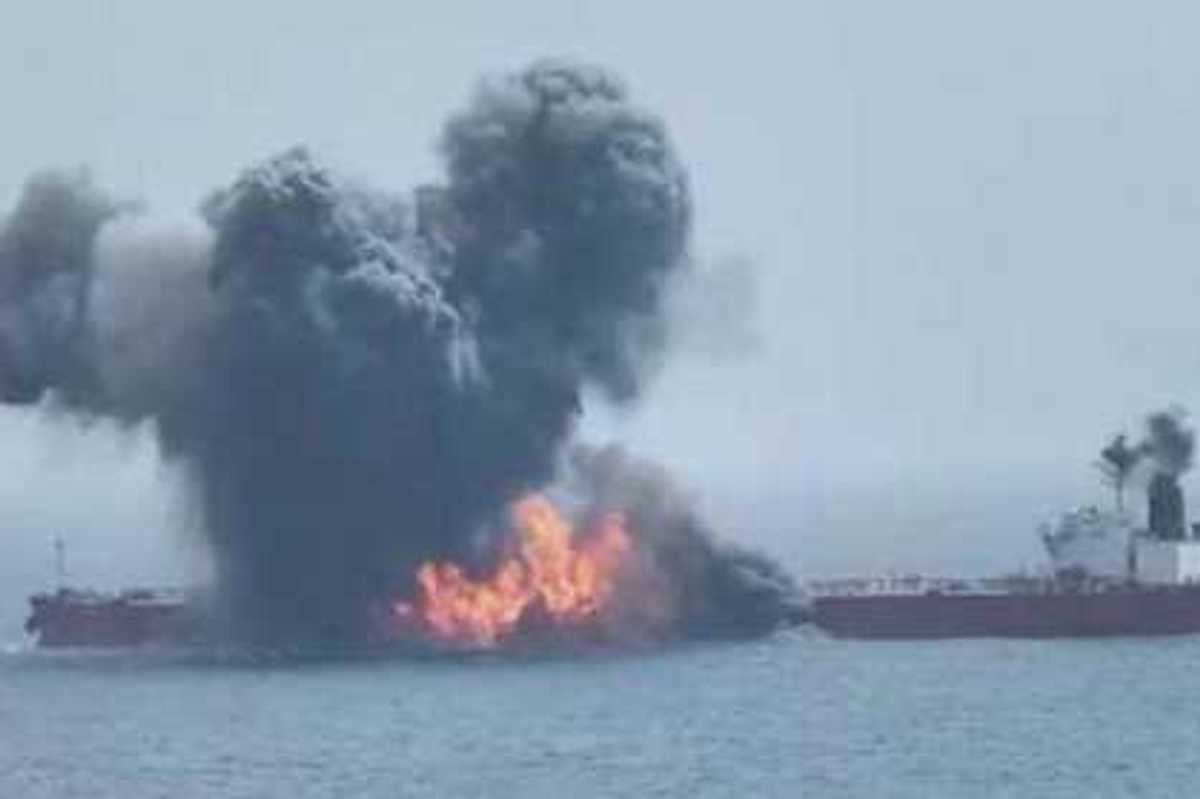
IRGC Navy: Two oil tankers explode, catch fire after hitting mines.
Picture Courtesy: PressTV/ X
Two commercial oil tankers exploded and caught fire in the southern sector of the Strait of Hormuz, prompting Iranian authorities to issue a stern warning to international shipping companies against traversing unauthorized routes through the strategic waterway, according to Iranian state media.
According to a statement issued by the Public Relations Office of the Islamic Revolutionary Guard Corps (IRGC) Navy, the two vessels, including a supertanker, suffered massive blasts and became engulfed in flames after striking naval mines while attempting to secretly transit an unauthorized southern channel with their radar and positioning systems switched off. Flames from the burning supertanker lit up the southern shores of the vital Persian Gulf choke point during the night.
What warning did Iranian naval forces issue to global shipping operators?
In the wake of the blasts, Tehran reiterated its strict maritime directives, cautioning shipowners and global shipping operators that attempting to navigate outside designated corridors or without prior coordination with the IRGC Navy's Strait of Hormuz traffic control center carries severe security risks.
IRGC Navy: Two oil tankers explode, catch fire after hitting mineshttps://t.co/l4f3vTvVGR https://t.co/SkrGhWicMH
— Press TV 🔻 (@PressTV) November 13, 2026
As per Iranian state media, the warning underscores Tehran's enforcement of restricted transit zones across the waterway, which serves as a critical artery for global energy supplies.
The IRGC Navy stated that any commercial vessel disabling its navigation transponders or coordinating with U.S. military patrols to traverse unauthorized southern lanes would face similar consequences.
How do blasts fit into the wider maritime standoff in the Persian Gulf?
The latest explosions follow a string of similar maritime incidents in the southern channels of the strait, where multiple commercial tankers attempting to bypass authorized lanes have been damaged by sea mines and onboard fires.
The blasts unfold amid acute military friction across the Persian Gulf, where Iran has maintained tight operational oversight over Hormuz transit routes in response to the United States' naval blockade of Iranian ports and U.S. Central Command's recent activation of "Task Force Iron Gate" to interdict shipments across Iran's land borders and the Caspian Sea.
Meanwhile, G7 foreign ministers have formally rejected Iran's unilateral transit restrictions and called for the restoration of safe, unrestricted commercial navigation through the waterway.
Despite the heightened maritime volatility, diplomatic back channels mediated by Qatar remain active as regional envoys work to prevent a broader armed confrontation between Washington and Tehran.
According to reporting by Tasnim News Agency, regional maritime authorities and international naval task forces are monitoring shipping lanes and rescue operations across the southern approaches to the strait.





Comments
See what people are discussing