

Outgoing UN Secretary-General Antonio Guterres delivers final climate rallying cry at New York summit
In his final high-level climate summit before completing his nine-year tenure, UN Secretary-General António Guterres hailed the unstoppable rise of clean energy while demanding concrete roadmaps to transition away from fossil fuels amidst worsening global climate impacts

News Desk
The News Desk provides timely and factual coverage of national and international events, with an emphasis on accuracy and clarity.
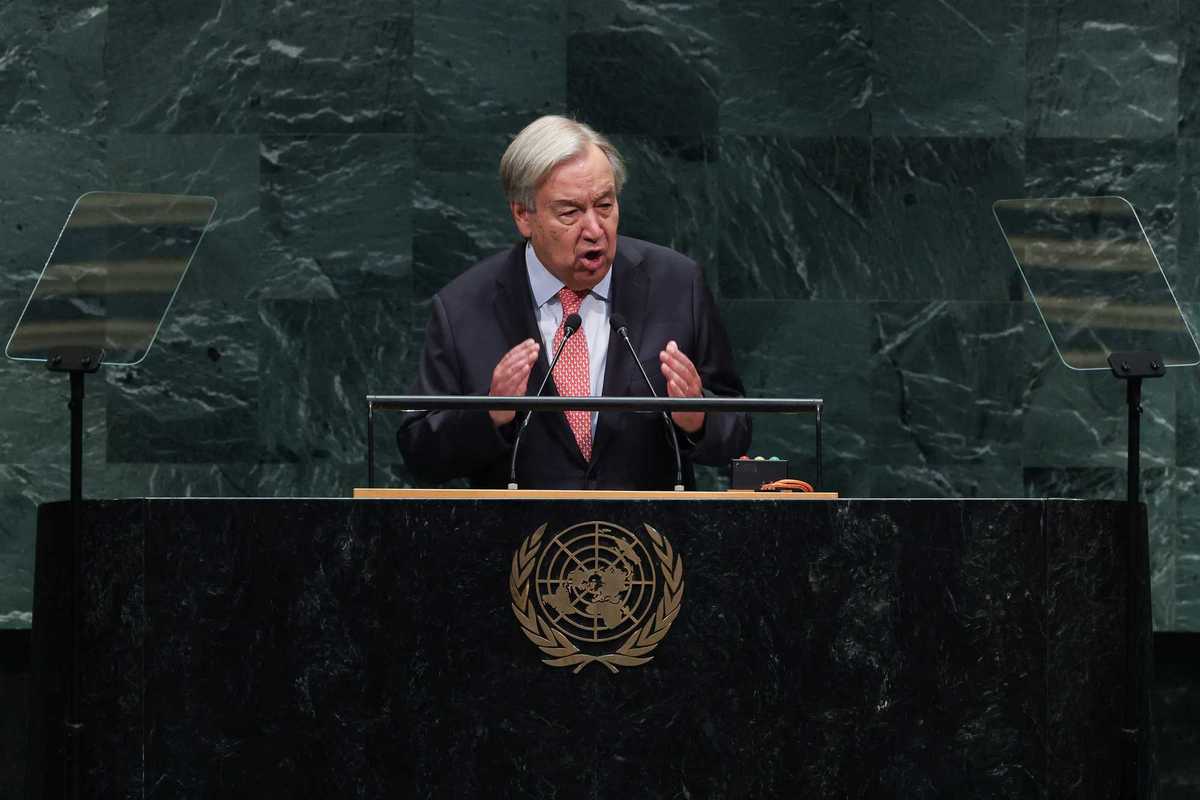
UN Secretary General Antonio Guterres speaks during the 81st United Nations General Assembly at the United Nations Headquarters in New York, on September 22, 2026.
AFP
Outgoing UN Secretary-General António Guterres delivered his final major climate address at the United Nations headquarters in New York on Wednesday, urging world leaders to accelerate the global transition away from fossil fuels and mobilize urgent climate financing for vulnerable nations.
What were the key takeaways from Guterres' final UN climate summit address?
Speaking at the "High-level Event on Climate Action and the Just Transition" during the 81st session of the UN General Assembly, the 77-year-old UN chief emphasized that clean energy has evolved from an alternative option into an "unstoppable" global economic force.
Guterres called on governments to elevate their national emissions reduction targets and publish firm roadmaps to phase out coal, oil, and gas. His address came shortly after Germany—Europe's largest economy—released its official fossil fuel phase-out roadmap, becoming the third country to do so following France and the Netherlands. Reiterating his harsh critique of major oil producers from the previous day, Guterres stated: "We are the first generation with the tools to end the fossil fuel age—and the last who can avert climate catastrophe."
How did COP31 co-hosts and international leaders react at the summit?
The summit featured contributions from Australian Prime Minister Anthony Albanese and Turkish President Recep Tayyip Erdogan, whose nations are co-hosting the COP31 climate conference in Antalya in November:
- Australia: Prime Minister Albanese touted that clean sources generated half of Australia's grid power during the peak of its last summer, while defending ongoing trade and energy security discussions with international partners.
- Turkey: President Erdogan emphasized economic pragmatism, cautioning that climate proposals failing to align with social and economic realities would falter, while promoting an initiative to raise electricity's share of global energy consumption to 35 percent by 2035.
- United Kingdom: UK Foreign Secretary Ed Miliband pledged £330 million ($437 million) to the Global Environment Facility to assist developing nations in tackling pollution and climate degradation.
According to reporting by Arab News and Climate Home News, Nepal's Foreign Minister Shisir Khanal delivered a poignant appeal following catastrophic Himalayan floods that killed over 1,400 people, demanding "climate justice" for vulnerable nations facing climate impacts they did not create.
What is the legacy of Guterres' nine-year tenure on climate action?
Throughout his nine years as Secretary-General, which concludes on December 31, 2026, Guterres made climate breakdown a central focus of international diplomacy. Environmental advocates and civil society organizations praised his consistent efforts to amplify voices from frontline island states and developing nations.
As extreme weather events compound under a record-setting El Niño cycle—from European heatwaves to glacial lake outbursts in Asia—Guterres reiterated his directive that early warning disaster systems must protect every human on Earth by 2027.




Comments
See what people are discussing