

Pakistan condemns attacks on Kuwait, backs mediation in Iran conflict
Kuwait backs Pakistan’s mediation push as Iran-US strikes and threats intensify

News Desk
The News Desk provides timely and factual coverage of national and international events, with an emphasis on accuracy and clarity.
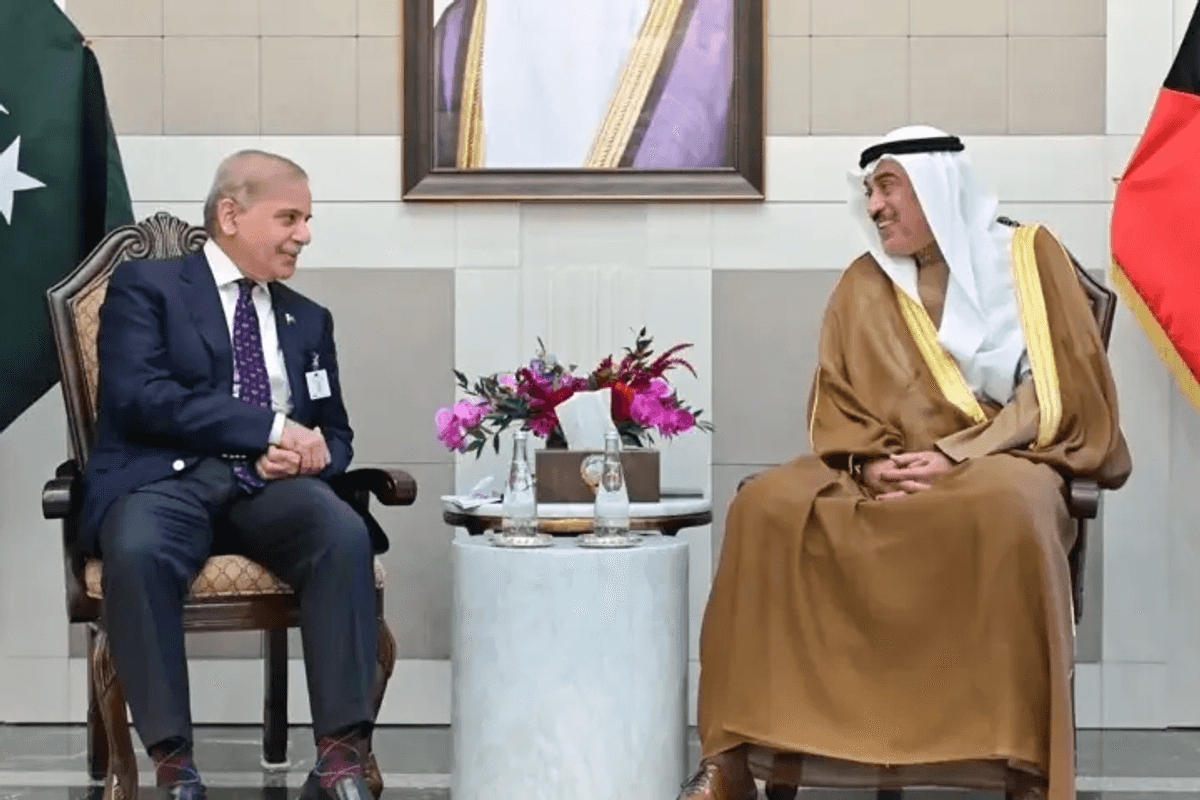
Pakistani Prime Minister Shehbaz Sharif (L) and Kuwait’s Crown Prince Sheikh Sabah Al Khaled Al Hamad Al Sabah (R).
Courtesy: X/ Permanent Mission of Pakistan to the UN
Prime Minister Shehbaz Sharif condemned on Friday recent attacks on Kuwait and reaffirmed Pakistan’s solidarity with the Gulf state, his office said, as tensions persist across the Middle East.
The conflict began on Feb. 28 with U.S.-Israeli strikes on Iran. Since then, U.S. and Israeli forces have continued attacks on Iranian targets, while Tehran has carried out counterstrikes against U.S. interests and oil and other infrastructure in the Gulf.
Pakistan has repeatedly urged restraint and has sought to mediate between Washington and Tehran following the collapse of talks over Iran’s nuclear program.
Shehbaz spoke by phone with Kuwaiti Crown Prince Sheikh Sabah Al Khaled Al Hamad Al Sabah and reiterated Pakistan’s strong condemnation of the attacks on Kuwait, according to a statement from the Prime Minister’s Office.
“The Prime Minister also apprised the Kuwaiti leadership of Pakistan’s sincere diplomatic efforts to bring an end to the war in the Middle East,” the statement said.
It added that the Kuwaiti crown prince “fully endorsed Pakistan’s efforts for mediation between Iran and the U.S.” and thanked Sharif for Pakistan’s support during the crisis.
Shehbaz assured the crown prince that Pakistan would continue to play a constructive role in promoting peace and stability in the region, the statement said.
The development came hours after Iran’s Revolutionary Guards urged civilians across the Middle East to avoid areas near U.S. forces, escalating warnings despite U.S. President Donald Trump’s claim that talks to end the monthlong war were “going well.”
The Guards’ statement followed Trump’s decision to extend a deadline for Tehran to open the Strait of Hormuz or face the destruction of its energy assets. The deadline was pushed from Friday to April 6.
Separately, Pakistan has taken a central role in efforts to facilitate indirect contacts between Washington and Tehran, working with Ankara and Cairo.
Officials have confirmed that indirect exchanges between the United States and Iran are continuing through structured message relays rather than direct negotiations.
In a post on X on Thursday, Deputy Prime Minister and Foreign Minister Ishaq Dar said “U.S.-Iran indirect talks are taking place through messages being relayed by Pakistan.”
He added that a 15-point U.S. framework had been shared and was under Iranian deliberation, with the support of what he described as the “brotherly countries of Turkey and Egypt.”




Comments
See what people are discussing