

Pakistan court seeks federal reply on PTI plea against KP Governor’s Rule, denies interim relief
PHC issues notices to federal government and Attorney General on petitions filed by PTI challenging the proclamation of Governor’s Rule and emergency in KP

Kamran Ali
Correspondent Nukta
Kamran Ali, a seasoned journalist from Khyber Pakhtunkhwa, Pakistan, has a decade of experience covering terrorism, human rights, politics, economy, climate change, culture, and sports. With an MS in Media Studies, he has worked across print, radio, TV, and digital media, producing investigative reports and co-hosting shows that highlight critical issues.
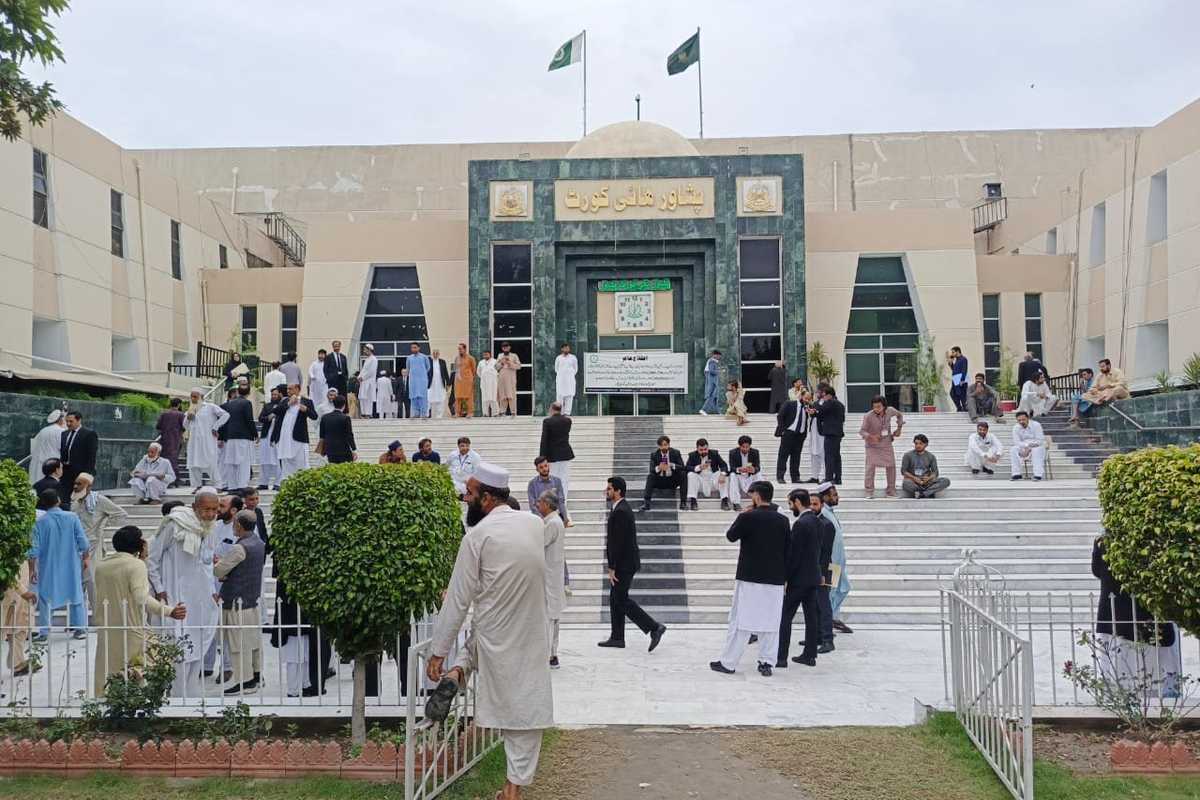
FILE: Proceedings of Peshawar High Court resumed after five hours following a meeting between the judiciary and representatives of the bar.
The Peshawar High Court (PHC) on Tuesday, October 20, sought detailed responses from the federal government and the Attorney General’s Office regarding petitions challenging the imposition of Governor’s Rule and a state of emergency in Khyber Pakhtunkhwa, while declining to grant interim relief to suspend the measures.
Why did the Peshawar High Court decline interim relief while issuing notices?
A division bench comprising Justice Ijaz Anwar and Justice Faheem Wali took up the constitutional petitions submitted by Pakistan Tehreek-e-Insaf (PTI) leadership contesting the October 11 executive orders.
Appearing before the bench, PTI Chairman Barrister Gohar Ali Khan pleaded with the court to grant immediate interim relief by suspending the emergency proclamation and restraining federal authorities from conducting coercive actions against party workers.
The bench declined to issue an immediate stay order or injunctive relief against the federal administration, ruling instead that the judicial review of complex executive actions taken under constitutional emergency provisions requires formal input from the federation.
Justice Anwar confirmed that the court would examine the federal government’s formal stance through the Attorney General for Pakistan before determining the legality of the measures. The bench subsequently issued formal notices to the Attorney General’s Office and relevant federal respondents, adjourning further substantive proceedings until November 10.
What are the constitutional arguments against the emergency and Governor's Rule?
In the petition, Barrister Gohar argued that the proclamation unconstitutionally displaced a democratically elected provincial government and violated multiple constitutional guarantees. Gohar told the court that PTI leaders and lawmakers were being targeted through arbitrary raids, stating: "We have been deprived of our mandate, and raids are being conducted at our homes."
He also questioned the partisan removal of developmental inaugurations across the province, noting that plaques marking PTI-funded projects were being systematically dismantled while those belonging to other parties were left undisturbed. Gohar emphasized that PTI remains unified, supports state-led counter-terrorism operations, and remains committed to peaceful political processes, arguing that the federal takeover was exacerbating regional resentment.
The petition asks the high court to strike down the emergency declarations as unconstitutional and reinstate suspended Chief Minister Sohail Afridi alongside his provincial cabinet. PTI maintains that the proclamation was enacted without the requisite constitutional thresholds, including prior consideration by the provincial legislature, alleging that security challenges were leveraged as a pretext for political victimization.
The federal government imposed Governor’s Rule and declared an emergency in Khyber Pakhtunkhwa on October 11, citing an unsustainable surge in militant attacks and an alleged failure by the provincial administration to address security threats. President Asif Ali Zardari signed the orders under Articles 232 and 234 of the Constitution following a breakdown in high-level counterterrorism negotiations between the federal government and the provincial executive.
Constitutional experts expect both the federal response and companion appeals before the Federal Constitutional Court to clarify the limits of federal emergency powers over provincial assemblies.





Comments
See what people are discussing