

Pakistan elected to chair developing-country Borrowers’ Platform
Aurangzeb says 2026–27 agenda will focus on debt management, technical cooperation and new development-financing instruments

Business Desk
The Business Desk tracks economic trends, market movements, and business developments, offering analysis of both local and global financial news.
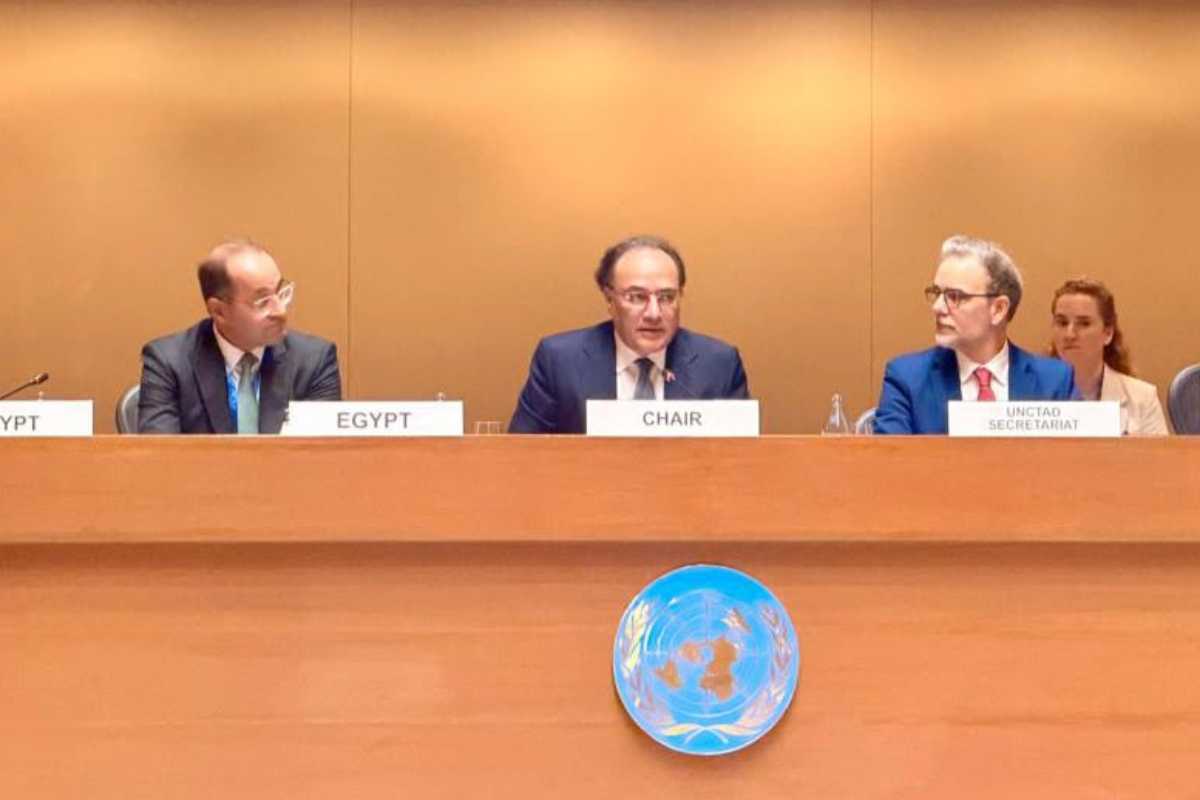
Finance Minister Muhammad Aurangzeb accepted the chairmanship on Pakistan’s behalf during the platform’s first Governing Council meeting in Bangkok on October 12.
Finance Division
Pakistan has been elected to chair the Governing Council of the Borrowers’ Platform, an initiative bringing together developing-country borrowers to strengthen cooperation on debt management and development financing.
Finance Minister Muhammad Aurangzeb accepted the chairmanship on Pakistan’s behalf during the platform’s first Governing Council meeting in Bangkok on October 12, held on the sidelines of the World Bank Group–International Monetary Fund Annual Meetings, according to Pakistan’s Finance Ministry.
What will Pakistan focus on as chair of the Borrowers’ Platform?
Pakistan will use its 2026–27 chairmanship to strengthen debt-management practices, share reform experiences and explore innovative development-financing instruments. Aurangzeb said the Borrowers’ Platform is designed for mutual learning and technical cooperation among developing-country borrowers, not as a collective bargaining or crisis-management mechanism.
“It’s about mutual learning, technical cooperation with each other,” Aurangzeb told reporters. “This is more about proactive engagement — how we avoid the pitfalls.”
Aurangzeb acknowledged Egypt’s leadership and the contributions of member countries and the platform’s secretariat in making the initiative operational.
He also reaffirmed Pakistan’s commitment to practical implementation and measurable results, stressing that debt should remain an instrument for development rather than a constraint on it.
The finance minister welcomed the rapid progress in establishing the platform’s institutional foundations, governance arrangements and shared work program, as well as growing interest from prospective members.
The Borrowers’ Platform was formally launched in April following preparatory work by a seven-country working group led by Egypt as chair and Pakistan as vice-chair. UN Trade and Development serves as its secretariat.
Its first Governing Council meeting convened finance ministers, central bank governors and senior officials from developing countries and launched the platform’s first annual cycle. Thirty-one developing countries have formally joined.
Developing countries face mounting debt costs
The initiative comes as developing economies contend with high borrowing costs, geopolitical conflicts, trade and climate pressures and constrained access to financing.
United Nations Secretary-General António Guterres described the pressures facing developing countries as a “perfect storm,” citing geopolitical tensions and conflicts, trade and climate pressures, inadequate financing and high debt-service burdens.
“The Borrowers Platform offers members an opportunity to navigate this storm,” Guterres said.
A United Nations Development Programme report released ahead of the Bangkok meetings found that the median developing country now spends about 9.5% of government revenue on interest payments alone, the highest share in 25 years and more than three times the proportion in high-income countries.
Higher global bond yields are adding to the pressure. UNDP said the US 10-year Treasury yield had reached 5.3%, its highest level since 2002, increasing financing pressure on countries already carrying heavy debt burdens.
The debt problem is not confined to developing economies. IMF Managing Director Kristalina Georgieva has called advanced economies the world’s “worst offenders” in the buildup of global debt.
The Borrowers’ Platform is intended to complement existing international debt mechanisms by giving borrowing countries a dedicated forum to exchange experience, strengthen technical capacity and cooperate on debt issues rather than act as a collective debt-restructuring body.





Comments
See what people are discussing