

Pakistan emerges as hub for US-Iran-Israel backchannel diplomacy
Kamran Khan highlights Pakistan’s growing role as US and Iran weigh ceasefire framework

News Desk
The News Desk provides timely and factual coverage of national and international events, with an emphasis on accuracy and clarity.
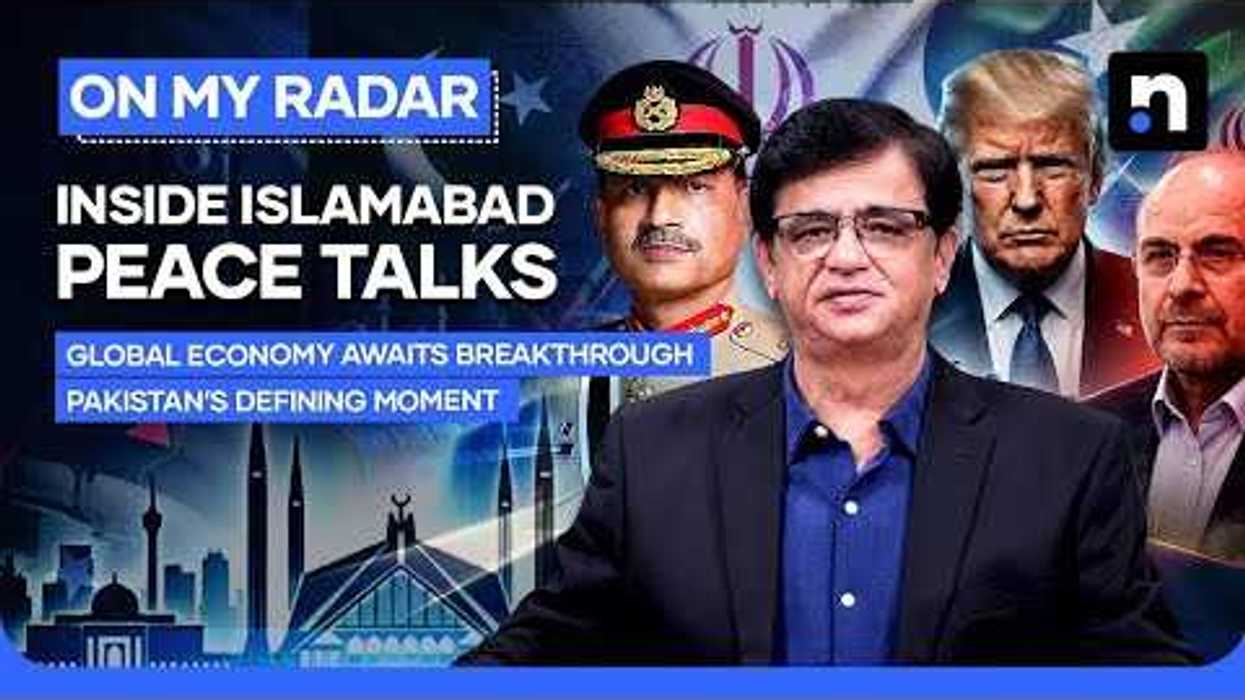
Kamran Khan said signs are emerging that the ongoing conflict involving the United States, Israel and Iran may be entering its final phase, as backchannel diplomacy accelerates and Islamabad becomes the focal point for potential negotiations.
Speaking on his program “On My Radar,” Khan said wars ultimately end through negotiation, and for the first time “clear signals” suggest that this dangerous confrontation may be approaching a diplomatic turn.
He said that despite the high morale of Iran’s 90 million people, the country’s military capability has suffered significant damage. At the same time, he added, neither the U.S. nor Israel sees a decisive military victory in sight after a prolonged and costly campaign, with signs of fatigue visible within their forces.
Against that backdrop, Khan said, intense backchannel diplomacy is underway, with multiple countries pushing for a negotiated solution. He said Islamabad has emerged as the center of these efforts and could potentially host talks as early as “tomorrow.”
International media outlets, including the Financial Times, The New York Times and CNN, have reported on Pakistan’s role in quiet diplomacy, according to Khan.
He said the process is being led by Pakistan’s chief of defense staff, Field Marshal Asim Munir, who has engaged key Iranian figures, including individuals linked to the Islamic Revolutionary Guard Corps and Iranian Parliament Speaker Mohammad Bagher Ghalibaf.
The diplomatic push comes as President Donald Trump appears to be stepping back from a war posture.
Speaking at the White House, Trump said, “We are in negotiations right now,” confirming active diplomatic engagement. He named senior envoys Steve Witkoff, Jared Kushner, Secretary of State Marco Rubio and Vice President JD Vance as involved in the process.
Trump also indicated that Iran had provided what he described as a “significant gift” related to energy supplies through the Strait of Hormuz, suggesting Tehran may be open to de-escalation.
However, early complications have surfaced.
British newspaper The Guardian and The Wall Street Journal have reported that Iranian officials may object to negotiating directly with Witkoff or Kushner, citing failed talks in Geneva in February involving Iranian Foreign Minister Abbas Araghchi.
According to U.S. outlet Axios, the White House has conveyed that Trump is serious about reaching an agreement. The possible inclusion of Vance as chief negotiator is seen as an effort to address Iranian concerns, with reports suggesting Tehran does not view him as a hardline hawk.
Prime Minister Shehbaz Sharif confirmed on X that Pakistan has offered to host negotiations and welcomed all peace efforts. Trump later reposted Sharif’s message, a move interpreted by Khan as a signal of tacit support.
Diplomatic sources cited by Khan suggest talks could begin before Friday, the deadline previously referenced by Trump in connection with potential strikes on Iranian power facilities.
Experts and diplomatic officials agree that a ceasefire would be the first essential step. Both sides would need to halt hostilities before formal negotiations on broader issues could proceed.
The proposed U.S. framework reportedly includes stringent limits on Iran’s nuclear program. These would require enriched uranium to be reduced to 3.67%, enrichment facilities deactivated within a month, centrifuges dismantled and a new civilian nuclear program established with partial U.S. funding. Fuel would be stored outside Iran.
These provisions echo elements of the 2015 nuclear agreement between Iran and world powers, formally known as the Joint Comprehensive Plan of Action, which Trump withdrew from in 2018 during his first term.
New proposals also include the formation of a regional nuclear consortium involving the U.S., Iran, Saudi Arabia, the United Arab Emirates and Qatar. Sanctions relief would be limited, and Iran would be restricted from allocating funds to its missile program.
U.S. officials have reportedly acknowledged that such terms would be difficult for Tehran to accept.
Iran, for its part, is expected to demand guarantees against future U.S. attacks, broad sanctions relief and recognition of its regional security concerns. Freedom of navigation in the Strait of Hormuz has also become central, with Gulf Arab states seeking a broader non-aggression framework.
Khan said the scope of negotiations now extends beyond the nuclear file to encompass regional security, maritime routes, missile capabilities and economic sanctions.
All eyes, he said, are on Islamabad. If talks proceed there, it would mark an extraordinary diplomatic moment for Pakistan, placing it at the center of global geopolitics.
Whether diplomacy can overcome deep mistrust and competing regional interests remains uncertain.



Comments
See what people are discussing