

Pakistan emerges as key diplomatic bridge as US-Iran talks gain momentum
Kamran Khan says high-level visits and backchannel diplomacy are accelerating prospects of a US Iran understanding

News Desk
The News Desk provides timely and factual coverage of national and international events, with an emphasis on accuracy and clarity.
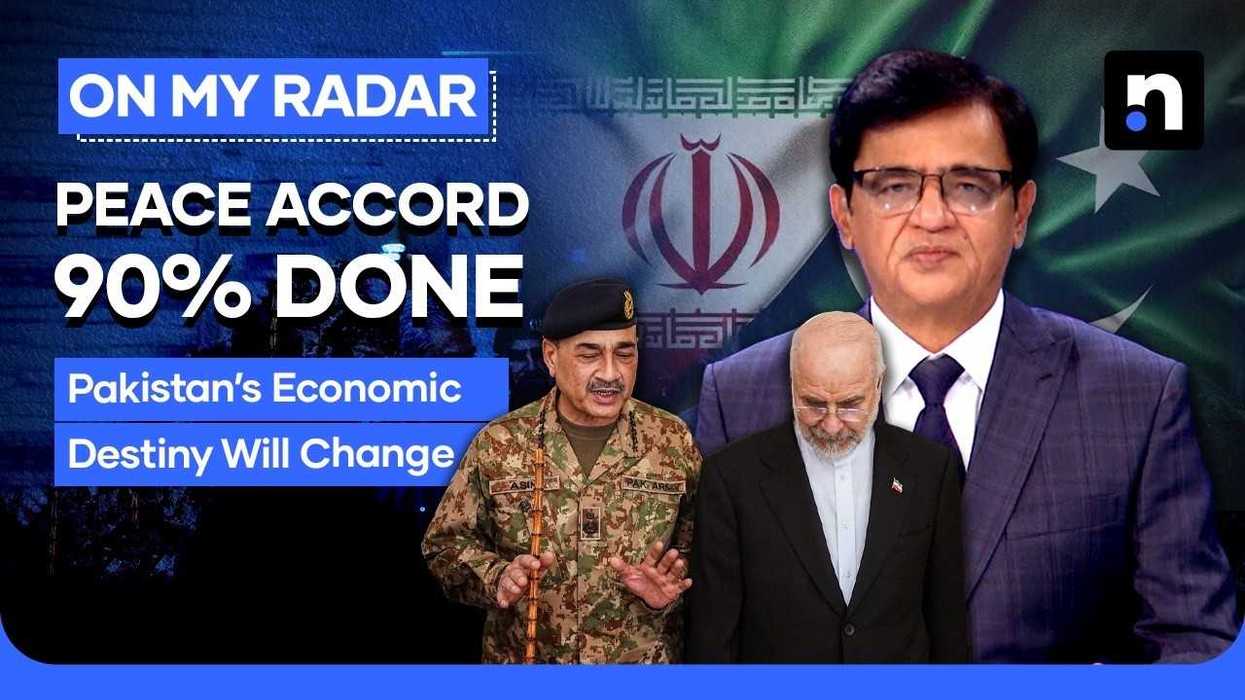
Diplomatic activity across the Middle East has intensified sharply, with new signals suggesting the long-running U.S.-Iran crisis may be approaching a turning point, Kamran Khan said on his program “On My Radar.”
A high-level Pakistani delegation led by Field Marshal Syed Asim Munir is holding meetings in Tehran with senior Iranian leadership, including Parliament Speaker Mohammad Bagher Ghalibaf and Foreign Minister Abbas Araghchi, according to Khan.
The discussions come as the White House has publicly expressed optimism about the possibility of a deal with Iran, with U.S. officials indicating that a resolution appears more achievable than in previous months, he said.
Officials have also suggested that a second round of talks could likely be held in Pakistan, further strengthening Islamabad’s emerging role as a diplomatic facilitator between Washington and Tehran.
Iran’s ambassador to Pakistan said Thursday that Tehran would not hold negotiations in any country other than Pakistan, reinforcing perceptions that Islamabad has become a central conduit for indirect engagement.
International media reports cited in the broadcast suggested that Pakistan’s mediation efforts have contributed to progress on several sensitive issues, including Iran’s nuclear program, though details remain limited.
If momentum continues, Islamabad could soon become the venue where decades of U.S.-Iran tensions enter a new phase of negotiations, Khan said.
Global diplomatic circles have pointed to Field Marshal Munir’s visit to Tehran as a key development in Pakistan’s mediation role.
Following his arrival, Pakistan’s national security adviser and Inter-Services Intelligence Director General Lt. Gen. Asim Malik, along with other officials, also traveled to Iran to participate in the discussions.
According to sources, Field Marshal Munir carried a message from Washington during his visit, addressing Iran’s demand for a ceasefire in Lebanon, an issue on which the United States is also engaged diplomatically.
U.S. President Donald Trump also announced on social media that Israel and Lebanon would begin direct negotiations aimed at a ceasefire after 34 years, while an Israeli minister said Prime Minister Benjamin Netanyahu and Lebanese President Joseph Aoun would meet.
The developments have fueled speculation that Sunday and Monday could be pivotal, with the possibility that talks in Islamabad could begin as early as Monday.
Prime Minister Shehbaz Sharif held a two-hour meeting with Saudi Crown Prince Mohammed bin Salman, briefing him on Pakistan’s recent diplomatic efforts and their impact on U.S.-Iran communication channels.
Iran’s Foreign Ministry spokesperson Ismail Baghaei confirmed that indirect contacts with the United States continue through Pakistan after the Islamabad discussions, with messages exchanged between the two sides.
Chinese Foreign Minister Wang Yi also spoke with Iranian Foreign Minister Abbas Araghchi, expressing support for Iran’s position and offering Beijing’s readiness to play a constructive regional role in maintaining a ceasefire and advancing dialogue.


Comments
See what people are discussing