

Pakistan emerges as mediator as US-Iran-Israel war enters fourth week
Kamran Khan says it is now effectively settled that the United States and Israel cannot militarily defeat Iran

News Desk
The News Desk provides timely and factual coverage of national and international events, with an emphasis on accuracy and clarity.
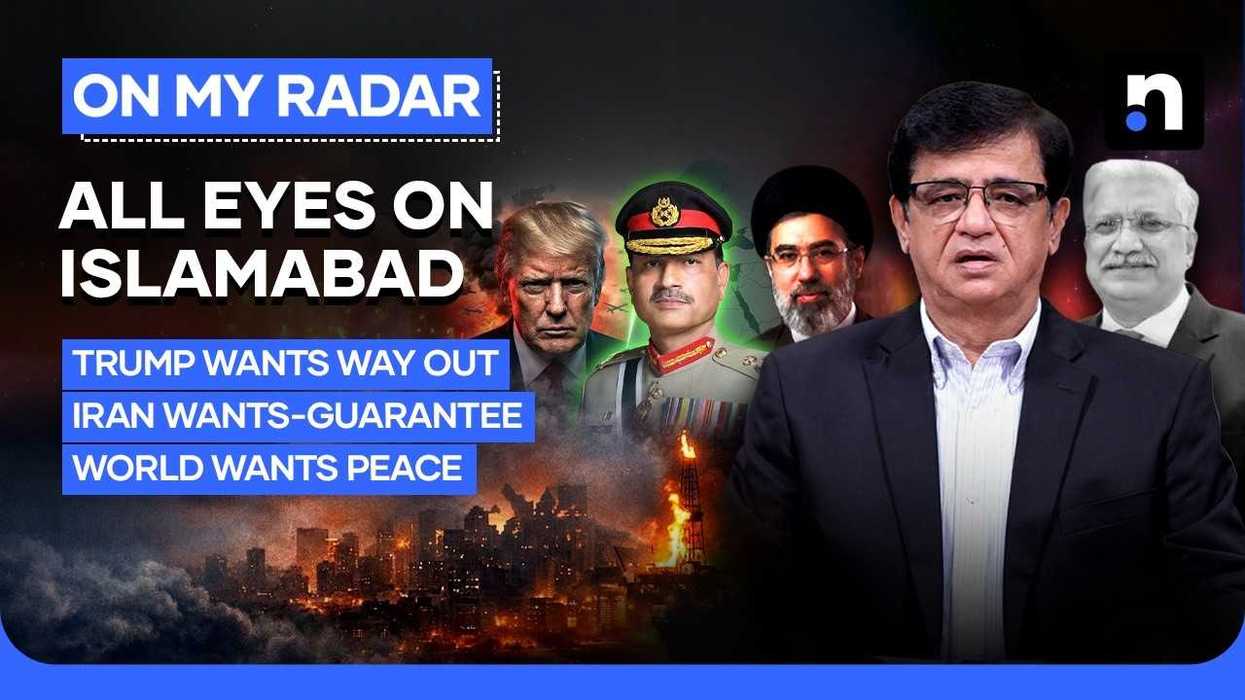
The war involving the United States, Israel and Iran has entered its fourth week, with key outcomes already taking shape, Kamran Khan said during an episode of “On My Radar.”
Khan said it is now effectively settled that the United States and Israel cannot militarily defeat Iran. He also said it has become clear that Washington and Tel Aviv cannot politically defeat Iran or bring about the end of its government.
According to Khan, President Donald Trump is now seeking a path out of the conflict and is looking for a face-saving exit.
He said there is also broad global consensus — particularly among Arab states — that the most urgent priority is an immediate end to the war so that global trade and economic activity can stabilize.
Against that backdrop, Khan described Pakistan as gaining renewed importance because of its geography and foreign policy positioning.
He said Pakistan’s military chief, Field Marshal Syed Asim Munir, has emerged as a balanced and credible figure among the parties due to what Khan described as recent military successes and effective military diplomacy by Pakistan.
As a result, Khan said Pakistan and Munir have become key players in efforts to end the war. Pakistan’s Foreign Office has indicated the country is ready to host negotiations aimed at ending the conflict.
A major diplomatic development took place Sunday, when Munir and Trump held direct contact, diplomatic sources confirmed, according to Khan.
The following day, Prime Minister Shehbaz Sharif spoke by telephone with Iranian President Masoud Pezeshkian, advancing the discussion that began between Trump and Munir, Khan said.
These contacts occurred at a tense moment. Washington had warned Tehran that if the Strait of Hormuz was not reopened within 48 hours, Iran’s power infrastructure could be targeted.
Hours before that deadline expired, Trump announced what he described as “constructive and positive talks,” signaling openness to negotiations.
Khan said regional concerns about a wider war also played a role in the shift.
Arab states conveyed to Washington that strikes on Iran’s civilian infrastructure could have devastating consequences. Iran had warned that any such attack would prompt retaliation against key infrastructure in U.S.-allied Arab countries, including energy and water facilities.
Behind the scenes, several countries attempted to open diplomatic channels, Khan said. He described Pakistan as the most active and strategically positioned intermediary.
British Prime Minister Keir Starmer has confirmed that back-channel contacts between the United States and Iran are taking place.
Khan said Pakistan conveyed a 15-point U.S. proposal to Tehran and established direct contacts with U.S. representatives Steve Witkoff and Jared Kushner.
Islamabad has also been mentioned as a possible venue for formal negotiations, with diplomatic sources indicating the potential participation of Vice President JD Vance.
White House press secretary Karoline Leavitt described the matter as involving delicate diplomatic issues and said any possible meeting should not be considered final without an official announcement.
CNN also reported that sensitive back-channel diplomacy is underway, describing it as a nontraditional process. According to Khan, Pakistan’s director-general of Inter-Services Intelligence and National Security Adviser Lt. Gen. Asim Malik are playing key roles.
Officials have stressed that the process remains at an initial stage and should be seen as transmission of messages rather than full negotiations.
Pakistan’s efforts are part of a broader diplomatic network. Oman has historically served as a venue for quiet contacts and remains active, with its foreign minister confirming efforts to ensure a secure corridor in the Strait of Hormuz.
Turkey has also engaged, with Foreign Minister Hakan Fidan in contact with Iran, the United States and other regional countries. Egypt is involved as well and has spoken with both Iran and Pakistan.
Pakistan’s Foreign Minister Ishaq Dar is coordinating directly with Turkey, underscoring what Khan described as a multilateral diplomatic initiative.
At the center of the dispute are U.S. demands presented to Iran in a 15-point framework. These include permanent restrictions on Iran’s nuclear program, control or elimination of enriched uranium, limits on its missile program, an end to support for regional proxy groups and recognition of Israel.
Analysts say several of these conditions would be difficult for Iran to accept, suggesting that while talks may begin, reaching a final agreement could prove far more complex.
Global markets have reacted sharply to signs of de-escalation. Following Trump’s indication of a pause in potential strikes, U.S. stock markets rallied and global oil prices declined.
For Pakistan, Khan said the moment represents more than diplomacy. He described it as an opportunity to reinforce its growing global image as a credible mediator.
Still, caution prevails.
Sanam Vakil of Chatham House said multiple countries are trying to reduce tensions, but there is no clear indication that the war will end soon. No direct negotiations have formally begun, messaging continues through intermediaries and Iran’s internal decision-making remains unclear.
Diplomacy is moving quickly, Khan said, but uncertainty persists.
U.S. demands remain firm, Iran’s red lines are clear and multiple global and regional powers are involved. While diplomatic efforts may open the door to negotiations, reaching a final agreement will be a far more difficult and complex stage.



Comments
See what people are discussing