

Pakistan faces delicate test as Iran threatens Gulf states after Trump warning
Kamran Khan says Iran-Gulf tensions risk widening as Trump’s deadline on Tehran expires

News Desk
The News Desk provides timely and factual coverage of national and international events, with an emphasis on accuracy and clarity.
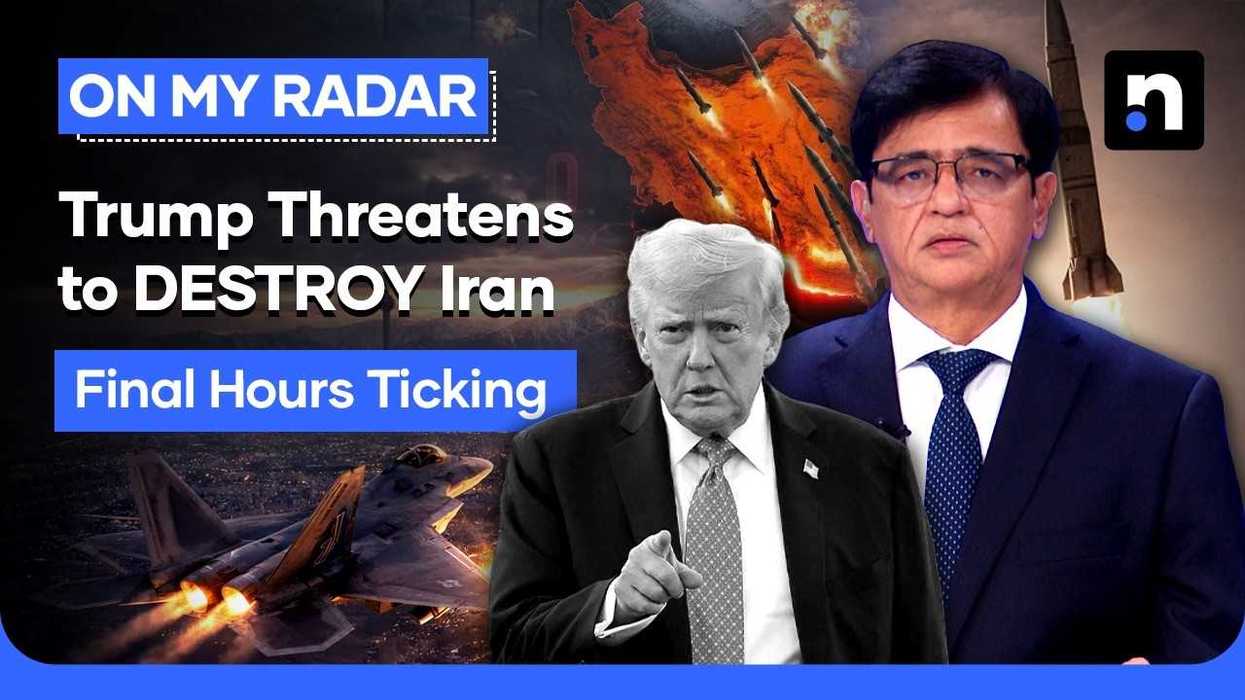
Kamran Khan says only hours remain before a deadline set by U.S. President Donald Trump for Iran, warning that failure to reach a deal could have devastating consequences.
Speaking on his program “On My Radar,” Khan said Trump had threatened that without an agreement, Iranian lives would become “hell.” He added that Trump wrote on social media that “tonight an entire civilization could end,” though he said he did not want that outcome.
Khan said Trump described the moment as potentially historic, suggesting that 47 years of corruption and bloodshed in Iran could end if the system changed and “more sensible and less extreme” leadership emerged.
Iran has rejected what Khan described as a U.S. ultimatum. According to him, Tehran warned that if further American or Israeli attacks occur, it would target infrastructure across Gulf states.
Khan said the crisis has placed Pakistan in an “extremely difficult test,” as both civilian and military leaders work to prevent a wider regional war.
Pakistan’s Foreign Office condemned Iranian missile strikes on the Saudi city of Al-Jubail, expressing “deep concern.” In a statement, it called the attack a serious violation of Saudi sovereignty and territorial integrity and a dangerous escalation threatening regional peace and stability.
Islamabad reaffirmed what it described as unwavering support for Saudi Arabia’s security.
Khan said tensions have intensified after Iranian forces launched multiple missiles toward Saudi Arabia over the past 24 hours, as Pakistan pursued diplomatic efforts to calm the conflict.
He said many Pakistanis feel deep anxiety as Iran responds to U.S. and Israeli attacks by targeting assets and infrastructure in Arab states, including Saudi Arabia.
Saudi Arabia holds religious significance for Pakistanis as home to Islam’s two holiest sites. The two countries also maintain close defense and strategic ties.
Khan cited analysts as saying that prior to the current conflict, no country — including Israel — had directly attacked Saudi territory. He described the strike on petroleum facilities in Al-Jubail as a major escalation.
Saudi authorities have previously said U.S. bases on their territory operate under agreements and are not permitted to be used for offensive operations against Iran.
Khan said the broader conflict appears to be shifting from a confrontation between the United States, Israel and Iran toward a possible Iran-Arab war.
According to figures cited on the show, more than 3,000 missiles and drones have targeted Arab states over the past five weeks.
The UAE reportedly intercepted more than 400 ballistic missiles and over 1,900 drones. Saudi Arabia faced more than 700 missile and drone attacks. Kuwait saw about 180 ballistic missiles and hundreds of drones, while Bahrain and Qatar also reported significant strikes.
Energy infrastructure has been hit, Khan said. In Saudi Arabia, facilities operated by Aramco in Ras Tanura and Yanbu were targeted. In the UAE, the Ruwais refinery and gas networks were damaged, affecting domestic production.
Qatar’s Ras Laffan LNG hub was also struck, leading to what Khan said was a roughly 17% drop in LNG exports. He said damage could disrupt up to 12.8 million tons of annual LNG output for three to five years.
Kuwait’s refineries, power plants and water desalination systems were attacked, as were petrochemical complexes in Bahrain.
Khan said the attacks have shaken global energy supply mechanisms and increased costs worldwide.
At the same time, he said Iran has suffered heavy losses from U.S. and Israeli strikes.
He cited figures claiming at least 1,900 people have been killed and 20,000 wounded in Iran during the conflict. He said more than 11,000 U.S. attacks targeted naval assets, missile sites, production facilities, petrochemical zones, air bases and power grid systems.
Khan also referred to media reports, including from CNN, saying Iranian universities have come under airstrikes. He said 30 universities in Tehran, Isfahan and other cities were struck last week, including Sharif University of Technology.
Khan said Arab states have so far limited their response to interception and defense, avoiding direct strikes inside Iran.
He described that restraint as a strategic decision aimed at preventing the region from igniting.
Still, he warned that continued threats and attacks make it increasingly difficult to predict whether negotiations can succeed — or whether the conflict will expand into a broader Iran-Arab war.





Comments
See what people are discussing