


Zain Ul Abideen
Senior Producer
Zain Ul Abideen is an experienced digital journalist with over 12 years in the media industry, having held key editorial positions at top news organizations in Pakistan.
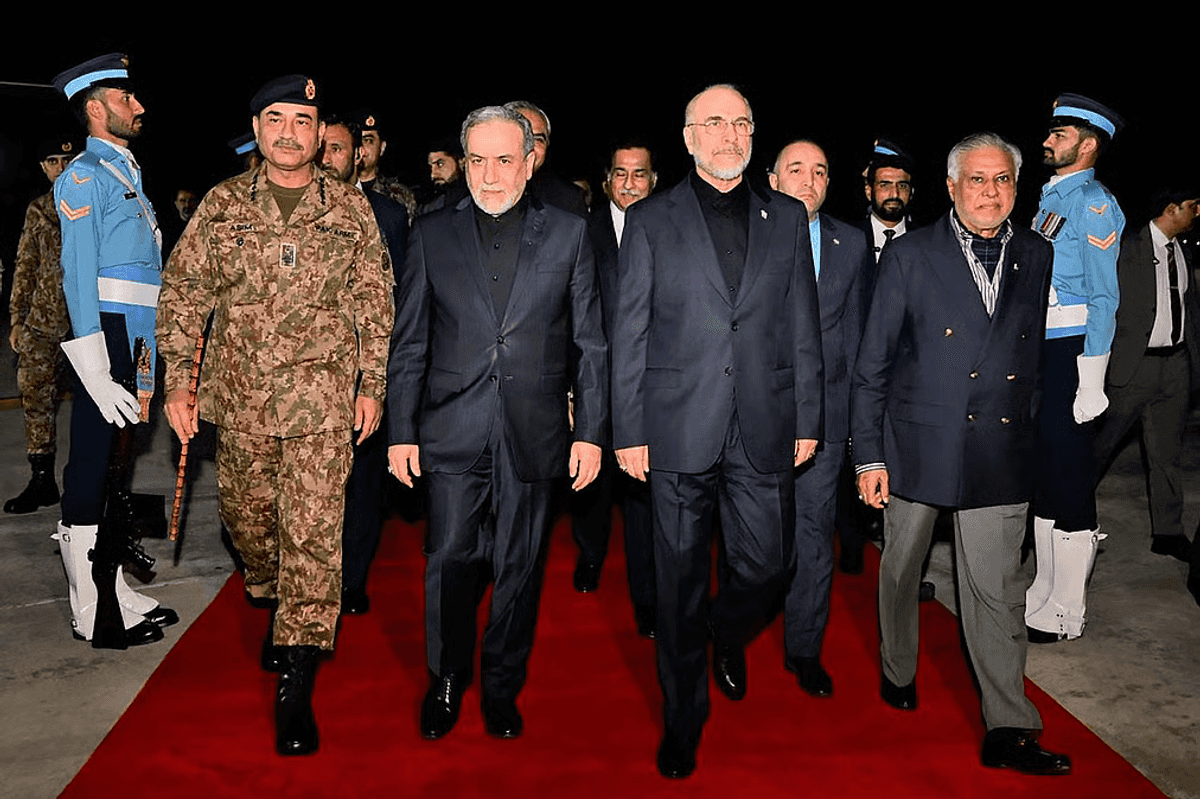
Pakistan’s recent diplomatic moment is hard to ignore — and, frankly, hard to believe. For those accustomed to seeing the country framed through crisis and instability, the sudden shift toward global relevance feels both refreshing and unexpected.
From brokering a fragile ceasefire after weeks of conflict between the United States and Iran to hosting high-stakes talks between the two, Islamabad has stepped into a role it has long aspired to play: a credible regional stabilizer. Even without a final deal, the symbolism has been powerful.
For a country often defined by crisis, Pakistan is now being discussed as a problem-solver.
But moments in geopolitics are fleeting. The real question is whether Pakistan can convert this visibility into lasting influence — or whether this, too, will pass?
The backdrop is critical. The 2026 Middle East crisis marked a dramatic escalation in regional tensions. Coordinated U.S.-Israeli strikes on Feb. 28 targeted Iranian military and nuclear infrastructure, killing senior leadership, including Supreme Leader Ali Khamenei. Iran’s response — missile barrages, attacks on U.S. bases, and the closure of the Strait of Hormuz — pushed the region toward a wider war.
For Pakistan, the stakes were immediate and existential.
Energy supplies were threatened. Global oil prices surged. Millions of Pakistani workers in the Gulf were exposed to risk. And traditional mediators such as Qatar and Oman were themselves under pressure.
Into this vacuum stepped Islamabad.
A doctrine taking shape
Led by Prime Minister Shehbaz Sharif and Army Chief Field Marshal Asim Munir, Pakistan hosted proximity talks that culminated in an Apr. 8 ceasefire. The truce halted 40 days of sustained conflict and offered a narrow diplomatic opening.
For Shan Saeed, chief economist at IQI Global, the significance of this moment goes beyond a single event.
“This does not look like a one-time development,” he said in conversation with Nukta. “Pakistan has sent a signal to the world that it is a credible and stabilizing power.”
That perception, he argues, has been building for months.
Saeed traces the shift back to the May 2025 conflict with India. In his telling, Pakistan’s military performance — particularly by its air force — reshaped global perceptions of its defensive capabilities. That, combined with subsequent diplomatic outreach, helped reposition the country.
“Over the last year, Pakistan’s image has gone up dramatically,” he said.
He points to a series of developments: high-level engagement with the United States, including a rare private meeting between President Donald Trump and Field Marshal Munir; a defense pact with Saudi Arabia; and renewed coordination with China under the China-Pakistan Economic Corridor.
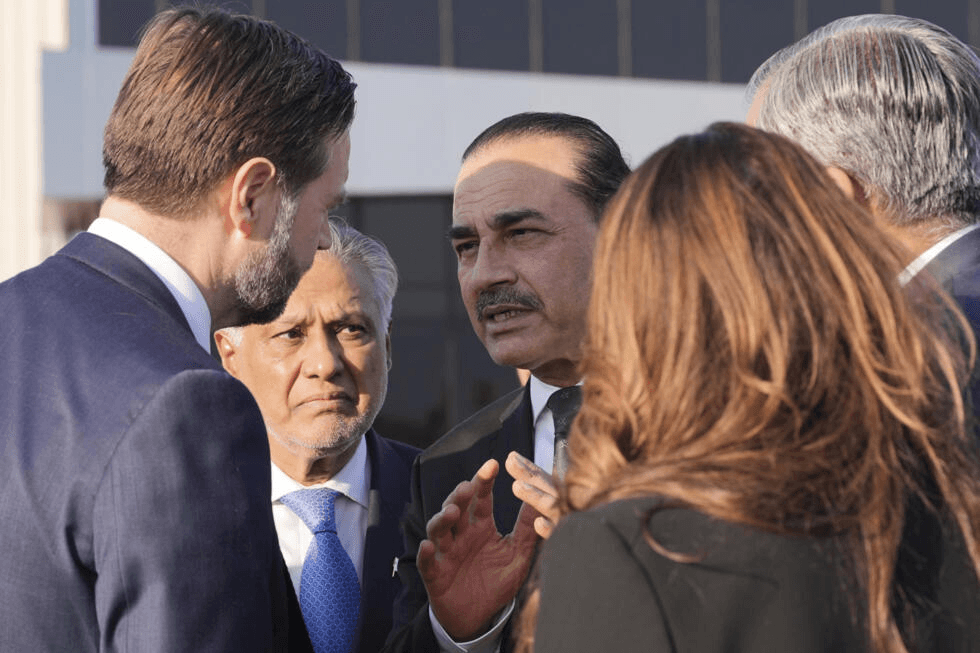 Pakistan's army chief, Field Marshal Asim Munir, took center stage at the talks, mediating the trilateral talks. AFP
Taken together, these moves reflect what Saeed describes as a “structured doctrine of engagement” — a coordinated approach in which civilian and military leadership are aligned on foreign policy priorities.
That alignment, he argues, has translated into credibility.
And in geopolitics, credibility is currency.
From goodwill to gains
The Islamabad talks reinforced that perception. Pakistan’s decision to engage both Washington and Tehran with equal visibility — including the army chief personally receiving both delegations — sent a deliberate signal of neutrality and seriousness.
It also generated global attention.
According to Saeed, interest in Pakistan — and its leadership — spiked during the talks, with international observers closely tracking developments in Islamabad. More importantly, the country received outreach from dozens of world leaders following the ceasefire.
This is where the opportunity lies.
Saeed frames Pakistan’s gains through three “strategic levers”: economic translation, geopolitical relevance, and institutional signaling.
The economic dimension is often overlooked but potentially significant. He cites market reactions following the ceasefire, noting that global equities rallied and oil prices moderated after weeks of volatility. A more stable regional environment, even temporarily, reduced pressure on energy-importing economies like Pakistan.
More importantly, he argues, the demonstration of diplomatic credibility could attract long-term capital.
“Institutions look for credibility, not rhetoric,” he said. “And credibility brings long-term investment.”
This is a crucial point. Pakistan’s economic challenges — from balance-of-payments pressures to structural inefficiencies — cannot be solved by diplomacy alone. But improved global perception can influence investor sentiment, sovereign risk assessments, and access to capital.
There are softer gains as well.
Saeed suggests that Pakistan’s enhanced image could gradually improve the strength of its passport — a symbolic but meaningful indicator of international trust. While such changes are slow and contingent on multiple factors, the argument underscores a broader point: perception matters.
Yet optimism must be tempered with realism.
Pakistan has experienced similar moments before — periods of heightened global relevance driven by geopolitical necessity rather than structural transformation. The post-9/11 era is one example, when Pakistan became central to U.S. strategy in Afghanistan but struggled to convert that role into sustainable economic progress.
The sustainability test
The risk today is similar.
Crisis diplomacy can elevate a country’s profile, but it does not automatically translate into long-term influence. That requires consistency, institutional strength, and economic resilience.
Pakistan’s internal constraints remain significant.
Political instability, policy unpredictability, and economic fragility could undermine the very credibility that Islamabad is trying to build. Diplomatic success abroad must be matched by governance reforms at home.
There is also the question of regional dynamics.
While Pakistan’s role as a mediator has been widely acknowledged, its relationship with India continues to cast a long shadow. Saeed is blunt in his assessment of Indian media narratives, dismissing them as lacking credibility. But beyond rhetoric, the structural reality is that South Asia remains deeply divided.
Can Pakistan’s rising stature create space for improved ties with India?
In theory, a more confident and internationally engaged Pakistan could pursue a less defensive posture, opening the door to pragmatic engagement. Trade, in particular, offers mutual benefits that have long been recognized but rarely realized.
In practice, however, the obstacles remain formidable.
Historical mistrust, domestic politics, and competing strategic priorities continue to limit the scope for normalization. For now, Pakistan’s diplomatic gains are more likely to play out beyond South Asia than within it.
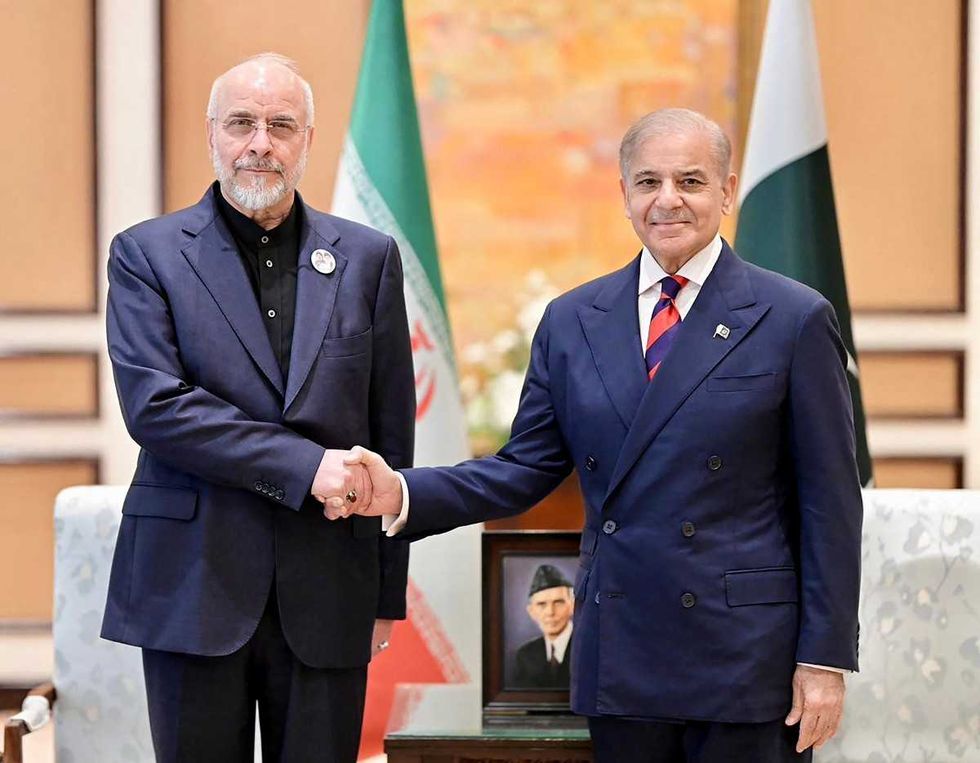 This handout photograph taken on April 11, 2026 and released by Pakistan's Prime Minister Office shows Pakistan's Prime Minister Shehbaz Sharif (R) shaking hands with Iran's parliamentary speaker Mohammad Bagher Ghalibaf during their meeting prior to the US-Iran peace talks in Islamabad. AFP
This raises a broader question about the nature of Pakistan’s emerging role.
Is it positioning itself as a regional power, a middle power, or a global intermediary?
Saeed leans toward the “middle power” framing — a country that may not dominate the system but can influence outcomes by bridging divides and facilitating dialogue.
That role suits Pakistan’s geography and relationships.
Bordering Iran, connected to China, and maintaining ties with the United States and Gulf states, Pakistan occupies a unique position. If leveraged effectively, this could allow Islamabad to act as a connector in an increasingly fragmented world.
But sustaining that role will require discipline.
Diplomacy cannot be episodic. It must be institutionalized.
The “structured doctrine of engagement” that Saeed describes will need to endure beyond specific crises or leadership tenures. It will also need to be supported by economic reform, regulatory clarity, and political stability — areas where Pakistan has historically struggled.
The stakes are high.
The 2026 Middle East crisis has shown that Pakistan can step up when the moment demands it. It has demonstrated agility, access, and a willingness to engage.
What remains uncertain is whether it can sustain that momentum.
For now, the answer is cautiously optimistic.
Pakistan has created an opening — one built on credibility, visibility, and strategic positioning. But openings close quickly in international politics.
The difference between a moment and a trajectory lies in what comes next.
If Islamabad can translate diplomatic goodwill into economic gains, deepen its institutional coherence, and maintain a consistent foreign policy approach, it may yet redefine its place in the world.
If not, this will be remembered as another missed opportunity — a brief period when Pakistan was at the center of global diplomacy, only to drift back to the margins.



Comments
See what people are discussing