


News Desk
The News Desk provides timely and factual coverage of national and international events, with an emphasis on accuracy and clarity.
Analysts and diplomats have cautioned that mediation efforts remain at an early stage.
PMO/File
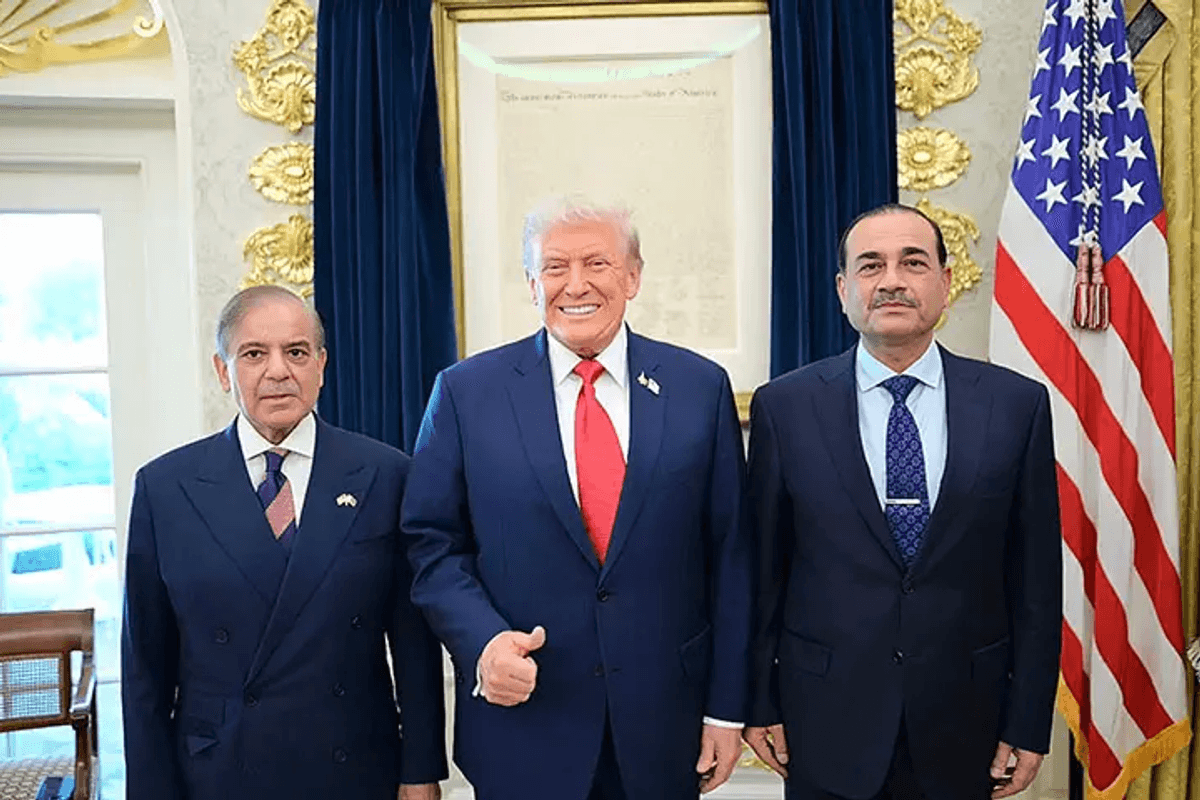
Pakistan is positioning itself as a key intermediary in efforts to ease tensions between the United States, Israel and Iran, leveraging its ties with Tehran and its working relationship with U.S. President Donald Trump, the Financial Times reported.
According to the report, Pakistan’s army chief Asim Munir spoke with Trump on Sunday, citing two people briefed on the call, while Prime Minister Shehbaz Sharif held discussions with Iranian President Masoud Pezeshkian on Monday. Pakistani authorities have not issued an official statement on the contacts.
The diplomatic outreach coincided with Trump’s announcement that he would delay threatened strikes on Iran’s power infrastructure by five days following what he described as “very good and productive” talks with Tehran. It remains unclear whether Pakistan’s mediation efforts were linked to Trump’s remarks, which contributed to a sharp drop in oil prices after being posted on his Truth Social platform. The White House declined to provide further details on the discussions.
“These are sensitive diplomatic discussions and the United States will not negotiate through the news media,” the White House said.
Other regional players are also engaged. Turkey, which had been involved in mediation efforts before the conflict escalated, has maintained contacts with Iranian officials and Trump’s envoy Steve Witkoff. Pakistan’s Foreign Minister Ishaq Dar held talks with Turkish Foreign Minister Hakan Fidan on Monday, while Egypt’s Foreign Minister Badr Abdelatty spoke on Sunday with counterparts in Iran and Pakistan, as well as Witkoff and Qatar’s foreign minister.
Tehran denies direct talks as mediation continues
However, Tehran has publicly pushed back on suggestions of direct negotiations. AFP, citing Iran’s foreign ministry, reported that messages had been received through “friendly countries” indicating a U.S. request for talks, but officials denied any such engagement since the start of the conflict.
"Over the past few days, messages were received through some friendly countries indicating a US request for negotiations aimed at ending the war," said foreign ministry spokesman Esmaeil Baqaei, according to the official IRNA news agency.
However, he "denied any negotiations or talks with the United States during the past 24 days of the imposed war".
Analysts and diplomats have cautioned that mediation efforts remain at an early stage. People familiar with the discussions said the contacts largely involve preliminary message exchanges rather than a structured negotiation process.
Senior Pakistani officials have been acting as intermediaries in communications between Tehran and the United States, including U.S. envoy Steve Witkoff and Jared Kushner, according to two people briefed on the matter. Prime Minister Sharif has held multiple conversations with Pezeshkian since the conflict began.
In a readout of Monday’s call, Pakistan said: “While sharing with the Iranian President the diplomatic outreach efforts of Pakistan’s leadership, the prime minister assured the Iranian leadership that Pakistan would continue to play a constructive role in facilitating peace.”
Last week, Pakistan’s Foreign Minister Dar told Arab counterparts at a meeting in Riyadh that Islamabad was engaged in mediation between the United States and Iran, though he did not provide further details, a diplomat said. The diplomat added that Pakistan is now taking a leading role in these backchannel efforts.
Tensions escalated after Trump warned in a Truth Social post that the United States would strike Iran’s power plants, “starting with the biggest one”, if Tehran did not reopen the Strait of Hormuz, a key route for about a fifth of global oil and gas shipments. On Monday, he said the threat would be suspended for five days.
Iran has warned it would retaliate against any such attack by targeting critical infrastructure across the region, including energy facilities and water desalination plants.
Historically, mediation between Washington and Tehran has been facilitated by Oman and Qatar. However, regional officials say diplomatic momentum has been limited since the United States and Israel launched strikes shortly after a round of nuclear talks between U.S. and Iranian officials in Geneva.



Comments
See what people are discussing