

Pakistan oil reserves rise 15%, gas reserves 9% as discoveries lift reserve base
New discoveries and field expansions lifted Pakistan’s oil reserves to 276 million barrels and gas reserves to 20.7 Tcf in June 2026

Business Desk
The Business Desk tracks economic trends, market movements, and business developments, offering analysis of both local and global financial news.
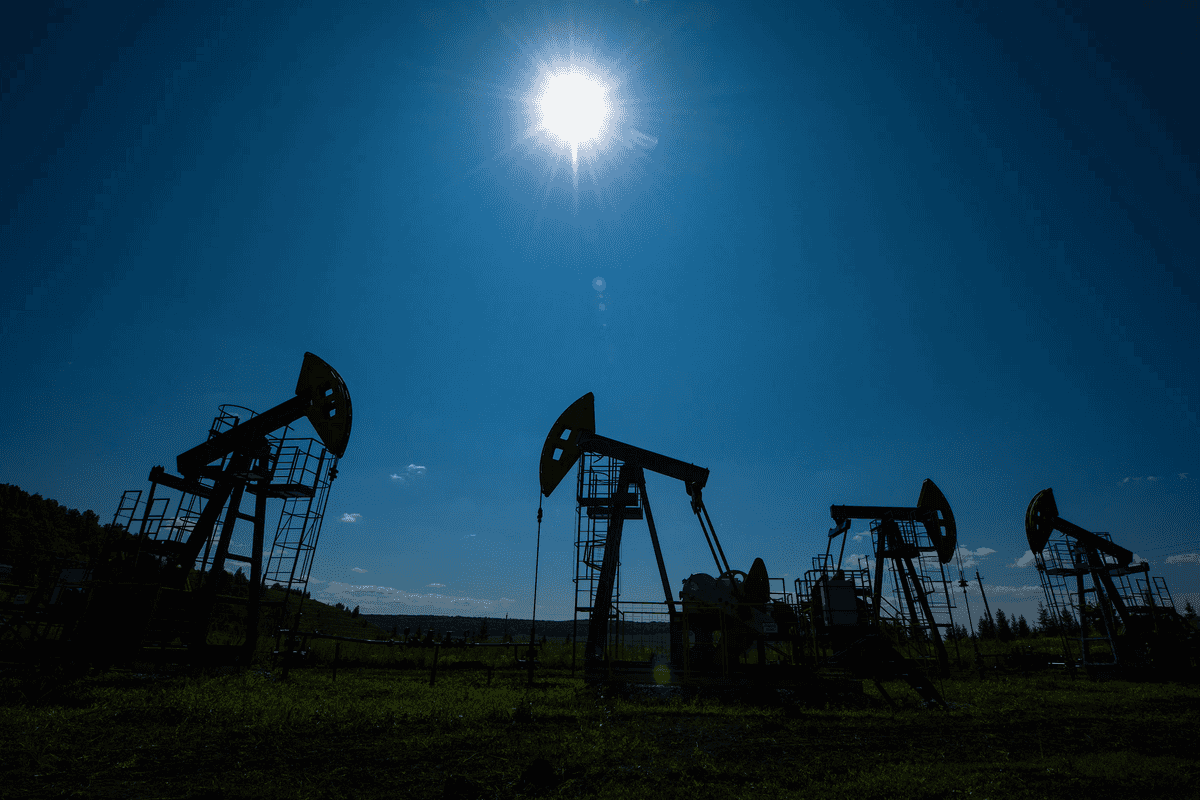
Pakistan’s recoverable oil and natural gas reserves increased in June 2026, supported by fresh discoveries, reserve revisions and field expansions, strengthening the outlook for the country’s exploration and production sector, according to research reports by Optimus Capital Management and Arif Habib Ltd.
The country’s total recoverable oil reserves rose 15% year-on-year to 276 million barrels in June 2026 from 240 million barrels a year earlier, while recoverable gas reserves increased 9% to 20,664 billion cubic feet, or 20.6 trillion cubic feet, from 18,981 Bcf, the reports said.
The increase comes as exploration activity begins to generate more meaningful additions to Pakistan’s hydrocarbon reserve base, although mature fields continue to experience depletion.
Reserve life
According to Pakistan Petroleum Information Service data cited by Optimus Capital Management, Pakistan’s remaining oil and gas reserve life stood at about 12 years and 21 years, respectively.
Arif Habib Ltd., using its own estimates, put the overall remaining hydrocarbon reserve life at around 19 years.
Among major listed exploration and production companies, Oil and Gas Development Co. Ltd., Pakistan Petroleum Ltd., Mari Petroleum Co. Ltd. and Pakistan Oilfields Ltd. had estimated oil reserve lives of 13, 8, 13 and 9 years, respectively, according to Optimus.
Their gas reserve lives stood at 20, 11, 23 and 10 years, respectively.
The contrasting trends in oil and gas reserve life reflect both new additions and production from mature fields, analysts said.
Exploration delivers new reserves
Hydrocarbon additions during fiscal 2026 amounted to about 61 million barrels of oil and 2,635 Bcf of gas, according to Optimus Capital Management.
Reserve additions were particularly notable in several fields operated by listed companies.
Mari Petroleum led the increase in gas reserves, with major upward revisions at the Ghazij and Spinwam fields. Ghazij reserves increased by about 747 Bcf, while Spinwam added around 399 Bcf, according to Optimus.
OGDC and PPL also contributed through reserve additions at Baragzai and Hatim-Faiz, with increases of around 282 Bcf and 215 Bcf, respectively.
The Baragzai field was also a major driver of the increase in Pakistan’s oil reserves. Arif Habib said oil reserves at Baragzai reached 49.09 million barrels in June 2026, compared with 21.01 million barrels reported in December 2025.
New discoveries add to reserve base
Arif Habib said newly discovered fields, including Spinwam, Baragzai, Bitrism East, Chakar and Faakir, contributed 53.52 million barrels of oil and 772.97 Bcf of gas to Pakistan’s reserve base in June 2026.
Optimus also highlighted the addition of several new fields, including Shams, Bilitang and Bobi Deep. Collectively, these fields added around 5 million barrels of oil and 150 Bcf of gas reserves.
The additions helped offset declines in several mature producing fields.
Arif Habib noted that oil reserves declined at Pasakhi/Pasakhi North East, Nashpa, Adhi, Makori East, Kunar and Sono, while gas reserves fell at Uch, Sui, Kandhkot, Qadirpur and Nashpa.
Listed E&P companies
Within Arif Habib’s E&P coverage universe, oil reserves at OGDC, PPL and MARI increased 16%, 58% and 5%, respectively, on a year-on-year basis in June 2026. POL’s oil reserves, however, declined 5%.
On the gas side, MARI recorded 15% year-on-year growth, while PPL, OGDC and POL posted declines of 3%, 4% and 2%, respectively.
Arif Habib estimated remaining hydrocarbon reserve lives at 19 years for OGDC, 10 years for PPL, 21 years for MARI and 10 years for POL.
Tal Block remains stable
The Tal Block, operated by MOL Pakistan, had remaining oil reserves of 13.5 million barrels and gas reserves of 531 Bcf as of June 2026, according to Optimus.
The block’s reserve life remained broadly stable, supported by upward revisions at Makori East, Mardankhel, Mamikhel South and Maramzai. Bilitang was also added to the block during June.
Analysts see positive sector outlook
Optimus Capital Management said continued exploration activity has supported the E&P sector, with reserve replacement ratios of listed companies exceeding 100% in fiscal 2026.
“MARI continues to stand out with massive upward revisions in its reserve base,” Optimus said, attributing the increase to enhancements and new exploration activity in the Mari D&PL and Waziristan blocks.
Arif Habib similarly highlighted the revival in discovery momentum, saying reserve additions from new fields and field expansions had strengthened Pakistan’s hydrocarbon base despite depletion at mature assets.
“Continued exploration initiatives have played well for the E&P sector,” Optimus said.
The brokerage added that ongoing energy-sector reforms, improving liquidity and increased exploration activity are expected to support the sector and its earnings outlook, maintaining an “outperform” stance on the sector.
The reserve data point to a gradual improvement in Pakistan’s ability to replace hydrocarbons produced from existing fields, although the longer-term sustainability of the reserve base will continue to depend on successful exploration, development of new discoveries and the pace of depletion from mature assets.



Comments
See what people are discussing