

Ahsan Iqbal calls population growth a national emergency
Planning minister warns rapid population growth could strain resources and urges NFC reforms to reward provinces for managing it

Business Desk
The Business Desk tracks economic trends, market movements, and business developments, offering analysis of both local and global financial news.
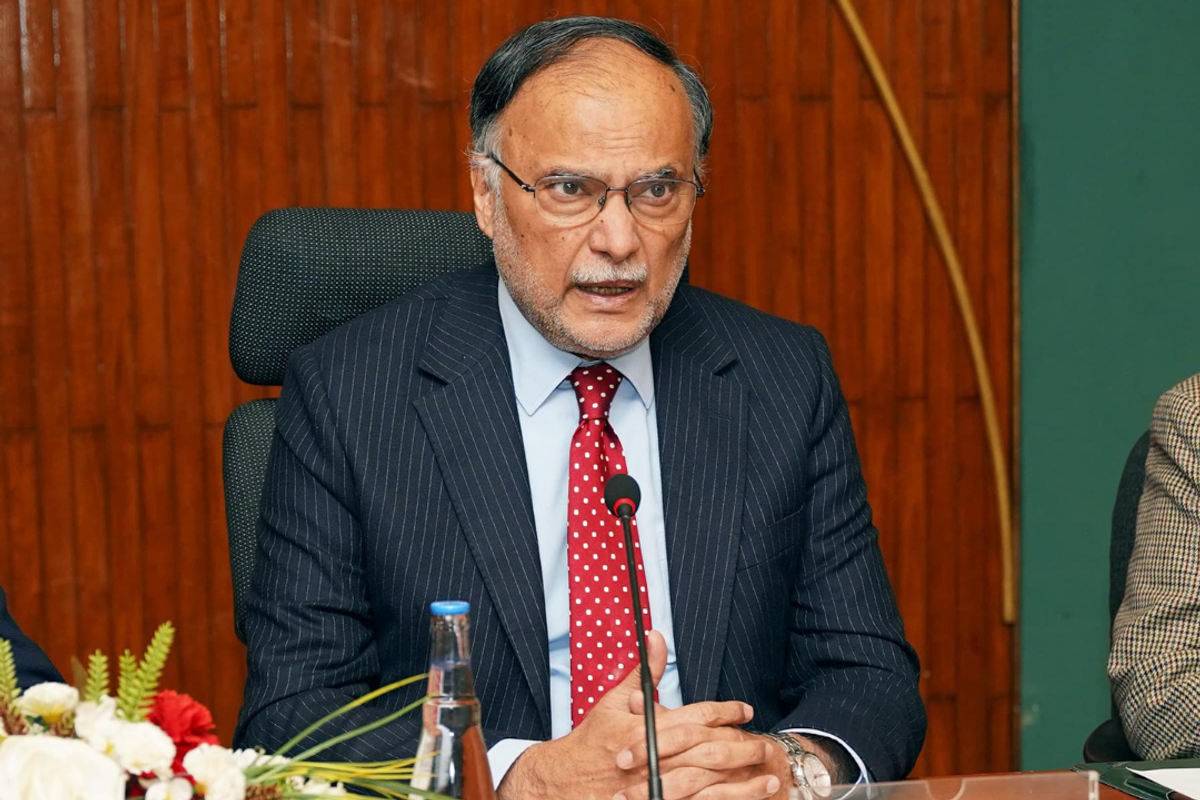
Pakistan's rapid population growth has become a national emergency, Planning Minister Ahsan Iqbal said, calling for a coordinated strategy to balance the country's growing population with available resources.
Addressing the first meeting of the Executive Committee of the National Population Council, Iqbal warned that unchecked population growth could undermine economic development and put increasing pressure on public services.
Why is Pakistan's population growth rate alarming?
Iqbal said Pakistan's average annual population growth rate declined over the decades since 1980, reaching 2.4% in the 1998–2017 census interval before rising to 2.55% in 2017–2023. He described the reversal as alarming and urged coordinated policy measures to bring population growth into balance with the country's available resources.
He likened the reversal to taking a foot off the brake and pressing the accelerator, stressing that the trend needed to be reversed.
“Population figures are not merely numbers; they raise critical questions about Pakistan’s future, our children and the sustainability of national resources,” Iqbal said.
How does population growth affect economic development?
Iqbal warned that Pakistan would struggle to achieve sustainable development and economic prosperity without balancing population growth with the resources available to support it.
He said that even if the economy grew by 5%, population growth of 2.5% would leave real per capita growth at only about 2.5%.
The minister said rapid population growth was increasing the challenge of providing education, health care, employment and basic public services.
He stressed that managing population growth was essential to achieving Pakistan's development targets and safeguarding its economic future.
Why does Iqbal want changes to the NFC Award?
Iqbal questioned the existing resource distribution framework, noting that population carries an 82% weight in the formula used to allocate the provinces' share of the divisible tax pool under the National Finance Commission (NFC) Award.
He argued that the heavy reliance on population in determining provincial allocations could discourage efforts to reduce population growth.
The minister proposed linking the NFC Award to development and sustainability indicators to reward provinces that manage population growth more effectively.
What measures has the minister proposed?
Iqbal said population management should not be treated solely as a health care or family planning issue, emphasizing its links to girls' education, women's economic empowerment and social awareness.
He called on federal and provincial governments to treat the challenge as a national emergency and develop a joint strategy.
The minister urged coordinated efforts in health care, education and community awareness, alongside changes in social attitudes.
He said managing population growth was critical to Pakistan's economic security, development goals and the well-being of future generations.





Comments
See what people are discussing