

Pakistan pushes for talks as US, Iran, Israel tensions rise
Kamran Khan says Pakistan plays a key role in back-channel talks on Middle East conflict

News Desk
The News Desk provides timely and factual coverage of national and international events, with an emphasis on accuracy and clarity.
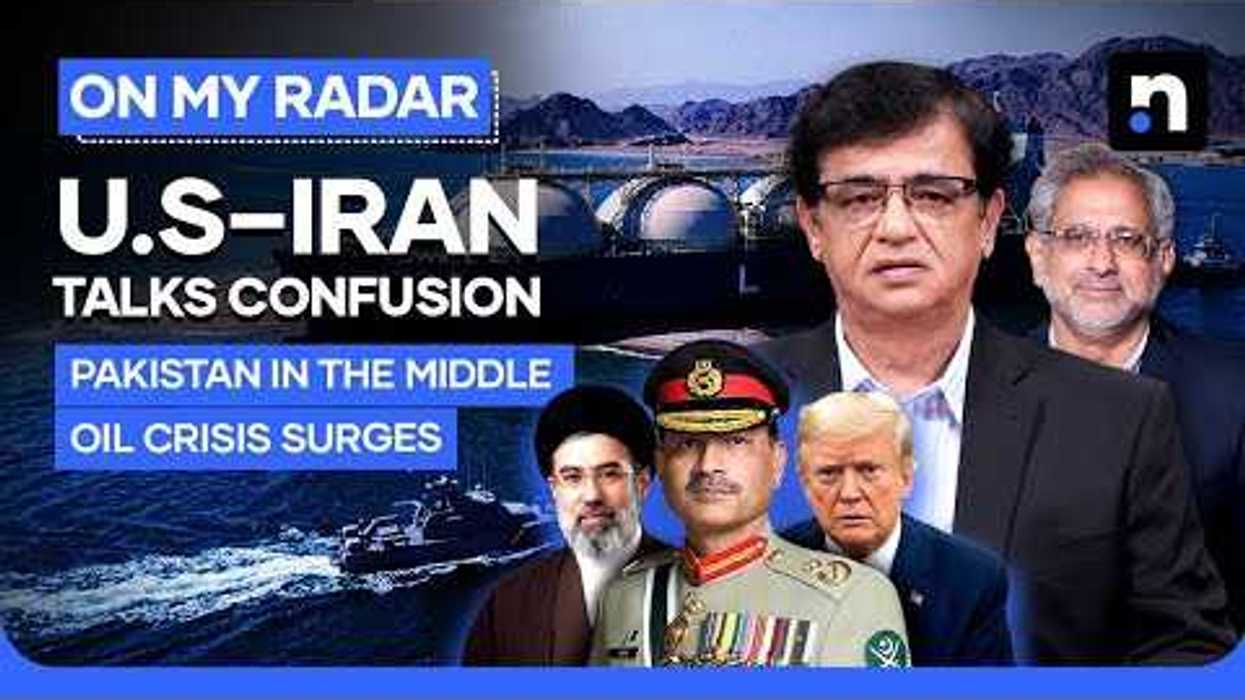
Diplomatic efforts continue behind the scenes to ease tensions between the United States, Israel, and Iran, even as the conflict in the Middle East intensifies and complications grow.
On the latest episode of “On My Radar,” Kamran Khan discussed the situation with former Prime Minister Shahid Khaqan Abbasi, highlighting that hope for a negotiated solution has not vanished.
Sources indicate that back-channel communications between the three parties are ongoing, with Iran now publicly acknowledging some of these exchanges.
Iranian Foreign Minister Abbas Araghchi confirmed that messages are being exchanged via friendly countries, but emphasized that these are not direct talks. He added that Tehran has received a 15-point proposal from Washington, which is under internal review.
Despite mixed signals about the negotiation process, Pakistan’s role in facilitating talks remains significant.
Reports suggest that at Pakistan’s request, the U.S. removed two key Iranian figures, Araghchi and Parliament Speaker Mohammad Bagher Ghalibaf, from a target list to ensure dialogue could proceed.
Indirect negotiations are continuing, with Iran responding to the U.S. 15-point plan through five demands aired on its state channel, Press TV.
These include an end to attacks and massacres, guarantees against renewed war on Iran, compensation for conflict damages, cessation of hostilities across all fronts, and recognition of Iranian sovereignty over the Strait of Hormuz.
CNN reported that Washington is arranging a critical meeting in Pakistan this weekend, possibly including U.S. Vice President JD Vance, to discuss potential pathways out of the conflict.
U.S. officials say the timing and location are not finalized. Pakistan’s Foreign Minister Ishaq Dar confirmed the ongoing back-channel talks and called speculation about a breakdown “unnecessary.”
Meanwhile, former President Donald Trump criticized Iran’s negotiating stance, urging Iranian officials to take talks seriously. Posting on Truth Social, Trump claimed Iranian representatives are secretly negotiating deals while publicly reviewing U.S. proposals.
While diplomatic doors remain open, Iran’s hesitancy stems from past experiences. Previous nuclear negotiations, in June last year and February this year, made progress but were overshadowed by U.S. military actions, which fueled Tehran’s distrust.
The recent deployment of 2,500 U.S. Marines in the Middle East, reportedly near Iran’s key oil hub Kharg Island, has added to Iranian concerns.
The conflict continues on multiple fronts. Iranian forces have struck Gulf Arab nations, including Saudi Arabia, the UAE, and Qatar, while fighting with Israel shows no signs of stopping.
Israeli media reported that Iran’s Revolutionary Guard Navy commander was killed in an airstrike. In the UAE, Iranian drone attacks killed two civilians. Regional Arab states are pressuring Trump to continue military operations, aiming to weaken Iran for future security.
Pakistan is pushing for a diplomatic solution for several reasons. Iran is a longtime neighbor and partner, the Strait of Hormuz supplies 85% of Pakistan’s energy imports, and attacks on energy infrastructure in Arab states have put additional pressure on Pakistan’s economy.
Rising tensions between the U.S., Iran, and Israel have pushed global oil prices above $100 per barrel, increasing Pakistan’s economic strain. Domestic energy costs have already risen by roughly 60%, with fiscal projections suggesting a 50% increase in oil import bills for this fiscal year.
Pakistan’s fragile economy, heavy import dependence, and limited fiscal space make these developments particularly challenging. Disruptions to Qatar’s LNG exports due to attacks on Ras Laffan facilities have affected roughly 17% of exports and triggered force majeure declarations on multiple contracts, potentially lasting several years.
Even if a ceasefire occurs, long-term LNG contracts with Qatar will continue to strain Pakistan’s finances. Reports indicate Pakistan must pay around $15 million monthly in capacity charges for two RLNG terminals in Karachi, regardless of actual supply.
Amid this complex backdrop, Pakistan continues efforts to mediate, seeking a negotiated resolution that stabilizes energy supplies and reduces economic pressure. Analysts note that the success of these efforts could have major implications for both regional stability and Pakistan’s fragile economy.
As Kamran Khan discussed on “On My Radar” with former Prime Minister Shahid Khaqan Abbasi, the conflict remains severe, but diplomatic channels are active, suggesting that dialogue, though indirect, has not yet failed.




Comments
See what people are discussing